
Local service guide
Plan lawn mowing in Knoxville, TN
Arrange lawn mowing in Knoxville by asking the provider to identify your grass, propose a cutting height, and explain when growth will require another visit. Compare written quotes that cover the same mowing area, trimming, cleanup, and weather-delay terms. University of Tennessee guidance ties mowing frequency to grass height: mow when plants reach one and a half times the intended cutting height. [1]
Choose frequency from growth and cutting height
Ask the provider to explain the proposed mowing height before choosing weekly or biweekly service. UT says grass species and weather influence cutting height. Its mowing rule is to cut when the average plant height reaches one and a half times the cutting height, which limits removal to one-third of the shoots. For example, a lawn maintained at 3 inches reaches that trigger at 4.5 inches. [1]
Use that trigger to discuss scheduling. Ask whether the provider can shorten the interval during strong growth and skip a visit when little grass needs cutting. Agree on who makes that decision, how they notify you, and whether a skipped visit changes the bill. If you prefer a fixed route day, ask how the crew handles growth that exceeds the agreed trigger between visits.
UT identifies tall fescue, fineleaf fescues, and Kentucky bluegrass as Tennessee's primary perennial cool-season grasses, which can suffer summer heat stress. Bermudagrass and zoysiagrass are its primary perennial warm-season lawn grasses; they lose color in fall and become dormant in winter. Ask for a seasonal plan based on the grass in your yard. [1]
Compare the same work in each quote
Request a written price for the lawn areas you want maintained. Identify the front, back, side strips, and any fenced areas. Specify trimming around trees and fences, edging along paved borders, and clearing clippings from walks and the driveway. Ask the provider to list excluded work and quote leaf cleanup or bed maintenance as separate items.
For an overgrown lawn, send current photos and ask for a separate first-visit scope. Have the provider explain the proposed cutting sequence and whether they will collect excess clippings. UT's one-third removal guidance gives you a reason to question a proposal to take tall grass down to the maintenance height in one cut. [1]
Request quotes for your property and compare the same scope of work. Ask whether the price applies per completed visit or to a seasonal package, how either party can cancel, and whether the provider needs your approval before charging for extra work. Include the first visit and any agreed cleanup when comparing your total commitment.
Agree on rain delays and access
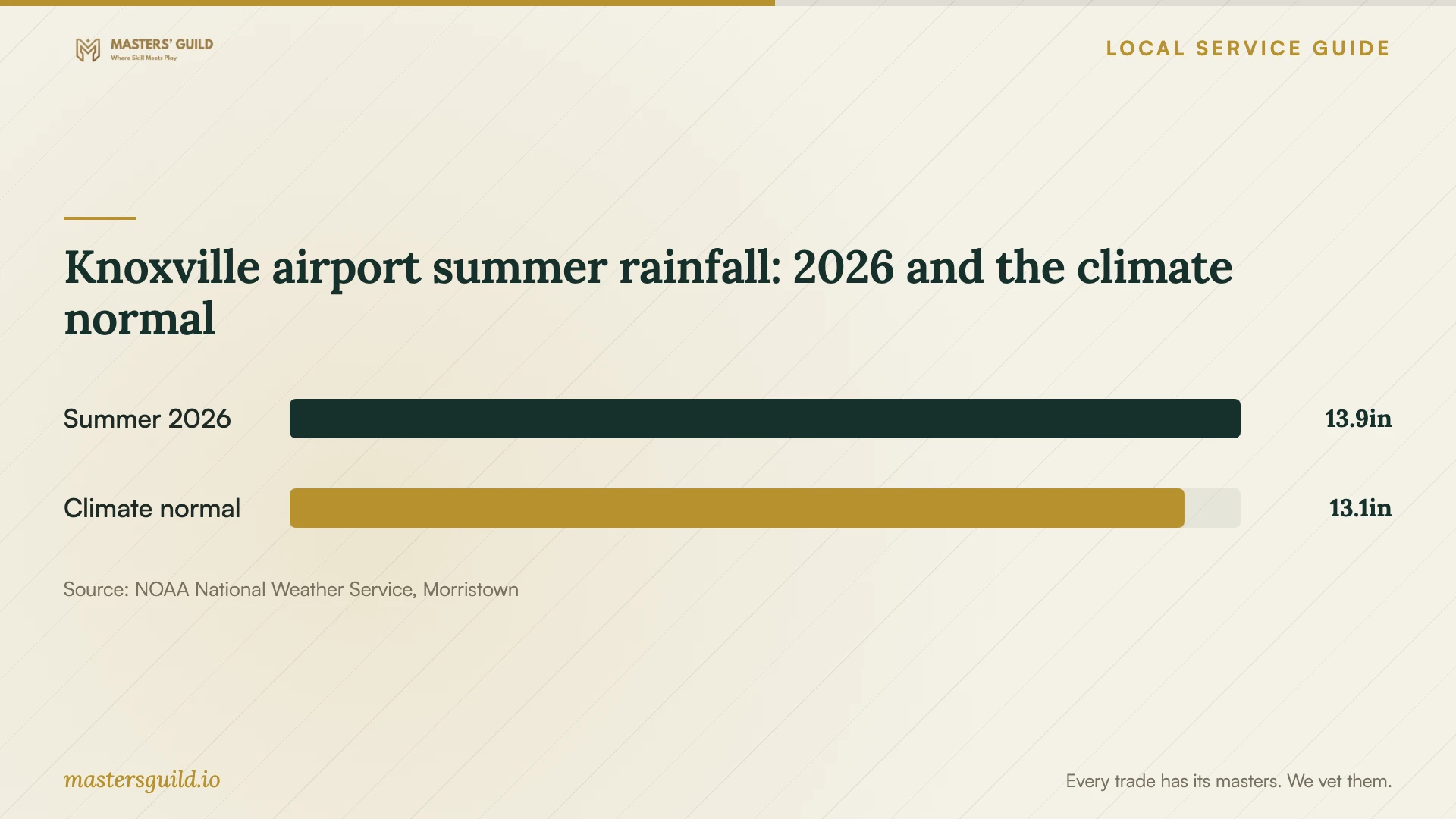
Ask how the provider decides to postpone work after rain, when they will return, and how they charge for a missed visit. The National Weather Service reported 33 days with at least 0.01 inch of precipitation at Knoxville McGhee Tyson during June through August 2026. Use that airport record to start a discussion about weather interruptions; ask the provider to base individual visits on your property's conditions. [3]
Before the first visit, walk the yard with the provider or send annotated photos. Mark soft areas, exposed roots, irrigation heads, steep sections, and places you want the crew to avoid. Give the gate opening width and discuss equipment access. Agree on pet arrangements, gate closure, and how the crew will report damage or an inaccessible area.
Check mowing quality and treatment add-ons
Ask about blade maintenance and mowing direction. UT recommends sharp mower blades because torn leaves give fungal pathogens an entry point. It also recommends changing direction between cuts to encourage upright growth and distribute wheel-related compaction. After the first visit, check the agreed height, uncut patches, trimming, and cleanup before confirming the recurring arrangement. [1]
Keep pesticide applications explicit in the agreement. Tennessee's Department of Agriculture requires a charter for a business offering custom pesticide applications, with a charter for each business location. Its Horticulture Lawn and Turf category covers pests, weeds, and diseases in residential and commercial lawns and landscapes. At least one commercially certified person must be on site during an application. [2]
If the provider proposes weed or pest treatments, ask for the firm's charter and the applicable license and certification details before accepting that work. Request the product name, treatment area, and label-based instructions for household access. Ask for evidence of insurance for the work you authorize, and keep the treatment price separate from mowing. [2]
Knoxville airport summer rainfall: 2026 and the climate normal
Local details that affect your job
East Tennessee grass choice changes the autumn plan
UT says growers generally prefer cool-season turfgrasses in East Tennessee's Appalachian Ridge and Valley region, while cold-tolerant warm-season varieties can also grow there. Its Tennessee guidance identifies late August through mid-October as an excellent cool-season seeding window. If you plan autumn seeding, tell the mowing provider before the next visit and agree on access and the first cut of new growth. Base your winter shutdown date on your grass and its growth. [1]
Tennessee treats paid weed spraying as pesticide work
Tennessee requires a charter and license even when a provider charges for the service while describing the pesticide as free. The state also says application volume does not change the charter requirement. For a Knoxville mowing offer with occasional weed spraying, verify the treatment credentials or ask the provider to subcontract applications to a chartered firm. The Department of Agriculture says a provider using no pesticides does not need a pesticide charter. [2]
Choose a mowing arrangement for your yard
| Your situation | Arrangement to discuss | Question before agreeing |
|---|---|---|
| Grass reaches the mowing trigger between visits | A shorter interval based on UT's one-and-a-half-times-height rule | Can you adjust frequency while keeping the agreed cutting height? |
| Little growth between scheduled visits | Visits confirmed from current growth | Who approves a skip, and how does it affect billing? |
| Tall grass before the first visit | A separate initial cut plan consistent with one-third removal guidance | How will you handle extra passes and excess clippings? |
| Autumn cool-season seeding planned | A coordinated mowing and seeding plan | When will you enter the seeded area and make the first cut? |
| Mowing quote includes weed spraying | Mowing plus a credential-checked treatment service | Which chartered firm and certified applicator will perform the application? |
Your hiring checklist
- Send current lawn photos and identify the areas included in the quote.
- Ask the provider to identify the grass and write down the proposed cutting height.
- Confirm trimming, edging, paved-surface cleanup, and clipping handling.
- Separate the first overgrown-lawn visit from recurring maintenance.
- Agree on rain delays, skipped visits, billing, and cancellation terms.
- Share gate width, pet arrangements, obstacles, and areas to avoid.
- Request insurance evidence and treatment credentials for any pesticide add-ons.
Frequently Asked Questions
Should I choose weekly or biweekly mowing?
Ask the provider to relate the interval to your grass and cutting height. UT recommends mowing at one and a half times the cutting height. Choose an interval that meets that trigger, and agree on adjustments when growth changes. [1]
Do I need the provider to bag clippings?
UT says short clippings decompose rapidly and do not contribute significantly to thatch. Ask to leave short clippings on the lawn and agree on how the provider will handle heavy accumulations or clippings on paved areas. [1]
Does a mowing provider need pesticide credentials?
Tennessee's pesticide charter requirement applies to custom pesticide applications. The state says providers who do not apply pesticides do not need that charter. If the service includes herbicides or other pesticides, check the firm's charter and applicable treatment credentials. [2]
Can I use a summer rain total to plan mowing dates?
Use the airport total as context for discussing postponements. Ask the provider to assess your lawn before bringing equipment onto it. The June through August 2026 McGhee Tyson report covers one airport and one season; it does not measure conditions in your yard. [3]
Sources and scope
This guide combines the sources below with practical planning guidance. Figures apply to the stated geography and period; request a written quote for your property.