
Local service guide
Junk Removal in Knoxville, TN: Plan Your Cleanout
For Junk Removal in Knoxville, hire a crew after agreeing on the item list, access conditions, disposal destinations, and total price in writing. Separate chemicals before pickup: the city’s household hazardous waste facility rejects household hazardous waste in commercial or work vehicles. Consider self-hauling a manageable load if you can unload without city staff assistance. [1] [2]
Get a quote for the exact pile
Send photos of the entire pile and individual bulky items. Include the pickup address, floor, stairs, narrow doorways, and where the truck can park. Explain whether you want removal from inside the home or from a prepared outdoor pile. Ask the crew to identify anything it will leave behind before you book.
Request a written total that names loading, hauling, disposal, and separate item charges. For a truck-space quote, ask for the truck capacity and how the crew measures your share. If weight affects the price, ask how the hauler will document it. Agree on how you will approve changes before loading starts.
Ask where the hauler intends to take each material. Knoxville’s transfer station accepts residential and commercial trash and construction materials, but excludes yard waste and asbestos. For a mixed garage or renovation cleanout, ask the crew to confirm separate destinations for excluded materials. [1]
Understand disposal fees before comparing offers
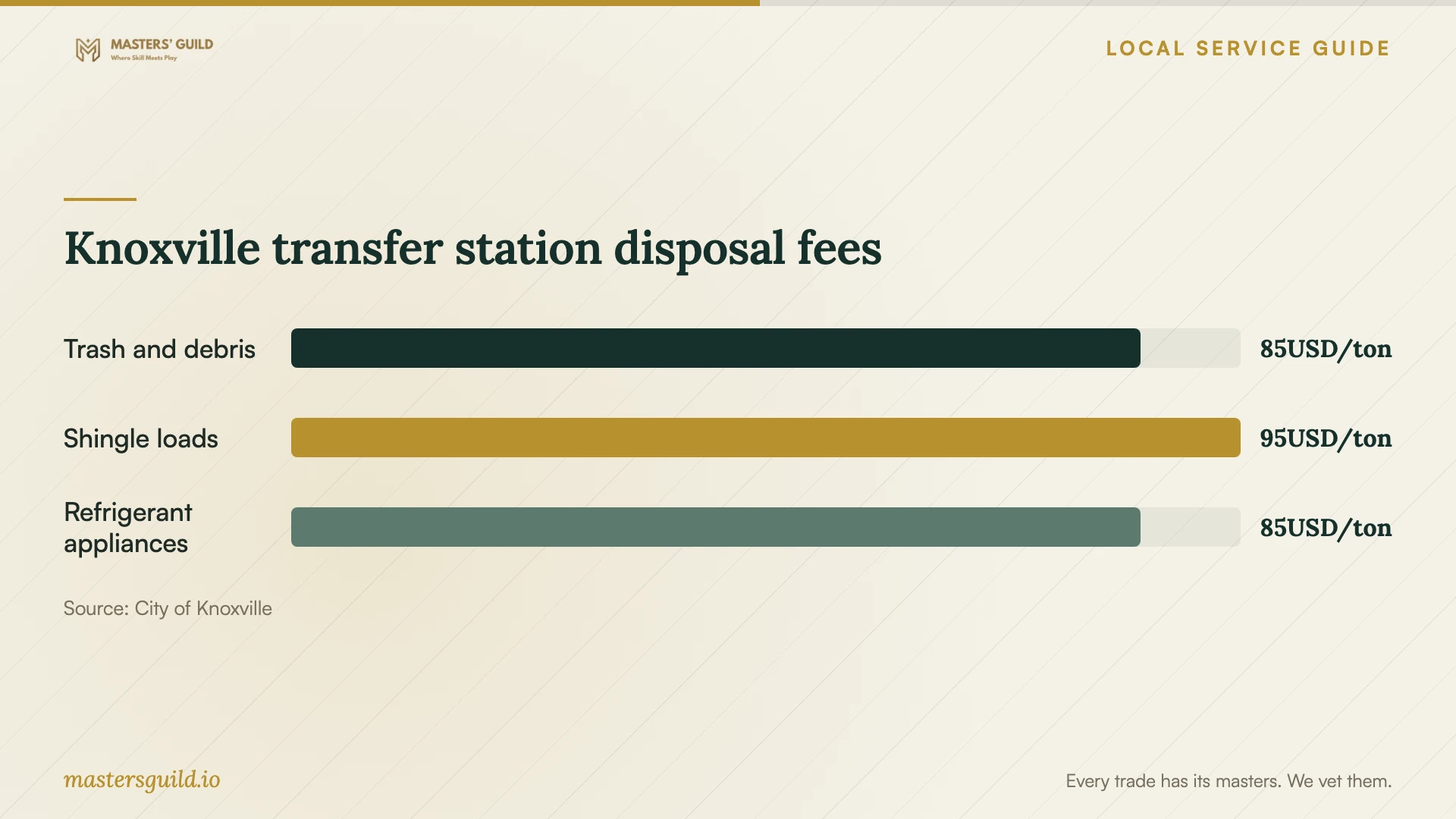
The city charges $85 per ton for garbage, construction, and demolition debris, and $95 per ton for shingles or loads mixed with shingles. It made those rates effective September 1, 2026. The transfer station lists refrigerant appliances at $85 per ton and accepts scrap metal and appliances without refrigerant at no charge. [1]
Use these fees to discuss the disposal portion of an offer. Ask the hauler to explain its charge for carrying and transporting scrap metal even when the destination accepts it without a disposal fee. The city fee schedule does not establish a full-service removal price, so compare written offers for the same items and access conditions. [1]
Identify shingles, insulation, masonry, and suspected asbestos before requesting a renovation-debris quote. The city rejects loose blown insulation, including bagged insulation, and limits rock, brick, concrete, or dirt to two wheelbarrows per vehicle trip. Ask the hauler to confirm an accepting destination before loading those materials. [1]
Separate chemicals, electronics, and recyclables
Set aside paint, fuel, cleaners, pesticides, and batteries for an item-by-item check. The city asks residents to bring accepted household hazardous waste to its dedicated facility rather than put it in the trash. Residents pay no drop-off fee for accepted household hazardous waste, but the facility excludes such waste in commercial or work vehicles. [2]
Check paint type before choosing a route. The household hazardous waste facility accepts oil-based paint within its limits and rejects latex paint. The city tells residents to solidify latex paint with an absorbent material and leave the cans open until dry before household-trash disposal. [2]
Identify electronics by type. The household hazardous waste facility accepts listed technology items, including computer systems and accessories, but excludes TVs from that stream. It limits computer systems to three per visit, with charges above that limit. The city lists TVs among items residents can take to the Solid Waste Facility for a fee. [2]
For ordinary recycling, separate flattened cardboard, accepted paper, metal cans, and accepted plastic containers. Bring clean, dry recyclables loose to the city bins; secure shredded paper in paper bags or envelopes. The city accepts brown, green, and clear glass at its four recycling centers. County convenience centers do not currently accept glass for recycling. [3]
Choose self-hauling or a crew
Choose self-hauling if you can load, transport, and unload with the help and equipment you have. At the transfer station, city employees cannot help unload, and visitors must unload within 30 minutes. The city rejects loads over 8,000 pounds. For an indoor cleanout, ask a crew to include carrying and agreed dismantling in its written scope. [1]
Request proof of insurance and ask how the crew will protect floors, doorframes, and the driveway. Mark items that must stay, clear the carrying route, and agree on an arrival window. After loading, walk through the work area with the crew and check the invoice against your agreed scope.
Knoxville transfer station disposal fees
Local details that affect your job
Free resident day excludes hired hauling
On the first Saturday of each month, unless a holiday closure applies, the city offers free disposal for City of Knoxville residents with proof of residence. It excludes county residents, commercial businesses, commercial vehicles or waste, dump trucks, trailers over 2,500 pounds gross weight, shingles, and brush. Each household gets one visit. Check your residency, vehicle, and materials before choosing this route. [1]
Plan a separate hazardous waste trip
The household hazardous waste facility at 1033 Elm Street limits residents to 20 gallons of oil-based paint, 10 gallons of other hazardous liquids, and 100 pounds of hazardous materials per day. It rejects containers larger than five gallons and household hazardous waste in commercial or work vehicles. Call 865-215-6710 to clarify your items and quantities before arranging transportation. [2]
Check hours and payment before self-hauling
The transfer station at 1033 Elm Street opens Monday, Tuesday, Thursday, and Friday from 7 a.m. to 3:45 p.m.; Wednesday from 7 a.m. to 11:45 a.m.; and Saturday from 8 a.m. to 11:45 a.m. It closes Sunday. Bring an accepted credit or debit card: the city accepts no cash and excludes some cards. Confirm closures and card acceptance with the scale house at 865-215-6700. [1]
Choose a route for your cleanout
| Your situation | Route to consider | Confirm before proceeding |
|---|---|---|
| Bulky items inside the home | Hire a crew for carrying and hauling | Include access, dismantling, and disposal in the written scope |
| Manageable accepted trash load | Self-haul to the transfer station | Unload within 30 minutes without city staff help |
| Eligible city household seeking free disposal | Check the first-Saturday resident program | Bring proof of residence; commercial vehicles and waste are excluded |
| Household chemicals | Arrange household hazardous waste disposal | Check accepted items and limits; commercial or work vehicles are excluded |
| Clean cardboard, containers, or qualifying glass | Use city recycling drop-off centers | Follow sorting rules; county convenience centers do not accept glass |
Your hiring checklist
- Photograph the full pile and identify bulky or unusual items.
- Describe stairs, narrow doors, parking, and carrying distance.
- Separate chemicals and confirm their disposal route before pickup.
- Request a written total with exclusions and separate charges.
- Ask for disposal destinations for trash, appliances, and renovation debris.
- Request proof of insurance and agree on property protection.
- Mark items to keep and approve price changes before loading.
Frequently Asked Questions
How much should I budget for a removal crew?
Get written offers for your actual pile and access conditions. The city publishes disposal fees, including $85 per ton for garbage and construction or demolition debris, but those figures do not establish a complete pickup price. Ask each hauler to include labor, transportation, disposal, and separate item charges. [1]
Can a hauler take my chemicals to the city facility?
Confirm a separate route before booking. The city rejects household hazardous waste in commercial or work vehicles. Keep those items separate and ask the household hazardous waste facility about an accepted transportation and disposal plan. [2]
Can I take several mattresses or tires in one trip?
The transfer station limits mattresses and tires to four of each per customer or business per day. Tell your hauler the quantities before requesting a quote, and ask it to confirm a destination and schedule for any excess. [1]
Where can I take glass from a cleanout?
The city accepts brown, green, and clear glass at its four recycling drop-off centers. It excludes window glass, windshields, and drinking glasses from those bins. Identify the glass type before choosing a destination. [3]
Sources and scope
This guide combines the sources below with practical planning guidance. Figures apply to the stated geography and period; request a written quote for your property.