
Local service guide
Gardening in Knoxville: Hiring and Planning
For Gardening in Knoxville, hire around a written list of beds and tasks: weeding, selective pruning, planting, mulching, and debris removal. Separate the initial cleanup from ongoing visits, and assign watering responsibility before planting. Before approving fertilizer or lime, arrange soil testing; UT Extension recommends testing before fertilizer applications to establish whether the soil needs added nutrients. [2]
Choose the work before choosing the visit schedule
Walk the garden with the person who will prepare the quote. Identify plants to retain, weeds to remove, and shrubs that need attention. Mark anything you cannot identify and ask the gardener to confirm it before removal. Describe the result you want, such as clearing a path edge or reopening a crowded planting bed, rather than requesting a general tidy-up.
Request separate scopes for the first cleanup and follow-up care. For recurring visits, name the tasks and agree on how the gardener will handle unfinished work. Ask whether the price covers removing debris, bringing materials, and cleaning paths afterward. Specify access through gates, parking arrangements, and a place for tools and deliveries.
Test planting areas before buying amendments
Ask the gardener to use soil results when proposing fertilizer or lime. UT Extension advises collecting separate samples from areas with different soils or previous management. Its guidance also separates vegetable and fruit areas from other planting areas, and acid-loving shrub borders from adjacent lawns. [2]
For a garden area with consistent soil and management, UT recommends mixing 10 to 15 equal subsamples collected to a depth of 6 inches. Ask the gardener to label each area and retain a copy of the submission information. That lets you connect each recommendation to the bed where you intend to use it. [2]
Fall sampling can support preparation for the next growing season. UT explains that gardeners often sample in fall to give amendments time to take effect. Treat testing, interpreting the results, purchasing amendments, and applying them as distinct parts of the quote, with someone responsible for each step. [2]
Investigate wet beds before replacing plants
Show the gardener where water collects and photograph those areas after rain. Ask for an assessment before approving replacement plants or drain installation. UT notes that drainage tiles and ditches can fail to help fine-textured soils where water moves too slowly toward them; effective drainage work requires detailed knowledge of the soil and site. [2]
Ask the gardener to explain the proposed remedy and whether you need a separate drainage assessment. UT identifies raised beds as an option where ditching and drainage tiles are unsuitable. For exposed soil, its guidance supports mulch or plant cover to reduce erosion. Agree on the treatment for each affected area before paying for a garden-wide intervention. [2]
Plan watering and material purchases
Assign watering duties before the gardener installs plants. Specify who checks moisture between visits, how they can access water, and who takes over during your absence. Ask for plant-specific care instructions and agree on how to report wilting or other concerns.
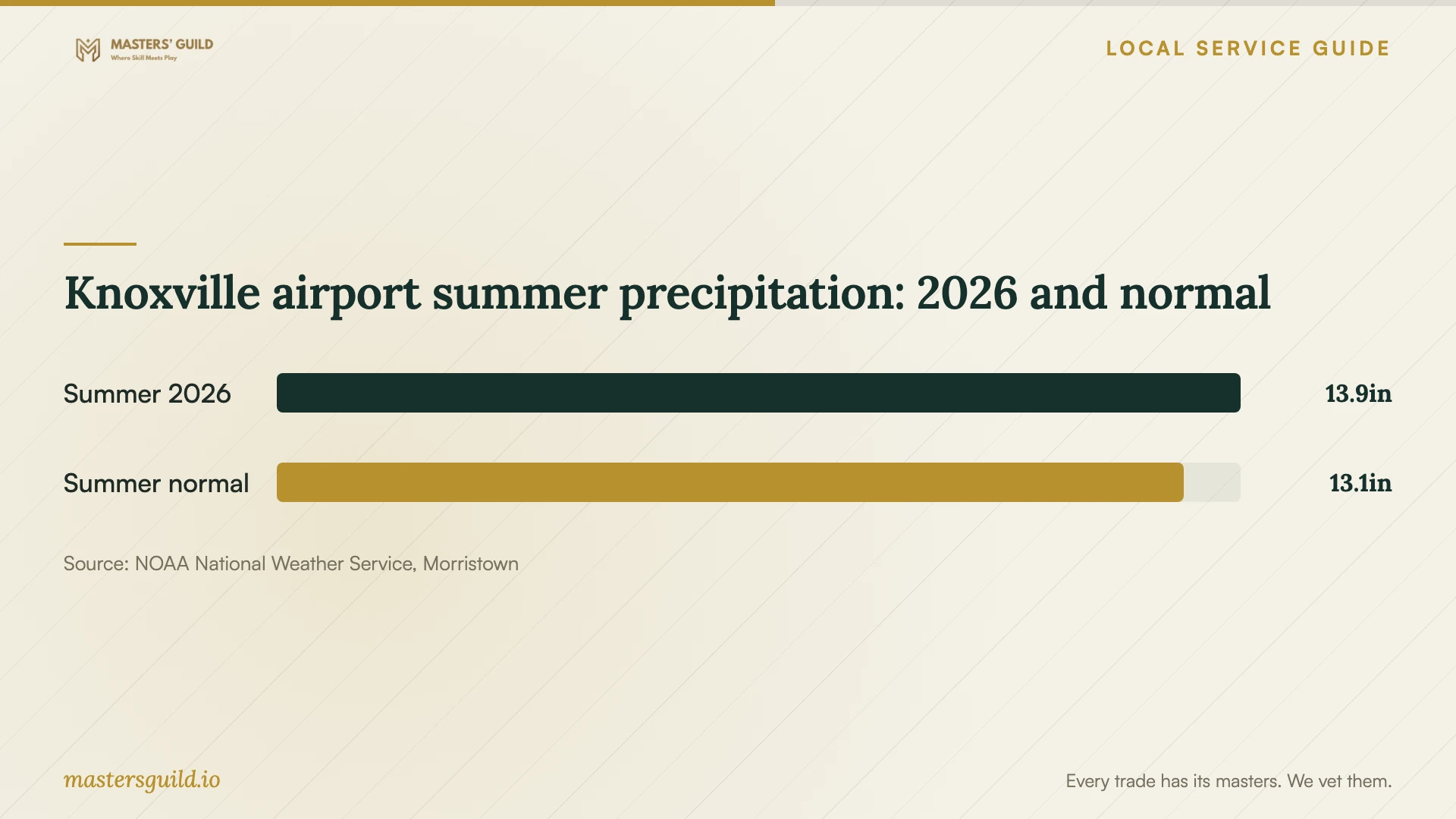
At Knoxville McGhee Tyson Airport, the National Weather Service recorded 37 days with highs of at least 90°F during June through August 2026, alongside 13.94 inches of seasonal precipitation. Those airport totals describe that summer, not the moisture available to an individual planting bed. Use them as a reason to discuss both heat and rainfall when arranging care. [3]
Before approving compost, ask who supplies it and what materials and process the producer uses. UT advises choosing a consistent-quality source free from weed seeds, pathogens, and damaging herbicide residues. Ask the gardener to specify the product and quantity in the quote, and require approval before substitutions. [2]
Knoxville airport summer precipitation: 2026 and normal
Local details that affect your job
Collect sample boxes locally before the preparation visit
Knox County Extension provides free soil sample boxes at its office and lists Farm South, Farmers Market, Knox Farmers’ Cooperatives, and Stanley’s Greenhouse as other pickup locations. The Extension office is at 400 W. Main Avenue, City-County Building, Suite 560. Arrange box pickup before the gardener’s sampling visit, and confirm laboratory and mailing charges as separate expenses. [1] [2]
Assign responsibility for mailing and results
Knox County Extension directs gardeners to mail collected samples to the Soil, Plant and Pest Center, 5201 Marchant Drive, Nashville, TN 37211-5112. UT’s statewide guidance calls for air-drying moist samples, using sample boxes rather than plastic bags, and including a Lawn and Garden Soil Submission Sheet. Decide whether you or the gardener will package and mail the samples, then review the results before authorizing amendments. [1] [2]
Match the garden problem to the scope
| Your situation | Scope to request | Confirm before work |
|---|---|---|
| Overgrown beds with plants you want to keep | Selective cleanup followed by a maintenance plan | Mark retained plants and agree on debris removal. |
| New planting or a proposed fertilizer treatment | Soil sampling and review before amendment purchases | Keep areas with different soils or management histories separate. |
| Persistent wet areas | Site and soil assessment before drainage installation | Ask whether water can move through the soil to the proposed drain. |
| Compost proposed for planting beds | Named compost source and application quantity | Ask about production materials, process, and quality. |
Your hiring checklist
- Photograph each bed and mark plants you want to retain.
- List cleanup tasks separately from recurring maintenance.
- Measure planting areas and describe gate or delivery access.
- Assign soil sampling, mailing, and results review.
- Request named materials, quantities, and approval for substitutions.
- Agree on debris removal and the condition of paths after work.
- Assign watering between visits and during absences.
- Confirm the price basis, spending limit, and approval process for extra work.
Frequently Asked Questions
How should I compare gardening quotes?
Give each gardener the same bed list and task description. Ask them to separate labor, materials, delivery, and disposal, and clarify whether hourly pricing refers to one worker or the crew. For an open-ended cleanup, set a spending limit and require approval before additional work.
Does Knox County offer free soil testing?
Knox County Extension states that soil sample boxes are free. UT’s soil guidance describes analysis fees that vary with the submission route. Confirm the current test and mailing charges before sending samples; the free-box offer does not establish free testing. [1] [2]
Can the gardener take one soil sample for the whole yard?
UT recommends composite samples only where soil and previous management are similar. Keep vegetable areas, acid-loving shrub borders, and visibly different soils separate. Ask the gardener to label samples by planting area so you can apply the resulting recommendations to the correct beds. [2]
Should a gardening visit include watering new plants?
Specify watering in the agreement and ask for instructions for the days between visits. Identify who checks moisture, who supplies water, and who covers absences. Agree on the ongoing care arrangement before approving plant purchases.
Sources and scope
This guide combines the sources below with practical planning guidance. Figures apply to the stated geography and period; request a written quote for your property.