
Local service guide
Knoxville duct cleaning: Hiring and Planning Guide
Arrange duct cleaning in Knoxville after an inspection shows substantial mold growth on hard surfaces, pests, or excessive debris in your heating and cooling system. Ask for a written whole-system scope and compare estimates before booking. EPA recommends cleaning as needed. If you want to address high bills or damaged ductwork, check KUB’s efficiency and weatherization resources before authorizing related repairs. [1] [2]
Decide whether cleaning addresses your problem
Ask the inspector to show you contamination inside the system. EPA identifies substantial visible mold on hard surfaces, vermin infestation, and excessive dust or debris as reasons to consider cleaning. Dust on a return grille does not establish those conditions. Photograph accessible areas and ask the provider to distinguish surface dust from deposits deeper in the ducts. [1]
For suspected mold, ask where moisture enters and who will correct it. EPA says an expert may need laboratory analysis to identify mold. Its guidance recommends replacement of wet or moldy duct insulation because cleaning cannot address it effectively. Request separate descriptions of moisture correction, material replacement, and cleaning so you can review each proposed task. [1]
Treat promises of allergy relief or lower energy bills with care. EPA’s duct-cleaning guidance, originally published in October 1997, reports no demonstrated prevention of health problems and little evidence of efficiency improvements from cleaning ducts alone. Discuss unexplained symptoms with your doctor. For comfort or utility-bill concerns, ask an HVAC technician to assess the system before buying a cleaning package. [1]
Compare matching scopes across written estimates
Get written estimates from at least three providers, as EPA recommends. Give each provider the same description of your concern and ask them to inspect the same areas. Require the total price, included components, exclusions, and approval process for additional work. Specify whether you want accessible register cleaning or inspection and cleaning of a contaminated heating and cooling system. [1]
EPA describes system cleaning as work that can include supply and return ducts, registers, coils, drain pans, the blower, and the air-handler housing. Ask which components the company will clean and whether another technician must handle any exclusions. Ask how workers will reach concealed sections, collect loosened debris, and seal and reinsulate access openings afterward. [1]
Ask about experience with your duct materials and protection for furnishings. EPA calls for outdoor vacuum exhaust or HEPA equipment when exhaust stays indoors, plus soft-bristled brushes for fiberglass duct board or fiberglass-lined ducts. Request references and evidence of liability insurance. EPA says it does not certify or endorse duct-cleaning companies; question any claim of EPA company certification. [1]
Separate the cleaning budget from repairs
Set your budget from an inspection and a written estimate for your home. Ask whether the total covers all agreed components, access work, cleanup, and any separately requested vent service. Compare complete scopes and require your approval before workers add charges. Keep the advertised starting price and the agreed finished-job price distinct when reviewing proposals.
Ask providers to price damaged-duct replacement, moisture correction, and other repairs separately from cleaning. For improvements intended to reduce energy use, review KUB’s resources before signing. KUB directs customers to TVA EnergyRight rebates for HVAC work, duct work, and insulation, plus free home energy assessments. KUB’s page does not identify duct cleaning as a rebate-covered service. [2]
Review filtration alongside cleaning
Ask your HVAC technician whether your filter fits its holder and whether your system can accommodate a higher-efficiency filter. EPA recommends regular replacement and preventing air from bypassing the filter. Its MERV guidance advises choosing MERV 13 or the highest rating the system fan and filter slot can accommodate when upgrading. Confirm compatibility before buying. [1] [3]
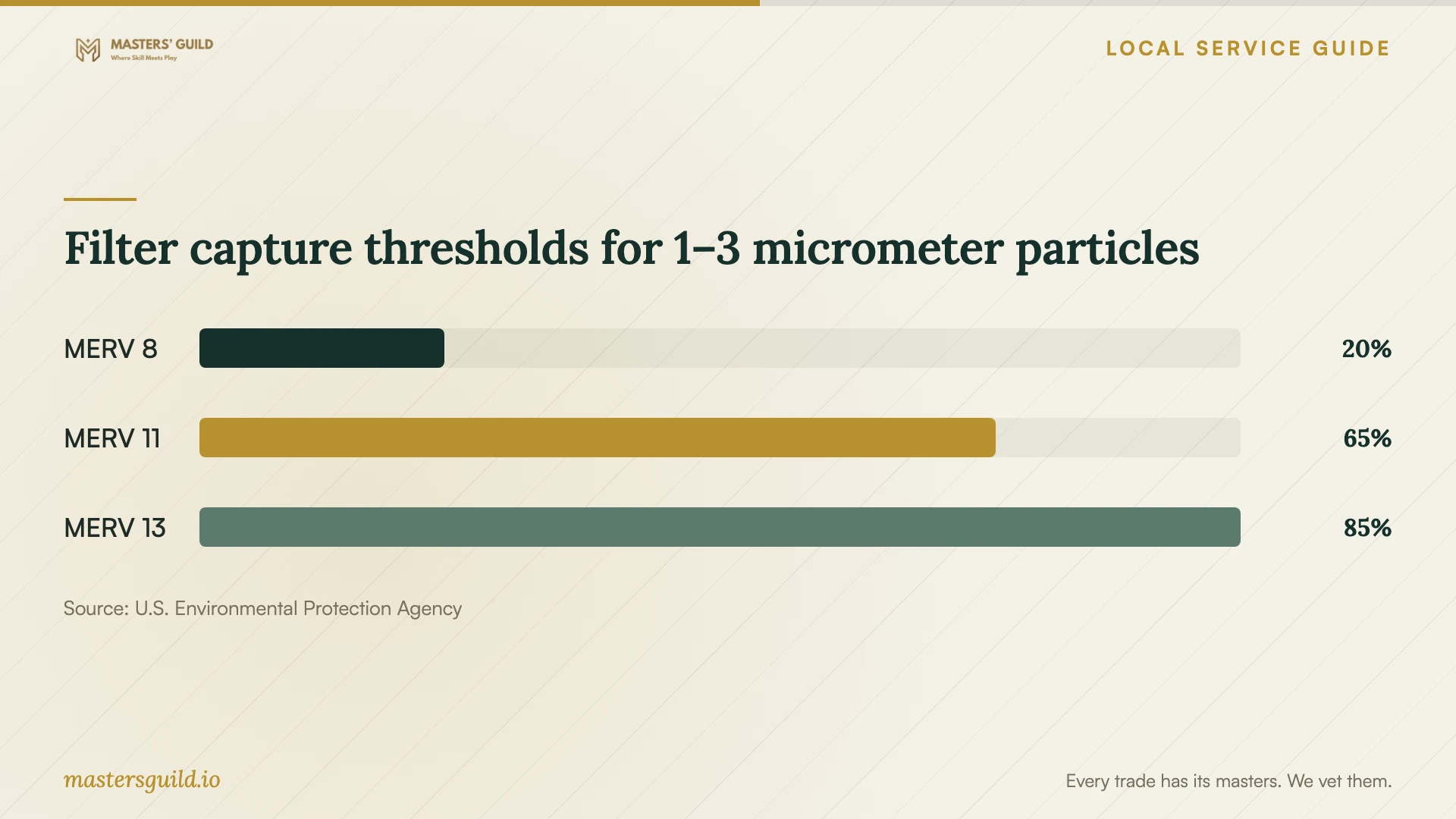
The chart compares EPA’s minimum average capture-efficiency thresholds for particles between 1 and 3 micrometers. EPA lists thresholds of at least 20 percent for MERV 8, 65 percent for MERV 11, and 85 percent for MERV 13. Use these reference thresholds to compare filtration ratings. They do not measure air quality in your home or establish benefits from duct cleaning. [3]
Prepare for the visit and inspect the result
Clear the agreed route to the air handler and registers. Tell the provider about fragile finishes, pets, and areas you cannot make accessible. Agree on expected work time and any interruptions. Before approving a chemical treatment, ask for the reason, product label, and precautions, including whether you and your pets should leave during application. [1]
Ask the provider to inspect for suspected asbestos-containing materials before disturbing insulation or register boots. EPA advises specialized handling by trained and equipped contractors. If the inspection raises a concern, pause the affected work and request a separate assessment rather than approving removal as an incidental cleaning task. [1]
At completion, ask workers to show the cleaned components and use photographs for concealed areas. EPA recommends a visual inspection and checks for secure registers, sealed access openings, and system operation in heating and cooling modes. Ask the provider to correct deficiencies before accepting the work. Keep the scope, photographs, and invoice together. [1]
Filter capture thresholds for 1–3 micrometer particles
Local details that affect your job
Use KUB’s assessment and rebate route before efficiency work
If you are a KUB customer considering duct repairs because of energy use, start with the utility’s Connect to Savings resources. KUB directs customers to TVA EnergyRight for free home energy assessments and rebates for energy-efficient HVAC work, duct work, and insulation. Ask which proposed improvement qualifies and what steps you must complete before work begins. Do not assume a cleaning invoice qualifies. [2]
Check weatherization assistance before paying for upgrades
KUB and TVA EnergyRight offer qualifying customers free weatherization and efficiency improvements that can include repaired or new HVAC units and insulation. If an inspection leads to a repair proposal you cannot afford, check program eligibility before authorizing the work. KUB’s page does not list application requirements or guarantee acceptance, and it does not identify duct cleaning as a covered service. [2]
Choose your next step from the inspection findings
| Finding or concern | Next step | Question to ask |
|---|---|---|
| Dust on return grilles only | Clean accessible grilles and review filter maintenance. | Can you show contamination beyond the grille? |
| Excessive debris or particles leaving supply registers | Request an inspection and a whole-system cleaning scope. | Which components contain debris and how will you clean them? |
| Wet or moldy duct insulation | Arrange moisture correction and replacement of affected insulation. | Who will correct the moisture source and replace the material? |
| Rodents or insects in ducts | Correct the infestation or entry cause before cleaning. | What must happen before your crew starts? |
| High bills with a proposed duct repair | Check KUB’s assessment and efficiency resources. | Does this repair qualify, and what must I do before work begins? |
Your hiring checklist
- Describe the problem you want the provider to investigate and photograph accessible areas.
- Ask the inspector to show the contamination and identify your duct materials.
- Compare written estimates with matching components, exclusions, and total prices.
- Require separate pricing and approval for repairs or chemical treatments.
- Check KUB program eligibility before authorizing related efficiency improvements.
- Agree on access, furniture protection, pet arrangements, and expected work time.
- Review completion photographs, access seals, register attachment, and system operation.
Frequently Asked Questions
How often should I schedule duct cleaning?
EPA recommends cleaning as needed rather than at a fixed interval. Ask for inspection evidence of substantial mold, pests, or excessive debris before agreeing to repeat service. Maintain filters and address moisture between visits. [1]
Can I clean dusty registers myself?
EPA says you can vacuum dusty return registers or remove and clean them. Ask a provider to inspect deeper contamination before commissioning whole-system work. Avoid disturbing suspected asbestos-containing materials. [1]
Should I approve a sanitizer or duct coating?
Ask for evidence of the problem, the proposed product label, and an explanation of why physical cleaning and moisture correction will not suffice. EPA’s duct-cleaning guidance cautions against chemical treatments and routine coatings. It states that no biocides are registered for fiberglass duct board or fiberglass-lined ducts; ask the provider to verify the proposed product’s permitted use for your materials. [1]
Can KUB help pay for the work?
KUB lists qualifying weatherization assistance and directs customers to EnergyRight efficiency rebates and assessments. Check eligibility for the specific repair or upgrade before authorizing it. KUB’s page does not confirm coverage for duct cleaning. [2]
Sources and scope
This guide combines the sources below with practical planning guidance. Figures apply to the stated geography and period; request a written quote for your property.