
Local service guide
Basement Remodeling in Knoxville, TN
Arrange Basement Remodeling in Knoxville by asking contractors to assess moisture, measure the usable space, and price a defined room layout before you choose finishes. Include radon testing in your preparation: Tennessee health guidance recommends testing homes and keeping basements dry. For a bathroom or sleeping room, ask the local codes office which requirements apply before approving the design. [1]
Define the rooms before requesting quotes
Give bidders a sketch showing the rooms you want, the area you intend to leave unfinished, and the equipment you need to reach for maintenance. Describe the intended use of each room. Ask the contractor to measure ceiling clearance beneath beams and ducts, review the stairs, and identify proposed changes to windows, plumbing, heating, and electrical service.
For sleeping space or a separate household living area, ask the codes office to review the proposed use before you buy windows or approve partitions. Tennessee's health department directs homeowners to their local codes office for area requirements. Request a written list of the approvals and inspections that apply to your address and scope. [1]
Investigate dampness before installing finishes
Show the contractor water stains, peeling coatings, musty areas, and photographs taken after rain. Ask for a diagnosis that distinguishes plumbing leaks, surface drainage, seepage, and indoor humidity. Tennessee health guidance recommends repairing leaks, maintaining gutters, and directing ground drainage away from the foundation. Ask the contractor to explain the proposed remedy before accepting a waterproofing allowance. [1]
Measure humidity during planning. The state advises reducing moisture when basement relative humidity often exceeds 50 percent and suggests considering a dehumidifier. Ask how you will drain and service that equipment after construction. Have the contractor document the moisture checks they propose before covering walls or installing flooring. [1]
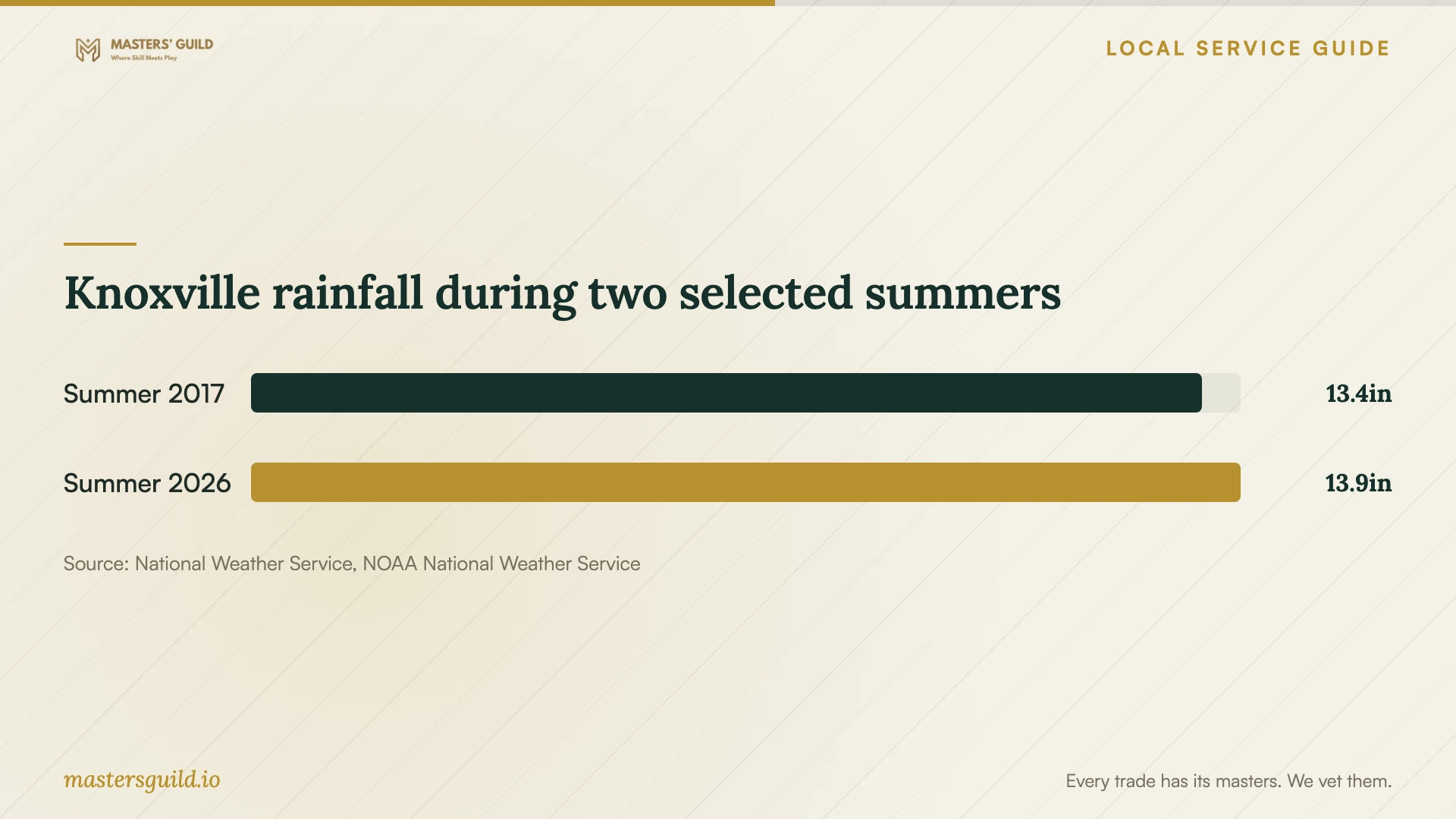
Use rainfall records as a reason to inspect your property after rain. The National Weather Service reported 13.39 inches of Knoxville summer precipitation in 2017 and 13.94 inches at McGhee Tyson Airport in summer 2026. Those selected seasons do not establish a trend or tell you whether your foundation leaks. [2] [3]
Plan air quality and demolition together
Test for radon before settling the layout and discuss the result with a qualified mitigation professional if needed. Tennessee health guidance recommends testing homes across the state and explains that location alone cannot predict an untested home's radon level. Ask how any proposed mitigation equipment would fit around finished rooms and storage. [1]
Ask the contractor to review appliance venting, bathroom exhaust, smoke and carbon monoxide alarms, stair lighting, and handrails. The state's basement guidance covers these safety measures and recommends venting dryers and fuel-burning appliances outdoors. Include the agreed work in the quote so you can compare complete scopes. [1]
Before demolition in an older home, discuss suspect materials. Tennessee health guidance identifies increased lead-paint risk in homes built before 1978 and notes that disturbing asbestos-containing materials can release hazardous fibers. Ask the contractor how they will assess materials before cutting, sanding, or removing them. [1]
Compare complete budgets and construction plans
Request separate prices for preparation, moisture repairs, demolition, framing, electrical work, plumbing, heating and ventilation, insulation, wall finishes, flooring, and cleanup. Identify fixtures and materials by specification or allowance. Ask bidders to explain exclusions and the written approval process for unexpected work.
Build your budget from property-specific quotes. Ask for optional prices for a bathroom, upgraded flooring, or built-in storage so you can reduce scope without obscuring essential repairs. Keep a separate reserve for unresolved conditions and agree on who can authorize its use.
Ask for a schedule tied to decisions and work stages: design approval, required authorizations, material delivery, concealed-work inspections, finishes, and final review. Specify access hours, dust containment, debris removal, and any expected utility interruptions. Before final payment, walk through the completed work, record remaining items, and collect applicable inspection records and equipment instructions.
Knoxville rainfall during two selected summers
Local details that affect your job
Use Knox County septic assistance for plumbing plans
Tennessee's health department identifies Knox County among counties that provide their own septic assistance services. If your home uses septic, contact that county service before approving basement bathroom or bedroom plans. Describe the existing home and proposed use, then ask which system records or review you need. Keep that answer with the contractor's scope. [1]
Separate household chemicals during basement clearing
State health guidance says Knox County residents can use permanent household hazardous waste collection sites year-round. Before the demolition crew arrives, separate stored chemicals from ordinary debris and confirm accepted materials and operating details with the collection site. Keep products in their original labeled containers and avoid mixing chemicals. [1]
Choose the next step before accepting a finishing quote
| Your situation | Next step | Ask the bidder to include |
|---|---|---|
| Water enters after rain | Investigate the moisture source before enclosing walls | A separate repair scope and proposed checks before covering |
| You want a basement bathroom | Confirm local requirements and contact county septic assistance if applicable | Plumbing scope, exhaust route, and approval responsibilities |
| You want a sleeping room | Describe the proposed use to the local codes office | A layout reflecting the office's applicable requirements |
| You have no radon result | Arrange testing as Tennessee health guidance recommends | Coordination with any needed mitigation work |
| You have stored household chemicals | Confirm Knox County collection arrangements before clearing | A debris plan that identifies your separate chemical disposal |
Your hiring checklist
- Prepare a room sketch and identify the intended use of each space.
- Photograph water stains and record what happens after rain.
- Request written moisture-repair recommendations before approving finishes.
- Record radon results and discuss any needed follow-up.
- Confirm applicable approvals with the codes office for your address.
- Ask who handles trade work, inspections, and documentation.
- Compare matching specifications, allowances, exclusions, and change procedures.
- Agree on access, dust control, chemical removal, and final walkthrough items.
Frequently Asked Questions
Can I finish a basement that smells musty?
Investigate the moisture source before approving finishes. Tennessee health guidance says you must fix moisture problems to prevent mold from returning and that painting over mold does not solve the problem. Ask the contractor to explain the repair and the checks they will complete before enclosure. [1]
Do I need a permit for my proposed rooms?
Confirm the requirements with the local codes office for your property. Tennessee health guidance directs homeowners there for area requirements. Describe the room uses and any structural, electrical, plumbing, or ventilation changes; ask which applications and inspections apply. [1]
How should I compare remodeling estimates?
Give each bidder the same room sketch and specifications. Compare preparation and repair work alongside finishes. Ask bidders to identify allowances, exclusions, inspection responsibilities, payment stages, and the procedure for approving changes.
Does the rainfall chart show that my basement needs waterproofing?
No. It compares reported precipitation during two selected summers in the Knoxville climate reporting area. It cannot diagnose water entry at your home. Ask a contractor to inspect your drainage, foundation, and evidence of leaks before recommending repairs. [2] [3]
Sources and scope
This guide combines the sources below with practical planning guidance. Figures apply to the stated geography and period; request a written quote for your property.