
Local service guide
Tile Setting in Kitchener: Plan the Work and Quote
Arrange Tile Setting in Kitchener by asking for a written scope that separates removal, surface preparation, installation and debris disposal. Have the installer inspect the existing floor or walls before you accept a firm price. The City lists tiling as finish work that does not need a building permit, but adding or moving plumbing fixtures requires one. Confirm that distinction before booking a bathroom renovation. [1]
Get a quote for the complete installation
Give each installer the room dimensions, photos, intended tile and a description of what you want removed. Ask them to measure during the site visit and identify any areas they cannot inspect until demolition. Request a written allowance or approval process for concealed repairs instead of accepting an undefined extra charge.
Ask for separate amounts for labour, tile, setting materials, preparation, removal and hauling. Confirm who buys the tile and handles shortages, damaged pieces or returns. Have the installer record the proposed pattern, grout colour, edge trim and transitions to adjoining floors. Compare those details alongside the total price.
Budget from measured project quotes, and keep disposal charges separate from installation costs. Ask whether the contractor includes loading, transport and disposal in the quoted amount.
Agree on preparation and shower details
Ask the installer to explain what they will install beneath the tile and how they will address the existing surface. For a floor, discuss finished height, door clearance and transitions. For a backsplash, mark outlet openings and the intended stopping points before work begins. Request approval of the layout before the installer starts setting tile.
For a shower, request a written description of the waterproofing system, drain connection, corners and penetrations. Ask who takes responsibility for each part of the assembly and what checks they will complete before covering it. Request photos of concealed work and the product care instructions at handover.
Ask for separate dates for installation completion and return to use. Have the installer base the schedule on the selected products and explain when you can walk on the floor, clean the grout or use the shower. If you have one bathroom, agree on fixture access and any interruption before demolition.
Set the demolition scope before removing finishes
Before removal, ask how the contractor will assess materials they may disturb. Ontario's asbestos guidance identifies floor tiles and drywall compound among materials that may contain asbestos. It explains that the regulation applies to contractors and workers on private residential projects, including where an owner exemption applies. [4]
Do not assume that an owner exemption settles the contractor's responsibilities. Ask who will arrange assessment of suspect materials, how they will handle findings and how a change in removal methods would affect the quote. Share any existing material reports before the contractor prices demolition. [4]
Agree on the route for carrying debris, protection for adjoining rooms, the cutting location and cleanup at the end of each workday. Put responsibility for hauling in writing. If you intend to take debris to a regional site yourself, check the applicable customer hours and vehicle access before loading. [2]
Check who will handle electrical work
If your tile project includes electrical work, such as an electric floor-heating connection, ask for the electrical business name and ECRA/ESA licence number. ESA says homeowners must hire a Licensed Electrical Contractor, or electricians working for that business, for home electrical work. Verify the business even when your renovation contractor arranges the subcontract. [3]
ESA requires its own electrical permit or notification, separate from a municipal building permit. Ask the Licensed Electrical Contractor to handle the necessary notification and provide the Certificate of Acceptance after ESA approval. Include electrical coordination in the schedule before agreeing to cover the floor assembly. [3]
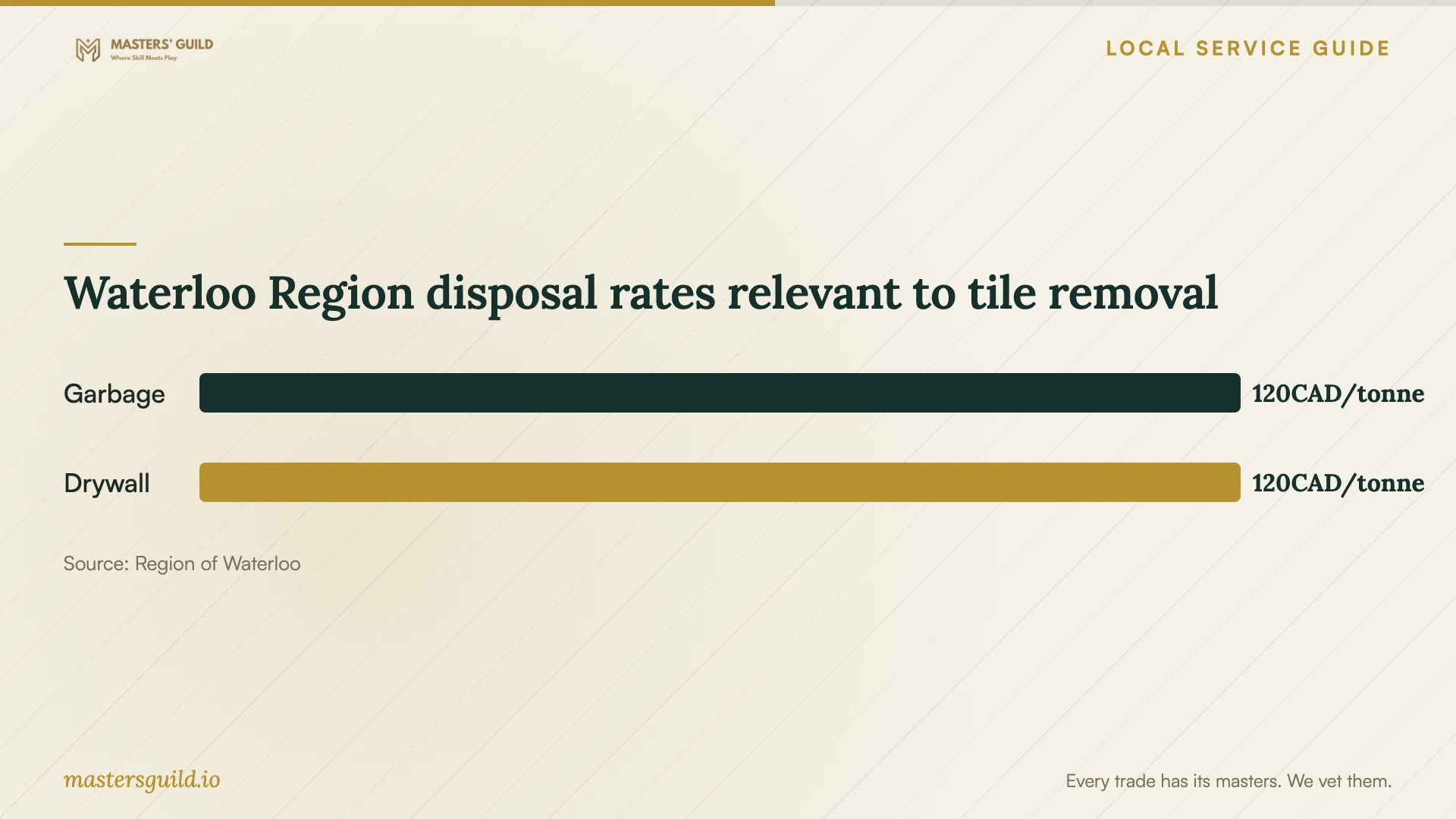
Waterloo Region disposal rates relevant to tile removal
Local details that affect your job
Kitchener permit checks depend on the surrounding work
The City lists tiling and replacement of a toilet, bathtub or sink in the same location among work that does not need a building permit. It lists adding or moving plumbing fixtures, removing load-bearing members and re-insulating walls, ceilings or floors among work that needs one. For a combined renovation, confirm the scope with the City at 519-741-2312 before setting the installation date. You can apply for a residential building permit through the City's online services tool or book an appointment to apply in person. [1]
Waterloo Region disposal rules affect removal arrangements
The Region accepts waste generated within Waterloo Region at its Waterloo and Cambridge waste management sites. It directs customers to sort ceramic tiles and cement wallboard as garbage. The Waterloo site is at 925 Erb Street West, with Gate 2 access limited by vehicle type and size; the Cambridge site is at 201 Savage Drive. Residential drop-off hours are Monday to Saturday, 7 a.m. to 6 p.m., excluding statutory and designated holidays. Commercial customers have different hours, so confirm the hauling arrangement with your contractor. [2]
Match your project to the next planning step
| Project scope | Relevant rule | Next step |
|---|---|---|
| Tile finish replacement | Kitchener lists tiling as work that does not need a building permit. | Confirm whether the quote includes any additional work that changes the permit position. |
| Bathroom with relocated fixtures | Kitchener requires a building permit for adding or moving plumbing fixtures. | Resolve the permit scope before scheduling installation. |
| Tile with electrical work | ESA requires a Licensed Electrical Contractor and a separate electrical notification or permit. | Verify the electrical business and assign responsibility for the paperwork. |
| Removal and hauling | Waterloo Region directs customers to dispose of ceramic tiles as garbage. | Ask whether the quote includes sorting, transport and disposal fees. |
Your hiring checklist
- Photograph the existing surfaces and identify everything you want removed or retained.
- Ask the installer to measure and document preparation work and concealed-work allowances.
- Approve tile layout, grout colour, trim and floor transitions in writing.
- Request a shower waterproofing scope and photos before the installer covers concealed work.
- Assign responsibility for permit checks, electrical coordination and any material assessment.
- Confirm protection, cutting location, debris hauling and final cleanup.
- Record return-to-use instructions, payment stages and the process for approving extras.
Frequently Asked Questions
Do I need a permit to replace bathroom tile?
Kitchener lists tiling as finish work that does not need a building permit. Check the whole renovation: adding or moving plumbing fixtures, removing load-bearing members or re-insulation can require a permit. [1]
Can the tile installer arrange my heated-floor electrical work?
Ask the installer who will perform the electrical work. ESA says only Licensed Electrical Contractors, or electricians employed by those businesses, can be hired for home electrical work. Verify the business licence and confirm responsibility for the ESA notification and acceptance documentation. [3]
Can I recycle the old ceramic tiles at a regional site?
Waterloo Region lists ceramic tiles and cement wallboard as non-recyclable and directs customers to dispose of them as garbage. Its sites charge a minimum fee of $15 per load. Ask whether your installer includes disposal in the removal price. [2]
What should I request before accepting the quote?
Request a measured scope, preparation details, tile layout, material responsibilities, debris removal, schedule and written approval process for extras. For shower work, add the proposed waterproofing assembly and handover records. Ask for proof of insurance and written warranty terms.
Sources and scope
This guide combines the sources below with practical planning guidance. Figures apply to the stated geography and period; request a written quote for your property.