
Local service guide
Roof Cleaning and Repair in Kitchener
Arrange Roof Cleaning and Repair in Kitchener by having a contractor assess your concerns before you approve a cleaning package. Get separate cleaning and repair prices, a material-compatible cleaning method, insurance documentation and plans for roof access and runoff. Kitchener exempts new shingles on an existing roof from a building permit; confirm the status of any broader work with the City. [1]
Choose the scope before comparing quotes
Describe what you want the contractor to investigate: staining, growth, missing material, an uneven area or indoor water marks. Include when you noticed the problem and whether it changes during rain. Keep your inspection to photographs from a safe location and leave roof access to the contractor.
Have the contractor separate cleaning from repairs in the estimate. For a repair recommendation, seek a photograph, its location, the proposed materials and an explanation of the work. If the contractor recommends replacement, have them explain why they would rule out a smaller repair.
For cleaning, get the product name and application method, plus confirmation that the contractor will follow your roofing manufacturer’s instructions. Include protection for plants, neighbouring property and outdoor equipment. Agree on the expected appearance after treatment and whether the price includes a return visit.
Check roof access and worker preparation
Identify who will perform the work and how the crew will reach the roof. Review current liability insurance documentation and have the contractor explain their fall protection arrangements for your property. Treat access and worker preparation as part of the proposal.
For construction projects requiring the specified fall protection systems, Ontario-approved working at heights training is the usual route. Ontario also recognizes WorkplaceNL-approved fall protection training with additional training requirements, and lists a limited exemption for workers employed directly by an automobile manufacturer or assembler. Have the repair contractor explain which requirements apply to the assigned crew. [3]
Ontario-approved working at heights training remains valid for three years, followed by refresher training. Employers must also ensure equipment-specific training and keep training records. Discuss how the employer verifies the crew’s records; assess their roofing experience separately. [3]
Compare the full price and control changes
Compare estimates for the same roof areas and tasks. Each proposal should identify cleaning or repair materials, gutter work, waste removal, taxes and exclusions. Clarify assessment charges, deposits, payment milestones and warranty terms before accepting an offer.
Set a written process for additional work: the contractor pauses, sends photographs and provides a price for your approval. Establish an approval limit if you agree to an allowance. For completion, specify photographs of repaired areas, debris removal, care instructions and a written explanation of unfinished items.
Keep the cleaning scope and repair warranty distinct. Confirm who will respond if you notice a leak after completion and what the contractor agrees to investigate or correct. Retain the accepted estimate, approved changes and completion photographs together.
Leave room for weather changes
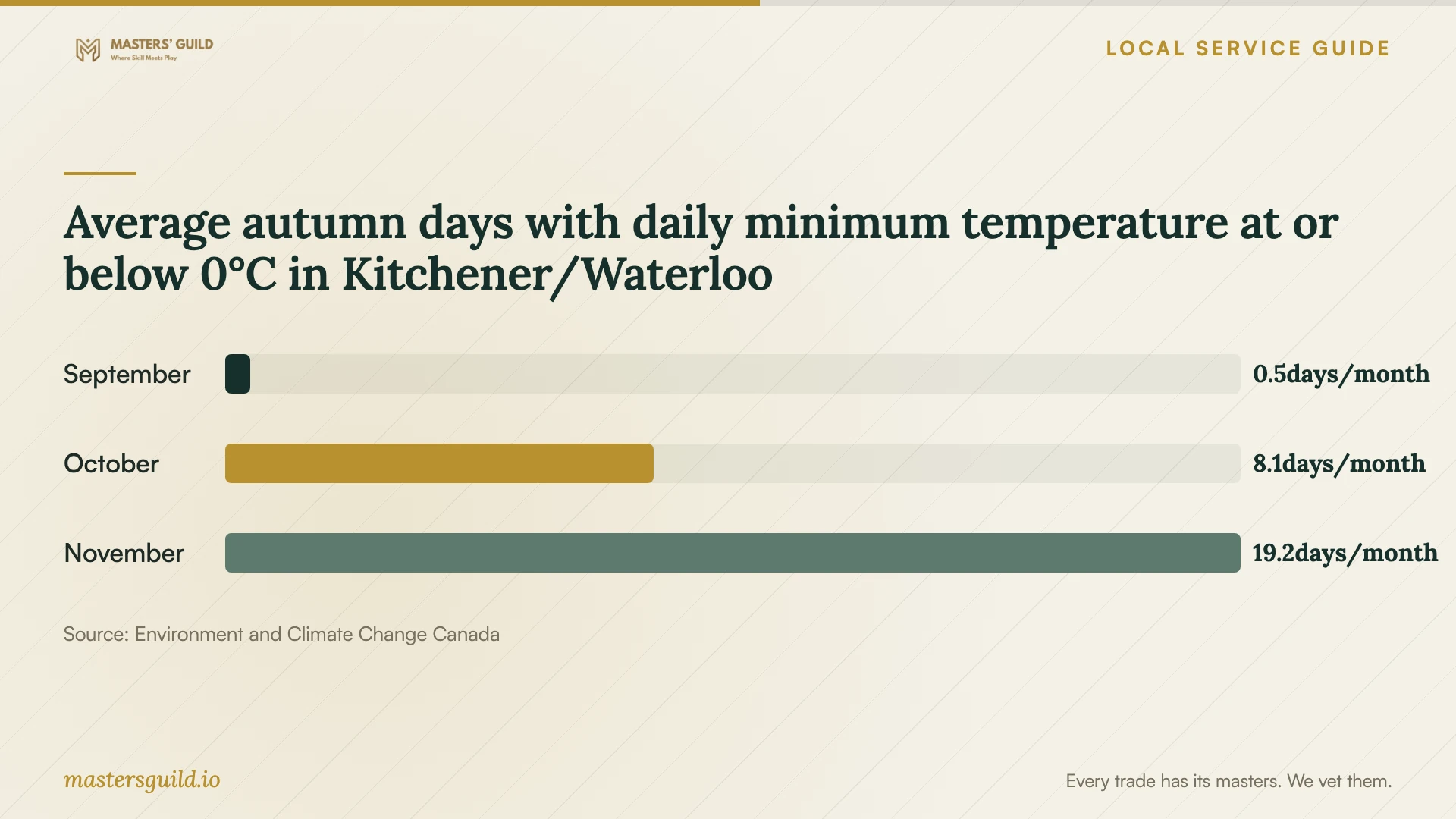
Have the contractor specify suitable conditions for roof access and the proposed products, along with a postponement policy. For autumn work, discuss minimum temperatures as well as daytime conditions. The Kitchener/Waterloo 1991–2020 normals report an average of 8.1 October days with a daily minimum air temperature at or below 0°C. [4]
Use the chart to plan scheduling flexibility, then check the forecast and product instructions with the contractor. Agree on how the crew will protect an opened repair if weather interrupts work. For an active leak, arrange a repair assessment and discuss temporary protection rather than tying the response to a cleaning appointment.
Average autumn days with daily minimum temperature at or below 0°C in Kitchener/Waterloo
Local details that affect your job
Resolve Kitchener permit questions before scheduling
Kitchener lists installing new shingles on an existing roof among projects that do not need a building permit. The City lists re-insulating ceilings and removing specified load-bearing members among projects that require one, and warns that its examples are incomplete. If your proposal includes work beyond shingles, describe the exact scope to Building staff at 519-741-2312. The City also lists 519-741-2433 for residential project questions. Agree with your contractor who will resolve the permit question before work starts. [1]
Plan runoff under Waterloo Region’s discharge rules
The Region of Waterloo regulates water and wastewater discharges into sanitary and storm sewer systems throughout the region. For cleaning at your property, have the contractor trace the downspout outlets and explain how the crew will collect or manage wash water. Confirm the disposal route and any permit requirements with the Region before work starts. Include the agreed handling method in the written scope before approving chemical treatment. [2]
Choose the next step for your roof
| Your situation | What to arrange | What to confirm |
|---|---|---|
| Staining or growth without a known leak | Assessment and a written cleaning proposal | Material-compatible method, expected finish and runoff handling |
| Active leak or visible damage | Repair assessment and a temporary protection discussion | Photographs, repair limits and approval before additional work |
| New shingles on an existing roof | A defined shingle replacement scope | Kitchener lists this work as permit-exempt; clarify the status of additional work |
| Proposed ceiling re-insulation or removal of load-bearing members | City permit discussion before scheduling | Kitchener lists these as examples of work requiring a permit |
Your hiring checklist
- Provide ground-level photos, roof material if known and a description of leaks or damage.
- Get separate cleaning and repair scopes with photographs supporting repair recommendations.
- Review insurance documentation, roof access arrangements and applicable training details.
- Resolve City permit questions about the proposed scope.
- Record the cleaning product, manufacturer instructions and runoff handling method.
- Agree on weather postponements and protection during interrupted repairs.
- Set approval limits for additional work and define completion records.
Frequently Asked Questions
Do I need a permit for roof repairs?
Kitchener lists installing new shingles on an existing roof as permit-exempt. For a broader repair, send Building staff the proposed scope and resolve the permit question before work begins. The City says its published examples are not a complete list. [1]
How should I set a budget?
Get a property-specific estimate after assessment. Compare the same areas and tasks, with separate cleaning, repair, gutter and disposal charges where applicable. Include taxes and agree on an approval limit for additional work before accepting the proposal.
Can the contractor send cleaning water into a storm drain?
Confirm the proposed route with the Region before approving it. Waterloo Region regulates sanitary and storm sewer discharges. Have the contractor document wash-water handling and confirm the disposal route and any permit requirements before work starts. [2]
Which safety training should I discuss with a repair contractor?
Have the contractor explain the construction-project and fall protection requirements that apply to your job. Ontario-approved working at heights training is the usual route; recognized WorkplaceNL training requires additional training, and applicable exemptions need consideration. Ontario also requires equipment-specific training. Confirm how the employer verifies the assigned crew’s records. [3]
Sources and scope
This guide combines the sources below with practical planning guidance. Figures apply to the stated geography and period; request a written quote for your property.