
Local service guide
Pest control in Kansas City, MO: Hiring Guide
To arrange Pest control in Kansas City, MO, start with an inspection and a written proposal identifying the pest, treatment areas, total charge, and follow-up terms. Verify the responsible applicator’s Missouri credentials and treatment category before booking. Missouri separates general structural pests from wood-destroying organisms, so match the credentials to the actual finding. Agree on household preparation and return instructions before work begins. [1]
Give the inspector a clear starting point
Record where you saw activity and when you first noticed it. Photograph insects or damage if you can do so without disturbing a nest or entering an unsafe space. Tell the inspector about previous treatments and identify the rooms, exterior areas, and outbuildings you want checked.
Have the inspector explain the identification and show you the evidence supporting treatment. Request a written scope that names the affected areas, proposed method, and any monitoring or repairs. If the identification remains uncertain, agree on the next inspection step before authorizing pesticide work.
Verify Missouri licensing for the proposed work
The Missouri Department of Agriculture describes certified commercial applicators as people authorized to use pesticides, supervise their use, or determine the need for them on another person’s land for compensation. Request the responsible applicator’s name, license number, current status, and categories, then confirm those details with the department. [1]
The department assigns general structural pest control to Category 7A, which excludes wood-destroying organisms. Category 7B covers wood-destroying organisms, including termites, carpenter ants, and powderpost beetles. Category 7C covers structural fumigants. Have the provider connect the proposed pest and method to the appropriate credentials. [1]
Missouri also licenses pesticide technicians for covered general-use work under direct supervision. The department requires their certified commercial supervisor to work for the same business, at the same business location, with matching categories. Confirm who will attend and who will supervise. Request current insurance documentation; the department requires evidence of financial responsibility when commercial applicators apply. [1]
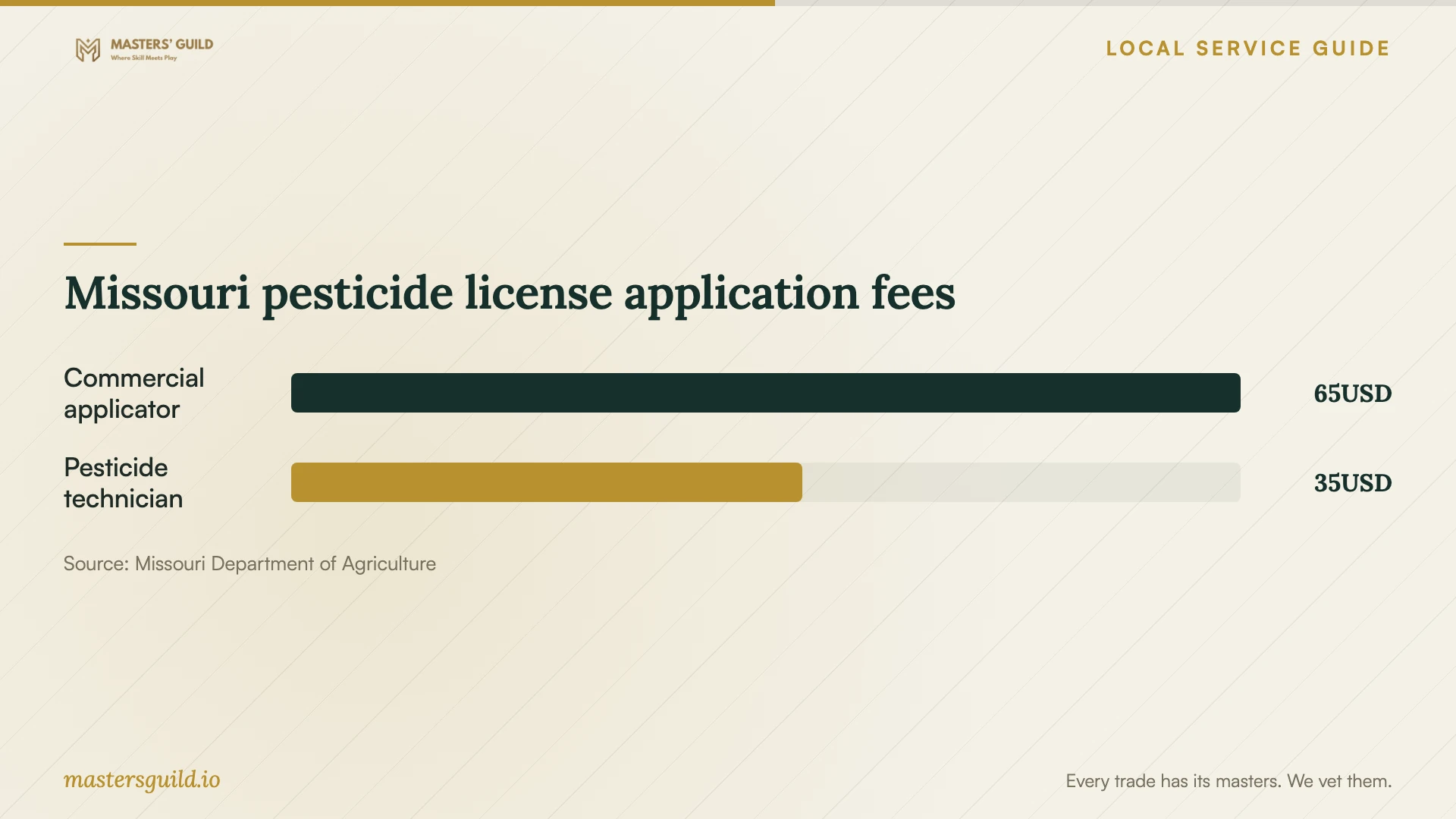
Use the license-fee chart only to understand the credentials you are checking. These are state application charges for providers. Obtain a separate household treatment quote and avoid using licensing fees to estimate your service bill. [1]
Compare complete quotes and household instructions
Give each provider the same inspection area and description of the problem. Request separate charges for inspection, initial treatment, monitoring, and optional maintenance. Have the provider identify included return visits and explain whether removal, entry-point repairs, taxes, or other charges change the total.
For recurring service, review the covered pests, visit schedule, exclusions, cancellation terms, and charges between appointments. Ask what finding would justify another application. For a warranty, get its duration, your maintenance obligations, and the remedy the company promises in writing.
Before the appointment, discuss children, pets, aquariums, and food preparation or growing areas. Obtain product names and the relevant label instructions from the provider. Agree on who will move belongings, provide access, and explain when household members and animals can return to treated areas.
Plan mosquito work around breeding sources
The Missouri Department of Conservation says mosquitoes need standing or quiet water to lay eggs and identifies eliminating breeding sites as the most effective control approach. Its examples include clogged gutters, tires, flowerpots, and ditches. Walk the property with the contractor and identify which sources you can remove. [2]
The National Weather Service’s Kansas City precipitation table covers 1889 to 2010 and lists higher monthly averages for May and June than for January. Treat that historical comparison as background for discussing rain-related water collection. It does not establish present mosquito activity or a treatment schedule. [3]
For water that remains, have the contractor explain the proposed management approach and your responsibilities between visits. Before buying repeat applications, request a reason for the treatment areas and frequency. Agree on how the provider will handle weather-related appointment changes.
Missouri pesticide license application fees
Local details that affect your job
Check Missouri authorization across the state line
For a Missouri property, request Missouri credentials from a Kansas-based provider. The Missouri Department of Agriculture has a reciprocal agreement with Kansas covering all categories, but applicants must complete Missouri’s application process. Confirm that step rather than relying on a Kansas credential. [1]
Treat carpenter-ant credentials as a separate check
If the inspector identifies carpenter ants, confirm Category 7B coverage before approving pesticide treatment. The Missouri Department of Agriculture includes carpenter ants under Termite Pest Control and excludes wood-destroying organisms from general structural Category 7A. Have the provider revise a general pest proposal if its scope does not address that finding. [1]
Act within Missouri’s pesticide complaint window
The Missouri Department of Agriculture says you may file a possible-misuse complaint within thirty days after the alleged pesticide impact. Record the date and observations and retain the application paperwork. The department reviews reports to decide whether investigation is warranted. It does not determine property-loss amounts or order compensation. [1]
Match the finding to your approval check
| Proposed work | Missouri category or inspection focus | Your next step |
|---|---|---|
| General structural pests | Category 7A excludes wood-destroying organisms. | Confirm the pest identification and covered areas. |
| Termites or carpenter ants | Category 7B includes these wood-destroying organisms. | Confirm coverage and request a specific treatment scope. |
| Structural fumigation | Category 7C covers structural fumigants. | Get preparation and return instructions before scheduling. |
| Mosquito management | Missouri conservation guidance emphasizes removing breeding sites. | Agree on standing-water removal and management of remaining sources. |
Your hiring checklist
- Prepare photos, sighting dates, affected locations, and previous treatment records.
- Confirm the attending worker’s credentials and the responsible applicator’s treatment categories.
- Get the identification, treatment areas, and proposed method in writing.
- Compare the full charge, included returns, exclusions, and cancellation terms.
- Obtain household preparation, pet precautions, and return instructions.
- Keep the proposal, application paperwork, invoice, and follow-up instructions together.
Frequently Asked Questions
Can a Kansas-based company work at my Missouri home?
Check its Missouri credentials. The Missouri Department of Agriculture offers Kansas reciprocity through an application process; confirm the provider has completed that process and holds the categories needed for your treatment. [1]
Does the worker at my home have to be a certified applicator?
Missouri permits licensed pesticide technicians to perform covered general-use work under direct supervision. The department requires a certified commercial supervisor from the same business and location with matching categories. Have the company identify the worker and supervisor. [1]
How should I choose between one visit and recurring service?
Have the inspector explain the purpose of each proposed visit and how they will assess progress. Compare the defined treatment and follow-up scope with the recurring plan’s schedule, exclusions, and cancellation terms before deciding.
Do the chart fees indicate what my treatment will cost?
The Missouri Department of Agriculture publishes these amounts as license application fees. Request a separate service quote covering your inspection, treatment, and follow-up work. [1]
Sources and scope
This guide combines the sources below with practical planning guidance. Figures apply to the stated geography and period; request a written quote for your property.