
Local service guide
Mold Removal in Kansas City, MO: Hiring and Planning
Arrange Mold Removal in Kansas City, MO by defining the moisture repair, cleanup, and any rebuilding in a written scope. Missouri health officials say visible mold usually does not require sampling. If cleanup includes regulated repairs, verify the appropriate Kansas City contractor credentials before approving that work. [1] [3]
Define the moisture problem before approving cleanup
Tell the contractor where you see growth, when you noticed it, and whether it followed rain, fixture use, or another water event. Missouri’s health department describes indoor mold growth as a symptom of a water problem. Have the contractor identify the suspected source and name who will repair it. [1]
Separate cleanable surfaces from materials that need removal. Missouri recommends scrubbing mold from hard surfaces with detergent and water, then drying them. It advises discarding porous items that did not dry promptly and show mold or water damage. Clean and dry affected surfaces before painting or caulking. [1]
For suspected damage behind a ceiling or wall, agree on the investigation before authorizing demolition. Specify the initial opening, photographs you expect, and who can approve additional removal. Require a revised scope and price before the crew extends the work.
Decide what testing would change
Missouri health officials say sampling is unnecessary in most cases with visible mold. They also state that sampling does not assess health risk and that Missouri and federal laws set no healthy or unhealthy mold exposure limits. Have anyone proposing samples explain the decision those results would inform. [1]
Look beyond a claim that a tester is licensed. Missouri says neither the state nor the federal government certifies mold testers, and a business license does not establish required training for this activity. Request the individual’s training details, relevant project experience, and a sample report. [1]
Agree on completion criteria before work starts. Request photographs, a record of source repairs, and an explanation of how the contractor will check the cleaned area. For proposed testing after cleanup, establish who interprets the results, who pays, and how you would authorize further work.
Check credentials for the repair work
Kansas City requires appropriate contractor licenses before contractors pull permits or perform regulated work within the city. Its categories include plumbing, electrical, mechanical, demolition, and residential building work. Identify which categories apply to the proposed repairs rather than assuming the cleanup company covers each trade. [3]
Kansas City’s process distinguishes a business license, a Certificate of Qualification for the qualified individual or supervisor, and the business’s contractor license. The city uses CompassKC for qualification and contractor-license applications. Have repair bidders identify the responsible business and qualified person. [3]
Discuss scope-specific licensing and permit questions with City Planning & Development’s Permits Division at 816-513-1500, extension 1, option 2. Describe the actual work, including any wall opening, framing replacement, or pipe repair. Assign responsibility for applications and inspections in your agreement. [3]
Compare the full price and a workable schedule
Request separate amounts for investigation, cleanup, material removal, disposal, moisture repair, and reconstruction. Have each bidder identify exclusions and allowances. Compare the same scope, and resolve who will handle any work outside the cleanup contract.
Set a written process for hidden damage and extra charges. Include protection for adjacent rooms, handling belongings, debris removal, and completion records. Tie payment stages to defined work, and distinguish the cleanup date from the date you expect to use the repaired room.
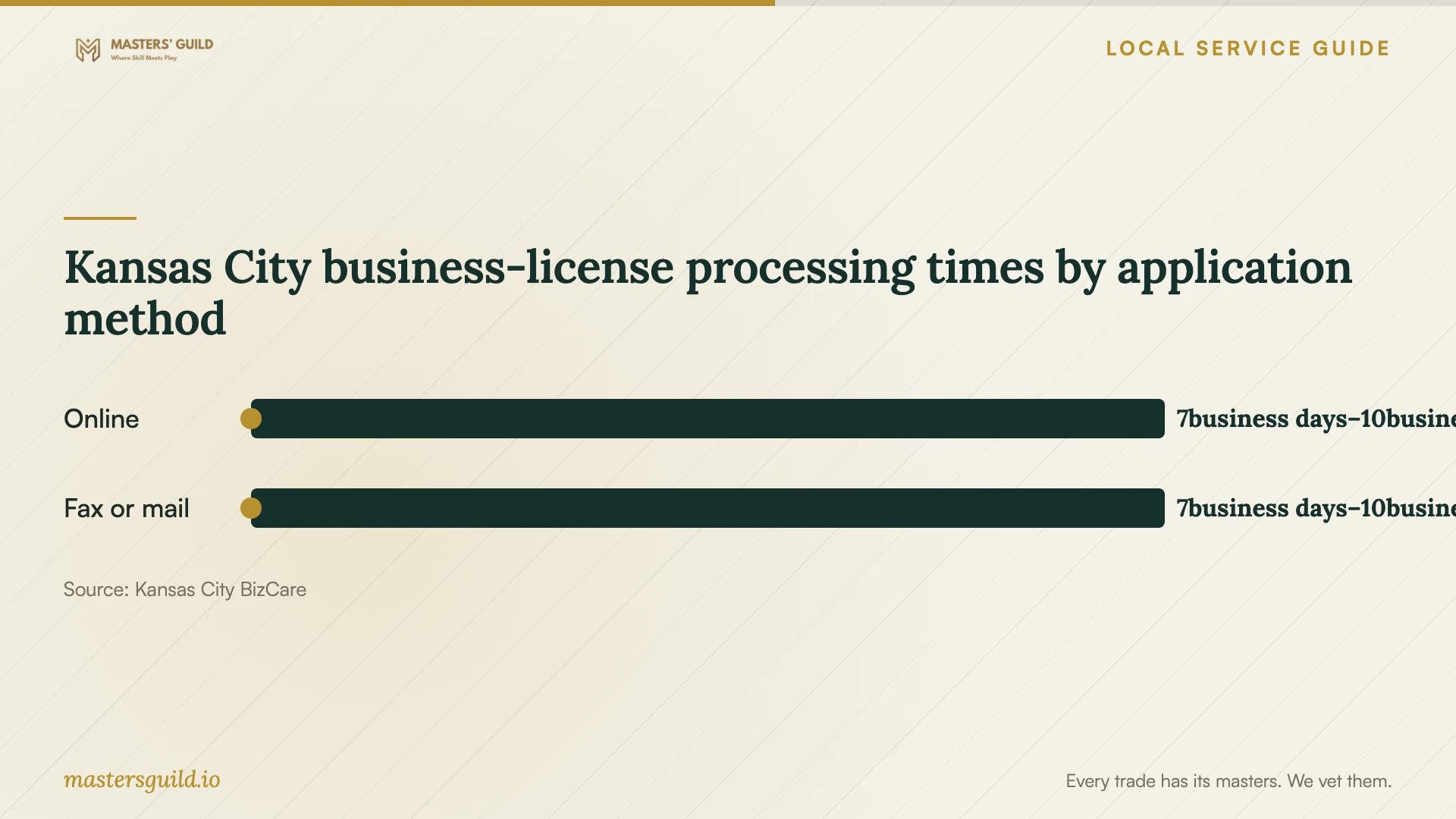
For an established repair contractor, verify current credentials before choosing a start date. If a bidder is still obtaining credentials, request its remaining steps. Kansas City publishes business-license processing times, shown below, but those times cover only that part of the licensing process. [3]
For suspected rain-related entry, provide dates and photographs from your own property. The National Weather Service’s supplied Kansas City precipitation table covers 1889 through 2010. Use that historical record as background, and base the repair discussion on where and when water entered your home. [2]
Prepare the home and document completion
Missouri recommends drying wet items within 24 to 48 hours. Tell the contractor when wetting occurred and what drying you attempted. Disclose sewage backup or floodwater before discussing salvage; state guidance says affected items should probably be discarded. [1]
Agree on room access, belongings you should move, and the route for debris removal. Missouri describes plastic sheeting to isolate a localized affected area and bagging discarded items before carrying them through the home as ways to limit spore spread. Have the contractor explain the proposed precautions. [1]
Keep the final scope, photographs, repair records, and warranty terms together. Check the repaired location after the event that first revealed the problem, such as rainfall or fixture use. Report renewed dampness to the contractor responsible for the moisture repair.
Kansas City business-license processing times by application method
Local details that affect your job
Missouri testing credentials require scrutiny
Missouri does not require training standards for someone to become a business-licensed mold tester. Before buying an inspection package, request the tester’s training details and a reason for each sample. Do not treat a business license as evidence of mold-testing competence. [1]
Kansas City separates business and trade qualifications
For regulated repair work, Kansas City’s licensing process includes a business license, an individual Certificate of Qualification, and a contractor license for the business. Qualification and contractor-license applicants use CompassKC. Check both the company and responsible qualified person when comparing repair bids. [3]
Choose the next step for your situation
| Situation | Next step | Question to ask |
|---|---|---|
| Visible mold with a known leak | Plan cleanup alongside leak repair; Missouri says visible growth usually does not require sampling. | Who repairs the leak, and which materials will you clean or remove? |
| A proposal starts with sampling | Request a reason for testing; Missouri says sampling does not assess health risk. | What decision would the result change? |
| Cleanup includes regulated repairs | Verify applicable Kansas City credentials and discuss permit requirements with the city. | Which business and qualified person will handle each repair? |
| Porous items show mold after remaining wet | Discuss disposal; Missouri advises discarding affected porous items that did not dry promptly. | Which items do you propose to discard, and why? |
Your hiring checklist
- Photograph visible growth and water damage before the inspection.
- Record the leak history and previous cleanup attempts.
- Identify who will investigate and repair the moisture source.
- Request a purpose and separate charge for each proposed test.
- Identify repair subcontractors and responsible qualified individuals.
- Compare inclusions, exclusions, and procedures for approving hidden damage.
- Agree on access, debris removal, completion records, and payment stages.
Frequently Asked Questions
Do I need to identify black mold before arranging cleanup?
Missouri health officials say cleanup methods remain the same regardless of mold type and that many common molds are black. Focus the inspection on moisture and affected materials. Consult a healthcare provider about symptoms you suspect relate to exposure. [1]
Can I clean a hard surface myself?
Missouri describes cleaning hard surfaces with detergent and water, followed by drying. Its precautions include gloves, goggles without ventilation holes, and a properly fitted NIOSH N-95 respirator. Consult a specialist if you are unsure how to clean an item. [1]
Does mold cleanup require a city building permit?
Kansas City’s cited guidance requires appropriate licenses for regulated work but does not establish a blanket permit rule for mold cleanup. Describe the proposed removal and repairs to the Permits Division and ask which permits and credentials apply. [3]
How should I evaluate a warranty?
Request written terms explaining what the contractor will correct, how to report recurrence, and which moisture conditions or repair exclusions affect coverage. Identify who handles a return visit when another contractor performs the leak repair.
Sources and scope
This guide combines the sources below with practical planning guidance. Figures apply to the stated geography and period; request a written quote for your property.