
Local service guide
Gardening in Kansas City, MO: Hiring and Planning
Gardening in Kansas City, MO starts with a clear scope: identify the beds, list the tasks, and request a written quote covering labor, materials, debris removal, and watering responsibilities. Separate cleanup and planting from pesticide treatments. Before approving treatment, ask who will apply it and which Missouri credentials cover the work. [1]
Define the work before comparing quotes
Walk through the garden and identify what you want to keep, remove, plant, or maintain. Send photographs and approximate bed dimensions. Mark plants you want retained, including dormant plants whose location you know. Ask the gardener to check with you before removing an unidentified plant.
Request separate prices for the initial cleanup and recurring care. For each visit, agree on the tasks, spending limit, and finish condition. Specify whether cleanup includes roots, loose leaves, edging, and removal of cut material. Decide where the gardener may leave debris if you want to compost it yourself.
For hourly work, clarify whether the rate covers one worker or a crew and whether travel counts. Ask for plants, mulch, delivery, and disposal as separate quote items. Before approving purchases, record plant names, sizes, quantities, substitution rules, and any replacement terms.
Check pesticide credentials before treatment
Missouri’s Department of Agriculture describes certified commercial applicators as people authorized to use, supervise use of, or determine the need for pesticides on another person’s land for compensation. Category 3 covers ornamental trees, shrubs, flowers, and turf, excluding fumigants. Ask which credential and category cover the proposed work. [1]
A technician may perform certain treatments under supervision. Missouri requires pesticide technicians working with general-use pesticides in ornamental and turf pest control to hold a license and remain under a certified commercial applicator’s direct supervision. Both must work for the same business, from the same business location, with matching category coverage. [1]
Request the target pest, proposed product, treatment area, and label instructions for returning to the garden. Point out edible crops and areas you want excluded. If you prefer hand weeding, put that preference in the scope. Request proof of liability insurance and identify any subcontractor before approving treatment.
Include soil testing in bed renovation
Before approving fertilizer or lime purchases, consider including soil sampling and a review of the results. MU Extension says you can sample throughout the year and identifies the period between crops as ideal for garden soil. It warns that heavy spring demand at its laboratory and county offices can delay results. [2]
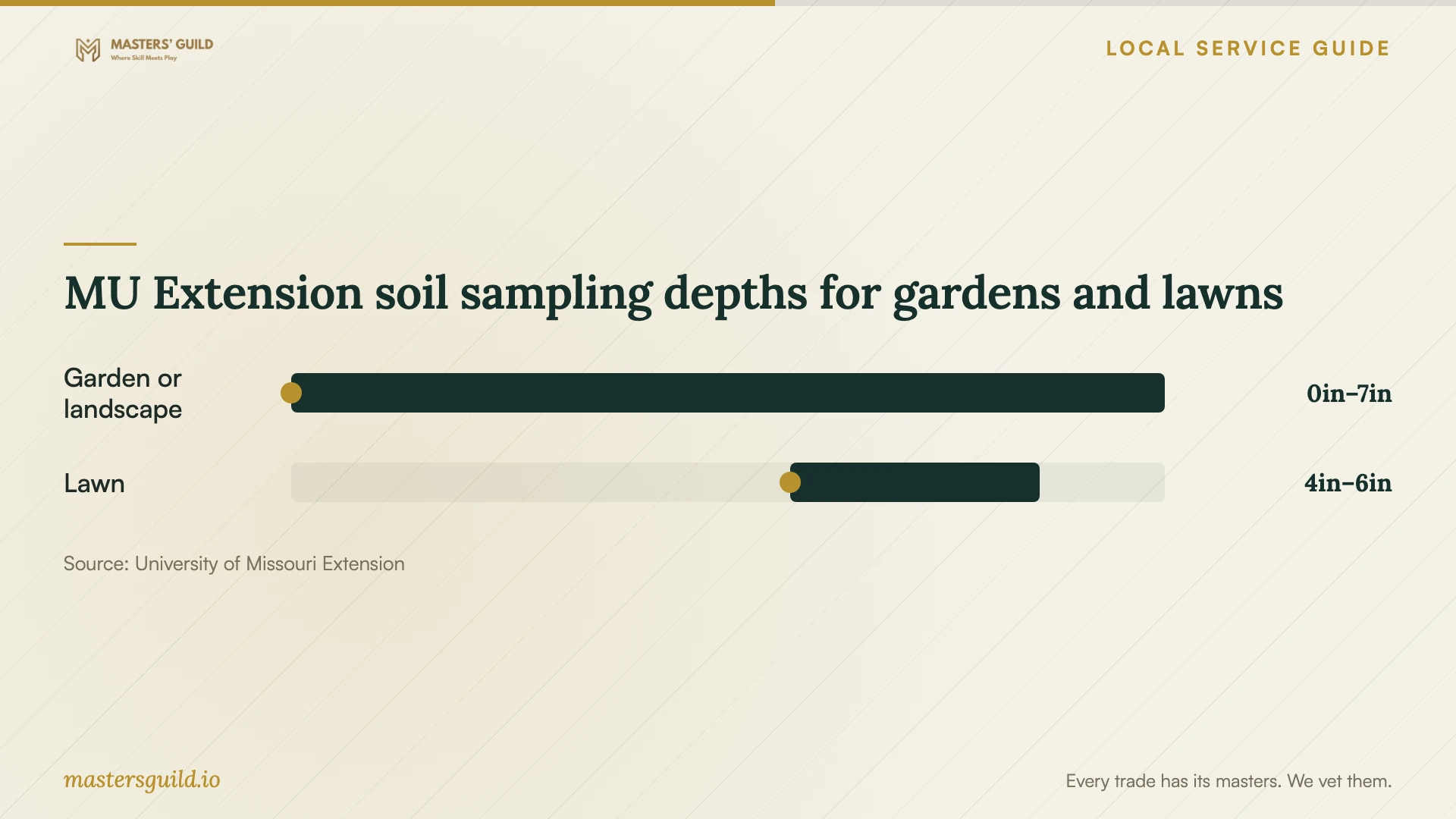
For garden or landscape soil, MU Extension specifies 8 to 10 cores taken from 0 to 7 inches deep. It directs users to sample uniform areas, keep areas with known soil differences separate, mix samples in a clean plastic pail, and retain one pint. Ask the gardener to label each sampled area and share the recommendations before ordering amendments. [2]
Tell the gardener what you intend to grow. MU Extension offers recommendations for annual flowers and vegetables. For an individual plant, it instructs users to select other on the horticulture form and write the plant’s name. Include collection, submission, and results review in the quote if you want the gardener to handle the process. [2]
Set watering and weather responsibilities
Choose who will water between visits. Show the gardener the water connection, explain access limits, and request written care instructions for new planting. Agree how you will report wilting or standing water and who can approve a change in the care plan.
The National Weather Service’s Kansas City precipitation table covers 1889 through 2010 and lists different monthly totals across years. Treat that record as historical context when discussing flexible scheduling. It does not establish current conditions or how much water your beds need. [3]
Ask how the gardener will notify you of a weather delay, arrange a replacement visit, and handle tasks left unfinished. Before work starts, agree where deliveries may go and whether the crew can reach the beds without crossing areas you want protected.
MU Extension soil sampling depths for gardens and lawns
Local details that affect your job
Check Missouri authorization for a Kansas contractor
For pesticide work at your Missouri address, request the applicable Missouri credential from a contractor based across the state line. Missouri’s reciprocity agreement includes Kansas in all categories. Applicants must still follow Missouri’s application process, including asking their state department of agriculture to submit a reciprocal form to the Missouri Department of Agriculture. A Kansas certificate alone does not document completion of that process. [1]
Add soil sampling to an autumn cleanup
For a fall visit, consider collecting samples before buying next season’s amendments. MU Extension’s Missouri guidance recommends fall or winter sampling for planning time and notes possible spring delays. Ask for separate samples where beds differ in soil characteristics, slope, or fertilizer and manure history. This gives you a defined testing task to include in the cleanup quote. [2]
Choose the scope to request
| Your situation | Scope to request | Before approving |
|---|---|---|
| An overgrown bed needs clearing | A cleanup with identified plants retained | Mark plants to keep and specify debris removal. |
| You want ongoing upkeep | A recurring task list and visit budget | Agree on access, watering, and authorization for extra work. |
| You plan to renovate beds | Soil sampling and an amendment plan | Follow MU Extension’s garden sampling guidance and review results before purchases. |
| The gardener proposes pesticide treatment | A named applicator and treatment plan | Check applicable Missouri credentials and Category 3 coverage for ornamental and turf work. |
Your hiring checklist
- Send photographs, approximate bed dimensions, and a list of requested tasks.
- Mark plants to keep and areas to leave untouched.
- Separate initial cleanup pricing from recurring maintenance.
- Confirm labor basis, materials, delivery, disposal, and approval for extra work.
- Request insurance documentation and identify subcontractors.
- Check applicable Missouri pesticide credentials before approving treatment.
- Name the person responsible for watering and agree on weather rescheduling.
- Record plant selections, substitutions, and any replacement terms.
Frequently Asked Questions
How should I compare gardening prices?
Give each gardener the same task list and request itemized labor, materials, delivery, and disposal. Clarify crew size, minimum charges, and the spending limit. Compare cleanup and recurring care as separate scopes, and ask what would trigger an additional charge.
Does a Kansas pesticide credential cover work here?
Request Missouri authorization. Missouri accepts reciprocity applications from Kansas, but applicants must complete the Missouri process. That includes requesting that their state department of agriculture submit a reciprocal form to the Missouri Department of Agriculture. [1]
Should I wait until spring for soil testing?
MU Extension says you can sample throughout the year. It recommends fall or winter sampling to allow planning time and warns that spring demand can delay results. For garden soil, it recommends sampling between crops so you can address fertilizer and lime needs before the next season. [2]
What should I prepare before the first visit?
Clear an access route, secure pets, mark plants to retain, and identify the water connection. Point out standing water or plant damage you have noticed. Confirm where materials may go and whether the gardener will remove debris or leave it in an agreed location.
Sources and scope
This guide combines the sources below with practical planning guidance. Figures apply to the stated geography and period; request a written quote for your property.