
Local service guide
Door and Window Repair in Kansas City, MO
Arrange Door and Window Repair in Kansas City, MO by having a contractor identify the faulty component and quote the proposed repair before you approve replacement. Describe the operating, glass, locking, or water-entry problem and agree on temporary protection if needed. For paid work that disturbs paint in pre-1978 housing, check applicable EPA renovation certification. Settle any testing method before work begins because Missouri restricts who can collect paint-chip samples. [1] [2]
Identify the fault and define the scope
Give the contractor photographs of the entire opening and close views of the problem. Photograph both sides from safe positions. Describe whether the door catches, the latch misses, the window will not stay open, or you see water during rain. For moisture on glass, explain whether you can wipe it away or cannot reach it.
Have the contractor explain the proposed component work. For a door, discuss hinges, latch alignment, threshold, and frame. For a window, establish whether the quote covers glass, operating hardware, sash, or the complete unit. If the contractor recommends replacement, get a written explanation and a separate repair option where they consider one suitable.
EPA says replacing a pane or fixing a broken window balancer does not constitute window replacement. The contractor must still assess whether the repair qualifies as minor repair and maintenance under the renovation rule. EPA explains that removing painted glazing during glass replacement can disturb paint. [3]
Plan paint disturbance before work starts
EPA generally requires certification for firms paid to disturb paint in pre-1978 housing. Its Renovation, Repair and Painting rule includes education, training, firm certification, and work-practice requirements. For covered work, obtain the firm's certification information and identify the renovator responsible for the job. [1]
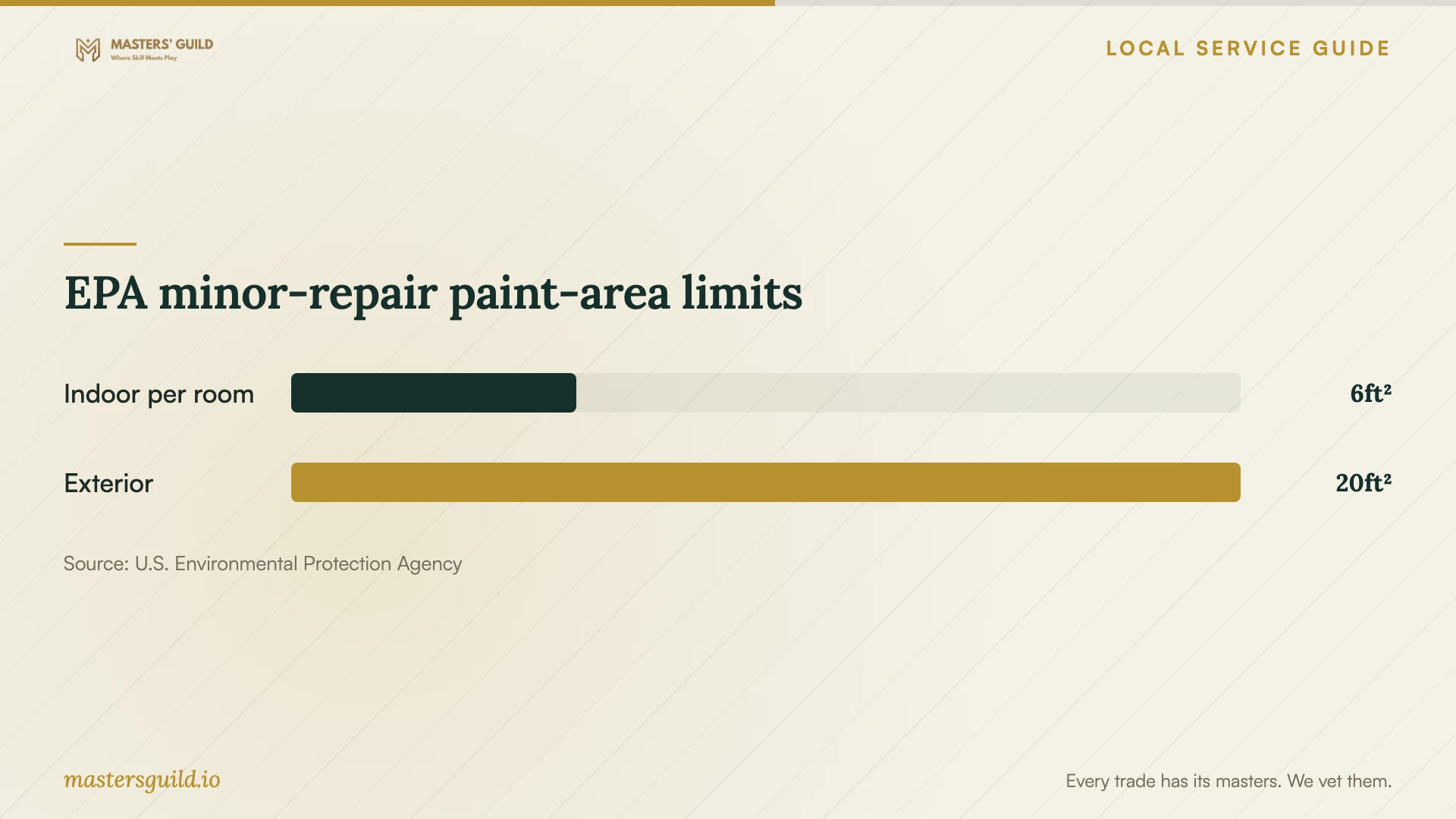
EPA's minor-repair exception includes paint-area limits of six square feet per room indoors and 20 square feet outdoors, with other conditions. Window replacement and demolition of painted surfaces do not qualify for this area exception. For removal of a component, EPA directs contractors to use the component's surface area when calculating indoor disturbance. [1] [3]
EPA does not require paint testing under this rule. Without documentation that affected paint is not lead-based, contractors must apply the requirements to covered work. Have the estimate state whether the contractor proposes testing or will follow applicable lead-safe requirements without testing. Use the Missouri sampling and credential distinctions below to review that plan. [1]
Compare complete estimates
Use an itemized estimate to compare the same work between contractors. Include the proposed part or glass specification, removal, disposal, access equipment, protection, cleanup, trim, and finishing. Establish who will handle painting or other work outside the repair contractor's scope.
Separate confirmed charges from allowances. Agree on what happens if the contractor discovers damage after removing a component: how they will document it, price the additional work, and obtain your approval. If diagnosis requires a paid visit, settle the inspection charge and what you receive from that visit.
Obtain insurance documentation and written warranty terms. Clarify who handles a faulty supplied part, who covers a return visit, and whether the contractor warrants the repair work. Compare repair and replacement options using the total scope and the explanation of what each option addresses.
Arrange access, weather protection, and completion
Agree on inspection, measurement, ordering, and installation dates. Tell the contractor about broken glass or an opening that will not lock when arranging the visit. Discuss temporary protection and whether workers will leave the opening secure between visits.
The National Weather Service publishes a Kansas City precipitation table covering 1889 to 2010. Treat that historical coverage as background, rather than a forecast for your appointment. For exterior sealing or water-entry work, have the contractor check the appointment forecast and the chosen product's application and curing instructions, then agree on a weather contingency. [4]
Clear furniture and coverings as the contractor directs. Establish the entry route, material storage area, and boundaries for children and pets. At completion, operate the opening with the contractor, check the latch and lock, review finishing and cleanup, and retain the parts and warranty information. For water entry, agree on how the contractor will evaluate the result and handle follow-up.
EPA minor-repair paint-area limits
Local details that affect your job
Missouri restricts renovation paint-chip sampling
Missouri DHSS requires a licensed lead-based paint inspector or risk assessor to collect paint-chip samples for renovation projects. EPA renovator certification alone does not authorize that sampling in Missouri. DHSS says alternative testing options under the federal renovation rule remain available to certified renovators. If your contractor proposes laboratory paint-chip testing, identify the person collecting the samples and verify the Missouri license before approving that step. [2]
Match Missouri credentials to repair or abatement
Missouri DHSS distinguishes incidental paint disturbance during remodeling or maintenance from work intended to abate lead hazards. It does not require state lead-abatement licensing for incidental disturbance, although EPA renovation certification can apply. For intended lead abatement, DHSS requires a licensed lead-abatement contractor. Have the contractor identify the project's purpose in writing so you can check the credential for that scope. Treat abatement and repair as separate quote items if the proposal includes both. [1] [2]
Resolve the scope before approving work
| Proposed work | Rule or distinction | Planning step |
|---|---|---|
| Pane or window-balancer repair | EPA distinguishes this from window replacement; paint disturbance can still trigger coverage. | Have the contractor assess the actual disturbance and minor-repair conditions. |
| Covered window replacement in pre-1978 housing | EPA excludes window replacement from the minor-repair area exception. | Verify applicable firm certification and agree on protection and cleanup. |
| Renovation paint-chip sampling in Missouri | DHSS requires a licensed lead inspector or risk assessor. | Identify the sampler and verify the Missouri license. |
| Intentional lead abatement in Missouri | DHSS requires a licensed lead-abatement contractor. | Confirm the abatement purpose and obtain the appropriate credential. |
Your hiring checklist
- Photograph the opening and damaged components from safe positions.
- Describe operating problems, water entry, and immediate security concerns.
- Share the construction year and existing paint-test documentation.
- Confirm the components the contractor will retain, repair, and replace.
- Agree on testing, protection, cleanup, and the people responsible.
- Review inspection charges, specifications, allowances, and finishing.
- Confirm parts timing, temporary protection, and approval for added work.
- Operate the repaired opening and retain written warranty information.
Frequently Asked Questions
Does replacing glass require replacing the whole window?
Have the contractor inspect the opening and explain the proposed scope. EPA distinguishes pane replacement from window replacement for its renovation rule, but that distinction does not establish whether a glass-only repair suits your particular opening. [3]
Does a small painted repair qualify for an EPA exception?
The contractor must assess the full scope. EPA lists minor-repair paint-area limits and other conditions, and excludes window replacement and painted-surface demolition from the area exception. Removing a component requires considering its surface area in the indoor calculation. [1] [3]
How should I budget without a verified local price range?
Get itemized quotes after inspection. Compare the same components, access, testing, protection, disposal, finishing, and warranty. Agree on inspection charges and approval of additional work so you understand the amount you authorize and the circumstances that could change it.
Sources and scope
This guide combines the sources below with practical planning guidance. Figures apply to the stated geography and period; request a written quote for your property.