
Local service guide
Data Recovery and Backup in Kansas City, MO
For Data Recovery and backup in Kansas City, MO, choose a provider around the work you need: recovering files from damaged storage, restoring an existing backup, or building a tested backup plan. Before handing over equipment, agree on diagnostic charges, spending limits, data custody, and which files you will check before accepting the result. For suspected ransomware, ask for incident response and recovery together; CISA recommends isolating affected systems and restoring critical services on a clean network. [1]
Choose the right recovery scope
Start your inquiry with the device type, symptoms, last successful access, and the files your business needs first. Tell the provider about previous recovery attempts and whether you have another copy. For clicking, liquid-damaged, or unrecognized storage, stop experimenting and ask a recovery specialist how to transport it. Avoid authorizing formatting, repair utilities, or operating-system reinstallation before agreeing on a recovery approach.
Ask who will perform the diagnosis and where. A nearby handoff address does not answer whether that provider will perform the work there. Request the destination of any shipment, the subcontractor’s role, and a record of equipment transfers. For encrypted devices, ask how the technician will receive and protect the recovery key.
For ransom notes or suspected malicious encryption, disconnect affected devices from the network and contact your incident-response lead. CISA recommends network isolation first and powering down only when disconnection is not possible, because shutdown loses evidence held in volatile memory. Use a phone or another separate communication method to coordinate. [1]
Get a quote with acceptance terms
Request a written diagnostic fee, an approval point before further work, and a maximum authorized spend. Ask whether the quote includes shipping, replacement media, encrypted delivery, and return of the original device. If the provider offers a no-recovery fee policy, ask how it defines success and which charges still apply.
Name the folders, date ranges, and applications that matter. Ask whether you can inspect a file list and open representative recovered files before accepting the job. For accounting or customer-management systems, include an application-level check with the person who uses the system. Agree on the deadline for checking results and the provider’s deletion date for working copies.
Separate the first update from the completion deadline. Ask when diagnosis will start, when you will receive findings, and what an expedited service charge buys. Request a staged return if a small set of files would let staff resume essential work before the full recovery finishes.
Specify a backup you can restore
Tell the backup provider how much recent work you could afford to lose and how long you could operate without each system. Ask for separate recovery plans for files, applications, and the equipment needed to run them. Include account access, software licenses, and encryption-key custody in the handover documents.
CISA recommends offline, encrypted copies of critical data and regular disaster-recovery tests. Ask the provider to explain which copy remains inaccessible to a compromised production account, who can delete it, and how you would obtain it if the provider became unavailable. CISA also recommends putting third-party security requirements into contracts. [1]
Make a restore demonstration part of acceptance. Choose representative files and a critical application, restore them to an agreed destination, and have staff check usability. Record the backup date used, the steps taken, and who will receive failure alerts. Set a schedule for future tests and assign someone in your business to review the results.
Plan recovery around power and access
For premises served by Evergy, check the outage map before arranging an urgent visit or equipment drop-off. The utility lets you search an address and inspect outage details, including a cause when identified and crew status. Confirm that the proposed recovery site has power and connectivity before traveling. [2]
Evergy says major outage or storm conditions can prevent it from giving an estimated restoration time. Ask the backup provider to plan a controlled shutdown and an alternate restore location without relying on a promised utility restoration hour. Define which equipment needs battery support and have the provider document the intended shutdown procedure. [3]
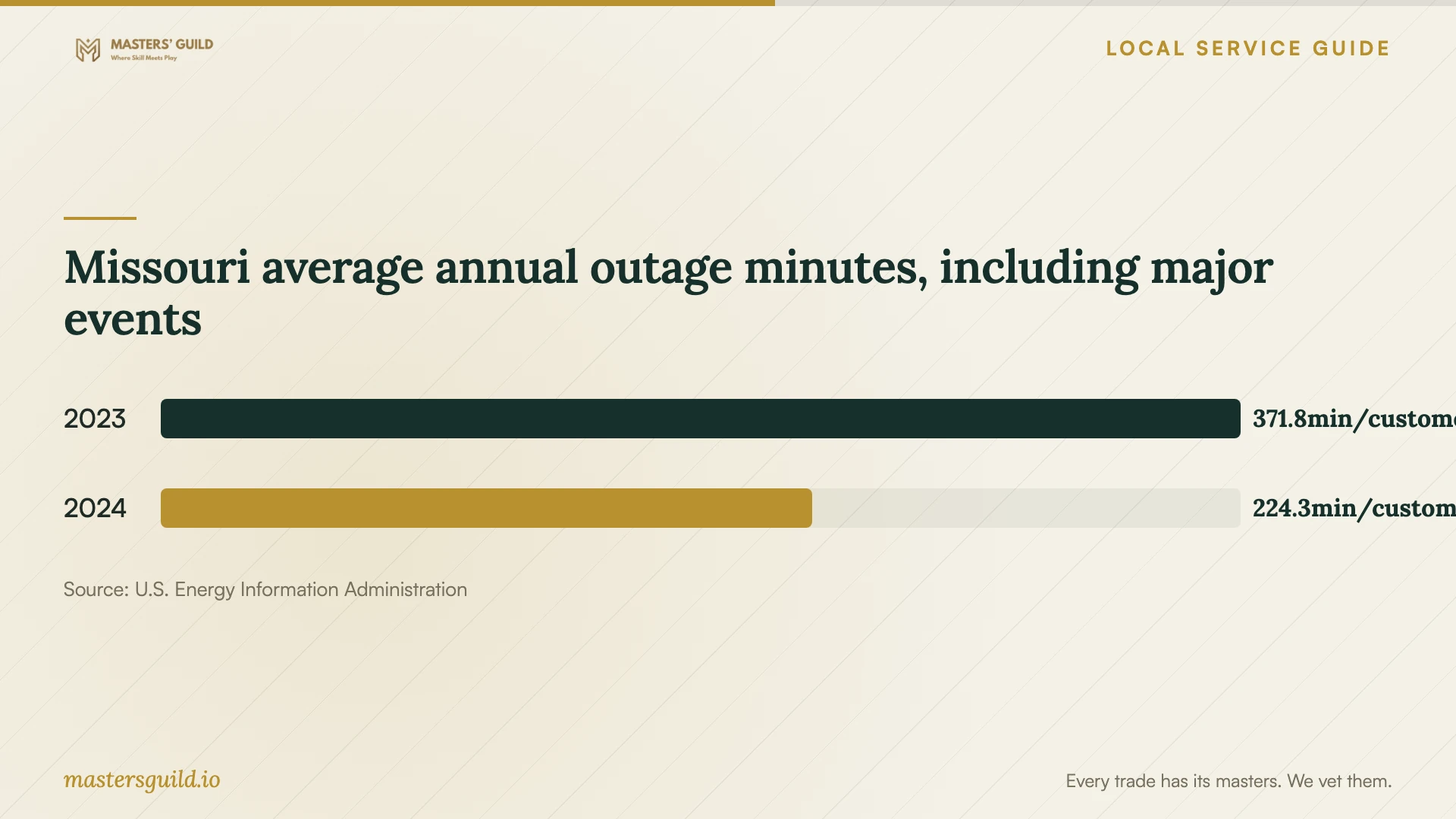
Missouri average annual outage minutes, including major events
Local details that affect your job
Missouri breach terms belong in the handoff agreement
Missouri section 407.1500 requires a person maintaining covered personal information they do not own or license to notify the owner or licensee immediately after discovering a qualifying breach, subject to the law’s provisions. Before transferring customer records, name the incident contact and require the provider to explain subcontractor notification, access records, and escalation. Ask counsel to assess notification duties if you suspect unauthorized access; recovering files does not resolve that question. [4]
Check the actual service addresses during an outage
Evergy’s map supports address searches and city, county, or ZIP-code views. For an affected Kansas City business served by Evergy, inspect both your premises and the proposed handoff location, then confirm conditions with the provider. Evergy cautions that severe storms can prevent restoration estimates, so arrange an alternate destination before moving equipment on a tight deadline. [2] [3]
Match the assignment to the situation
| Situation | Work to request | Question before approval |
|---|---|---|
| Damaged or unrecognized storage | Specialist diagnosis and a recovery proposal | Who performs the work, and what requires further approval? |
| An existing backup needs restoring | A supervised restore with usability checks | Which backup date and destination will you use? |
| Suspected ransomware | Incident response, isolation, and clean recovery | Who will preserve evidence and approve reconnection? |
| A new managed backup service | Documented protection and restore testing | Which copy stays offline, and who reviews test results? |
Your hiring checklist
- List priority files, applications, device symptoms, and previous recovery attempts.
- Identify available backups and their last known successful restore.
- Agree on diagnostic fees, approval limits, and expedited-service terms.
- Confirm the work location, subcontractors, and equipment transfer records.
- Document secure key sharing, file delivery, and working-copy deletion.
- Choose representative files and applications for acceptance checks.
- Assign an internal contact for updates, alerts, and restore testing.
Frequently Asked Questions
How much should I budget for recovery?
Get a device-specific written quote after diagnosis. Ask the provider to separate assessment, recovery, shipping, delivery media, and urgent handling. Set a spending limit and define the files that count as a successful result before authorizing work.
Can I restore a backup after ransomware?
Coordinate the restore with incident response. CISA recommends identifying critical systems, addressing the compromise, and restoring from offline, encrypted backups while preventing reinfection of clean systems. Ask who will authorize the recovery environment and reconnection. [1]
What should I ask about customer information?
Ask who can access it, where copies will reside, and when the provider will delete them. Include a named breach contact. Missouri law contains notification duties for qualifying breaches involving covered personal information; have counsel assess the facts if unauthorized access is suspected. [4]
Sources and scope
This guide combines the sources below with practical planning guidance. Figures apply to the stated geography and period; request a written quote for your property.