
Local service guide
Kansas City carpet cleaning: hiring and preparation
For carpet cleaning in Kansas City, MO, arrange a written quote that identifies the rooms, stairs, treatments, furniture handling and total charge. Describe the carpet’s condition before choosing an appointment, including past treatments and any water exposure. For soaked carpet or a musty smell after a leak, request a moisture assessment before approving surface cleaning; EPA recommends investigating those conditions. [3]
Define the work before comparing prices
Send each cleaner a room list, approximate measurements, stair count and photographs of problem areas. Specify whether you want exposed walking areas cleaned or furniture moved. Name the large pieces you expect the crew to handle, and separate fitted carpet from rugs in your request.
Request the total payable amount and an explanation of how the cleaner measures the job. If the quote uses a room rate, ask how the cleaner treats oversized rooms, hallways and closets. Have the cleaner identify any minimum charge, treatment fees and exclusions before you compare offers.
Describe stains and pet accidents, including products you have applied. Ask what treatment the cleaner proposes and what result they will commit to. Agree on how you will approve changes after inspection and how the cleaner will handle a remaining mark or returning odor.
Choose a method and prepare the appointment
Share the carpet’s care label or manufacturer instructions if you have them. Have the cleaner explain the proposed method and confirm its suitability for the material. Request a treatment test in an inconspicuous area before approving work across a visible surface.
Discuss parking, entry stairs and the distance between the vehicle and the rooms. In a condominium, check building rules for contractor access and service elevators. Confirm whether the crew needs water or electricity and how you should secure pets while workers manage doors and equipment.
Request instructions for walking on the carpet, replacing furniture and maintaining ventilation. Schedule around the rooms you need to use that day. Before the crew leaves, review any remaining concerns together and keep the invoice and aftercare instructions.
Separate water damage from routine cleaning
Report when the carpet became wet, the water source and whether you have stopped the leak. EPA’s Mold Course advises checking carpets after basement leaks and investigating musty areas. It also explains that mold can grow beneath carpets and pads. Request an assessment of the affected layers and moisture source. [3]
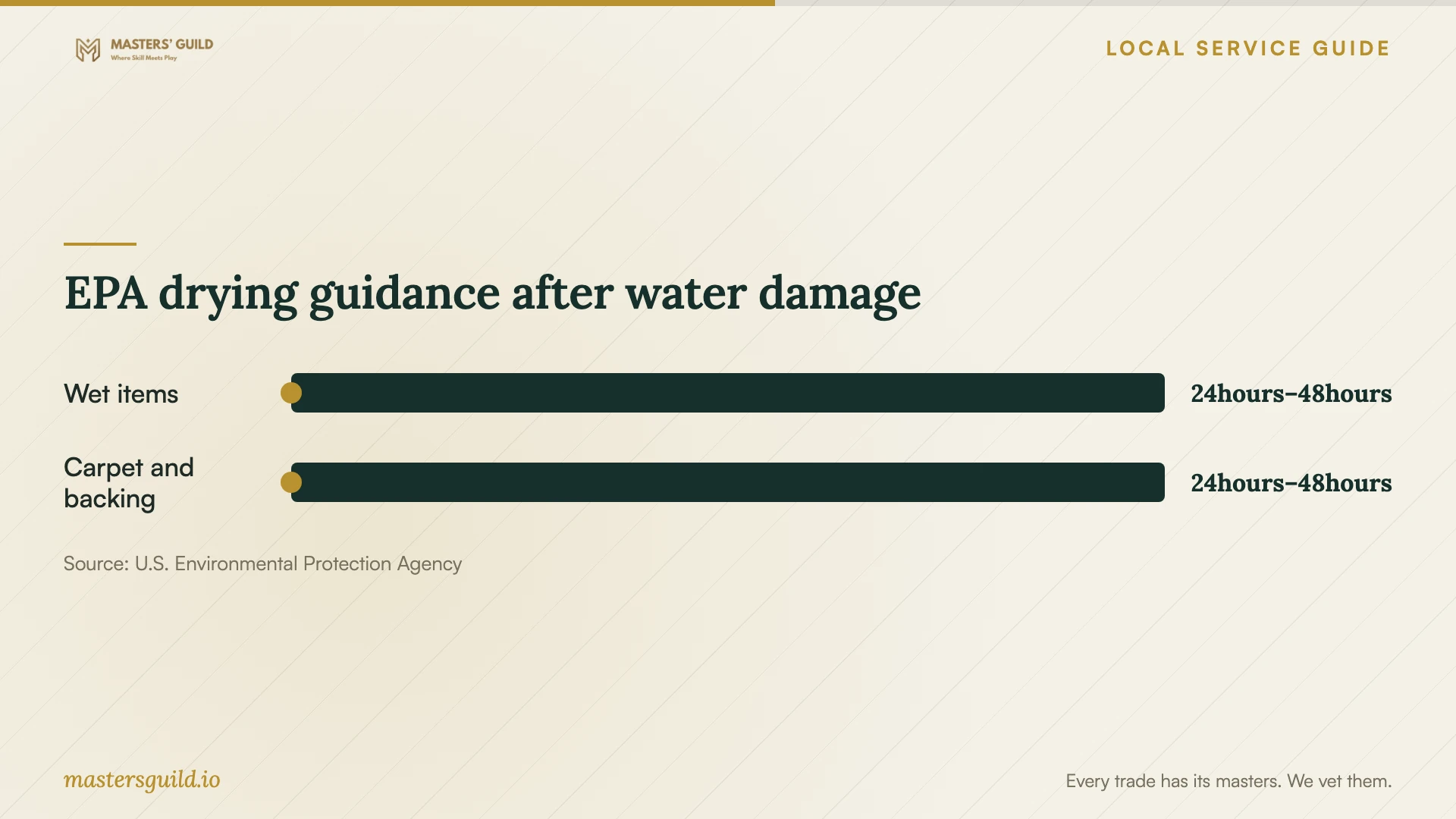
EPA’s cleanup table for schools and commercial buildings calls for drying clean-water-damaged carpet and backing within 24 to 48 hours. The table also addresses extraction, humidity reduction and subfloor drying. Use that guidance to discuss urgency with a restoration professional; it does not establish a routine cleaning dry time or guarantee that mold will not develop. [4]
For suspected sewage or other contaminated water, describe the source before work begins. EPA’s table advises consulting an experienced professional when the cleanup team lacks contaminated-water expertise. It cautions against using fans before determining that the water is clean or sanitary. [4]
EPA drying guidance after water damage
Local details that affect your job
Verify KCMO licensing for the appointment year
Kansas City BizCare says businesses must register and obtain a city business license unless state law provides an exemption. Licenses cover the calendar year and expire December 31. If your appointment moves into January, request documentation for that year. For a licensing question or claimed exemption, contact the Business License Section at 816-513-1120. Request proof of liability insurance as a separate hiring check. [1]
Follow Missouri’s documentation steps after flooding
Missouri’s statewide flood guidance directs homeowners to photograph damage before cleanup, contact their insurance agent for cleanup direction and retain expense records. It recommends professional carpet cleaning after flooding. For homeowners undertaking cleanup themselves, it instructs them to discard all padding and dry the carpet and floor before replacement. For a flood-affected room here, request a recovery assessment that addresses these materials before agreeing to a cleaning-only scope. [2]
Choose the appointment that fits the condition
| Condition | Arrange | Resolve before work |
|---|---|---|
| Traffic soil or isolated spots without known water damage | A cleaning quote | Rooms, treatments, furniture handling and total charge |
| Recent clean-water leak | Extraction and drying assessment | Backing and subfloor drying, using EPA’s commercial-building guidance as a discussion reference |
| Musty smell after a leak | Moisture and possible hidden-mold investigation | Water source and conditions beneath the carpet |
| Floodwater or suspected sewage | A recovery assessment suited to the water source | Contamination precautions and padding removal decisions |
Your hiring checklist
- Photograph problem areas and note previous stain treatments.
- Clear toys, cords and fragile belongings from the work area.
- Confirm who will vacuum and move furniture.
- Arrange parking, building access and a separate space for pets.
- Keep carpet care instructions available for the crew.
- Plan a route through the home while the rooms dry.
Frequently Asked Questions
How much should I budget?
Obtain a quote for your actual rooms and requested treatments. Ask whether the cleaner needs an inspection before confirming the total. Compare the payable amount and exclusions, and require approval before the crew adds work.
How long will routine cleaning take to dry?
Request an estimate for the proposed method and your home, plus instructions for furniture and foot traffic. The supplied EPA drying guidance concerns water-damaged materials; it does not establish a drying duration for a routine cleaning appointment. [3] [4]
Does a musty carpet need mold testing?
Start with an investigation of moisture and the affected materials. EPA says visible mold usually does not require sampling and discourages routine mold sampling. If a provider proposes testing, ask how the result would change the cleanup plan. [3]
Sources and scope
This guide combines the sources below with practical planning guidance. Figures apply to the stated geography and period; request a written quote for your property.