
Local service guide
Tile Setting in Jersey City, NJ: Plan and Hire
For Tile Setting in Jersey City, hire against a written scope that separates tile installation from demolition, surface preparation and any plumbing changes. The city treats flooring installation, repair and replacement as ordinary maintenance requiring no construction permit, while preserving historic approval requirements. Before accepting a bathroom quote, identify whether the contractor will replace finishes or change piping and fixtures, then confirm approvals for that scope. [1] [2]
Define the job before requesting quotes
Describe each surface: kitchen backsplash, bathroom floor, shower walls or another area. Send photographs, approximate dimensions and the tile you want. Tell bidders whether you want to retain the existing layout and fixtures. Ask each contractor to inspect the surface before committing to a final preparation price.
For a shower, request a written description of the proposed backing, waterproofing, drain connection and treatment around penetrations. Ask who will perform each part and who will resolve a leak or installation defect. Request photographs of comparable completed work and ask the contractor to explain the concealed work beneath the tile.
For a floor or backsplash, agree on layout, edge trim, grout color and transitions before installation. Ask the installer to show you where cut tiles will land at doorways, corners and visible edges. Record whether the price includes removing and reinstalling trim or fixtures.
Separate flooring maintenance from renovation approvals
Jersey City's ordinary-maintenance list includes installing, repairing or replacing flooring material. For a tile floor project confined to that work, the city lists no construction permit requirement. Keep the written scope specific so you and the contractor can identify any additional work that needs a separate review. [1]
The city also lists replacement of a plumbing fixture with a similar fixture as ordinary maintenance when the piping arrangement stays unchanged. Its renovation guidance distinguishes fixture replacement from adding fixtures, changing piping or changing the use of the space. Ask the contractor to identify those changes before demolition and confirm applicable release requirements with Construction Code. [1] [2]
Check historic status through the zoning map referenced on the city's Prior Approvals page. The city directs owners in historic districts to obtain Historic Preservation approval before submitting to construction. Its ordinary-maintenance page preserves historic approval requirements, so ask Historic Preservation whether your proposed tile work needs review before relying on the flooring exemption. [1] [2]
Compare complete prices and tax treatment
Request separate amounts or clear inclusions for demolition, disposal, surface repairs, tile, setting materials, waterproofing, installation, grout and trim. Ask how the contractor will price hidden damage after removal. Require your written approval of the scope and price before the contractor performs extra work.
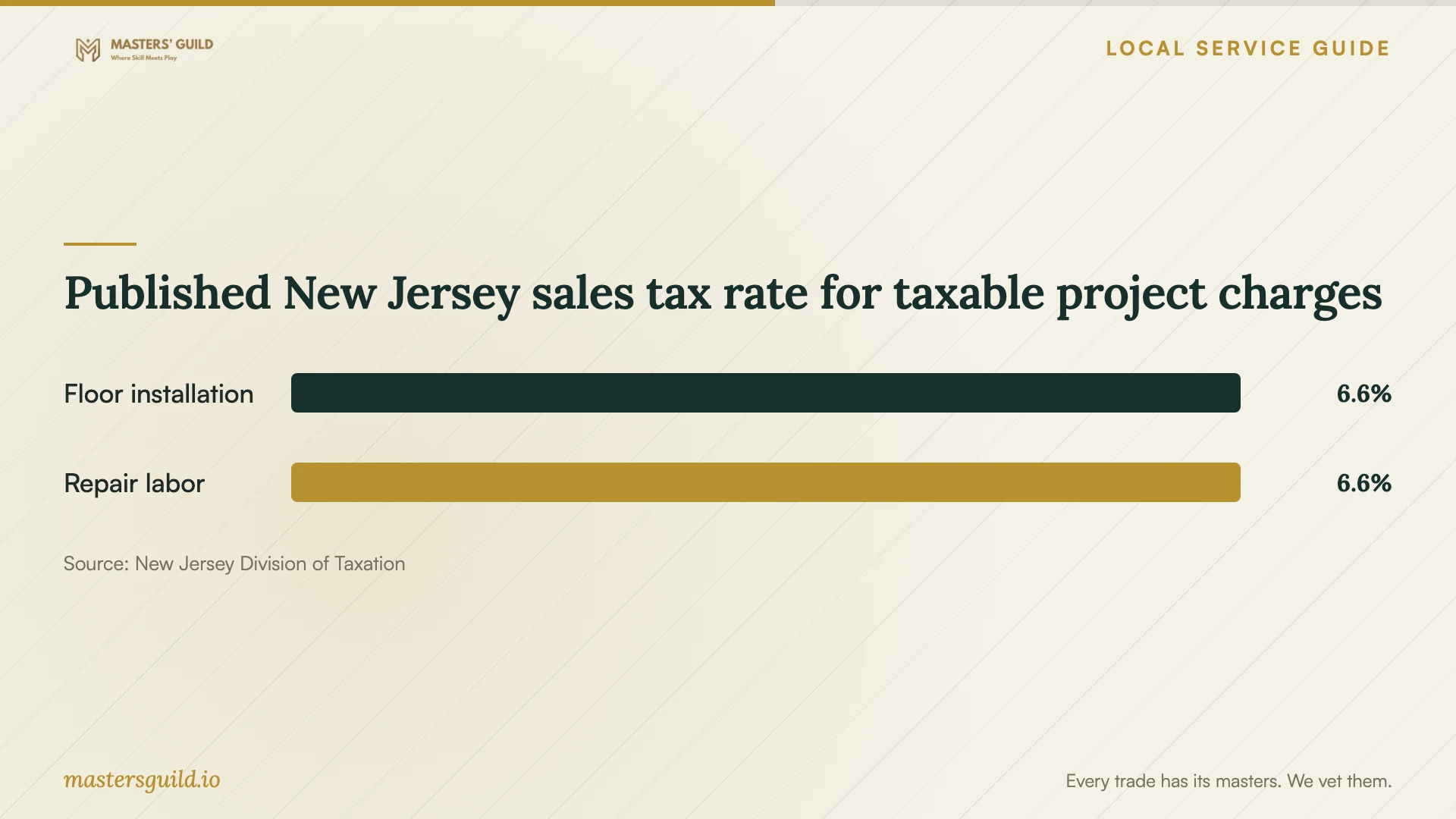
New Jersey's Division of Taxation states that charges for installing floor coverings, including replacement tile, are taxable. It publishes a 6.625% sales tax rate. Ask bidders to identify taxable charges and show the tax amount so you can compare the total you would pay. [3]
Do not assume that calling the project an improvement makes tile-floor installation exempt. The state distinguishes taxable repairs and maintenance from exempt capital improvements, but it answers its floor-covering installation question with a taxable classification. For any claimed exemption within a broader renovation, request the basis and applicable documentation; the state requires Form ST-8 for qualifying exempt capital improvements. [3]
Agree on access, timing and handover
If you live in a managed building, ask management about alteration approval, insurance paperwork, delivery access, work hours and debris removal before choosing a start date. Give those requirements to bidders. Agree on who will protect shared hallways and where the crew can store materials and make cuts.
Ask for a sequence covering removal, preparation, installation and return to use. Have the installer specify when you can walk on the floor or use the shower under the chosen products' instructions. Arrange another bathroom if necessary, and agree on how the contractor will communicate delays or unexpected repairs.
Before final handover, inspect the agreed layout, edges, transitions and cleanup with the installer. Record unresolved items and a completion date. Keep product names, care instructions, spare tile and written warranty terms together for future repairs.
Published New Jersey sales tax rate for taxable project charges
Local details that affect your job
A flooring exemption still leaves a historic-status check
Jersey City exempts flooring installation, repair and replacement from construction permits as ordinary maintenance, but preserves historic approval requirements. Check the zoning map referenced by the city and ask Historic Preservation about your scope before scheduling demolition. [1] [2]
Plumbing changes need an earlier approval conversation
The city's renovation guidance identifies new fixtures, piping changes and changes of use as triggers for its listed sewer-related prior approvals. It states that JCMUA release is not required for fixture replacements. Give Construction Code the proposed plumbing scope and ask which releases apply before the contractor submits paperwork. [2]
Choose the next step for your tile project
| Proposed work | Approval distinction | Next step |
|---|---|---|
| Install or replace floor tile | City lists flooring work as ordinary maintenance requiring no construction permit. | Keep the scope specific and check historic requirements. |
| Replace a similar plumbing fixture | City lists this as ordinary maintenance if the piping arrangement stays unchanged. | Have the contractor document that the piping arrangement will remain. |
| Add fixtures or change piping | City's renovation guidance identifies these changes for sewer-related prior approvals. | Confirm applicable releases with Construction Code before submission. |
| Work at a historic-district property | Ordinary-maintenance exemptions do not override historic approval requirements. | Ask Historic Preservation whether the tile scope requires approval. |
Your hiring checklist
- Send surface photographs, dimensions and the proposed tile to each bidder.
- Identify any fixture additions, piping changes or layout changes.
- Confirm applicable construction and historic approvals for the written scope.
- Ask for preparation, waterproofing, disposal and tax inclusions.
- Agree on written pricing and approval for concealed damage.
- Confirm building access, material storage and debris arrangements.
- Record return-to-use instructions, warranty terms and handover items.
Frequently Asked Questions
Do I need a permit to replace a tile floor?
Jersey City lists flooring installation, repair and replacement as ordinary maintenance requiring no construction permit. Check additional work separately, and confirm historic requirements before starting. [1]
Does moving a shower fixture change the approval process?
Tell Construction Code whether the work changes piping or adds fixtures. The city's renovation guidance identifies those changes for sewer-related prior approvals. Its ordinary-maintenance allowance for similar fixture replacement requires an unchanged piping arrangement. [1] [2]
Should a tile-floor quote include sales tax?
Ask the contractor to show tax explicitly. New Jersey identifies floor-covering installation, including tile, as taxable and publishes a 6.625% sales tax rate. Do not assume a capital-improvement exemption applies to flooring installation. [3]
How should I compare two tile installers?
Give both the same scope and tile selection. Compare preparation, waterproofing, exclusions, disposal, tax and written warranty terms. Ask each to explain how they will price unexpected damage and when you can use the finished surface.
Sources and scope
This guide combines the sources below with practical planning guidance. Figures apply to the stated geography and period; request a written quote for your property.