
Local service guide
Pressure Washing in Jersey City, NJ: Hiring Guide
Arrange Pressure Washing in Jersey City by asking each contractor for a written surface-by-surface cleaning plan, a total price, and an explanation of equipment access and wash-water handling. Before booking exterior work on a historic property, contact preservation staff about approval requirements. The city requires preservation approval for covered work even when a construction permit is unnecessary. [1]
Request a cleaning plan for each surface
Send contractors photographs of the entire work area and close-ups of stains, cracks, loose coatings, and joints. Identify the material if you know it. Separate the front steps, facade, siding, patio, and any other surfaces in your request so the contractor can describe a method for each.
Ask the contractor to explain the proposed pressure, cleaning products, application method, and rinsing procedure. If someone proposes soft washing, ask what that means for your particular material. Request a small test area and agree on the result before the crew proceeds across a visible facade.
Discuss stains as individual items. Ask which marks the contractor expects to remove, which may remain, and when they would stop rather than attempt further treatment. Record existing damage with photographs and agree on who will assess any concerns after cleaning.
Resolve historic-property questions before booking
Jersey City identifies five local historic districts: Hamilton Park, Harsimus Cove, Paulus Hook, Van Vorst Park, and West Bergen East Lincoln Park. The city also protects individual landmarks. Check the specific address with preservation staff rather than relying on a neighborhood name. [1]
The city describes Certificates of No Effect and Certificates of Appropriateness as approvals for covered work on protected properties. It includes maintenance and repairs among work staff may approve through a Certificate of No Effect. Ask staff how they classify your proposed exterior cleaning before committing to a work date. [1]
Submit photographs and the contractor's proposed cleaning method when seeking guidance. The city directs applicants to its online licensing and permitting system and asks for questions and appointment requests by email. Its ordinary-maintenance page also states that construction-permit exemptions do not supersede historic approval requirements. [1] [4]
Agree on water handling and equipment access
JCMUA explains that street catch basins carry stormwater into Jersey City's combined sewer system, which also carries wastewater. During heavy rainfall, the combined flow can overflow into waterways. Use that local context to ask for a wash-water plan before work starts. [2]
Ask how the crew will keep loosened debris and cleaning solution under control, collect water where needed, and determine an acceptable disposal route. Request confirmation of any disposal requirements with the relevant authority. Do not treat the presence of a street drain as permission to use it.
Walk through the route from the truck to the work area. Identify the water connection, gates, shared entrances, and places where hoses would cross a walkway. Agree on how residents will enter and leave during the job, and obtain building-management approval for shared spaces.
The Parking Division says many areas require resident permits for parking beyond two hours, and posted signs identify street-cleaning and other restrictions. The city provides information about no-parking signs and meter bags. Ask which arrangement applies to the contractor's vehicle and who will organize it. [3]
Compare complete quotes and set a weather contingency
Request a total written price with separate descriptions of cleaning, stain treatments, water collection, access equipment, and cleanup. Ask whether the total includes taxes and any parking arrangements. Keep sealing, repainting, or repairs separate unless you intend to purchase those services.
Ask for proof of liability insurance and discuss responsibility for damage before hiring. Agree on payment timing, cancellation terms, and a final walkthrough. Avoid choosing a contractor until you understand both the expected finish and the exclusions.
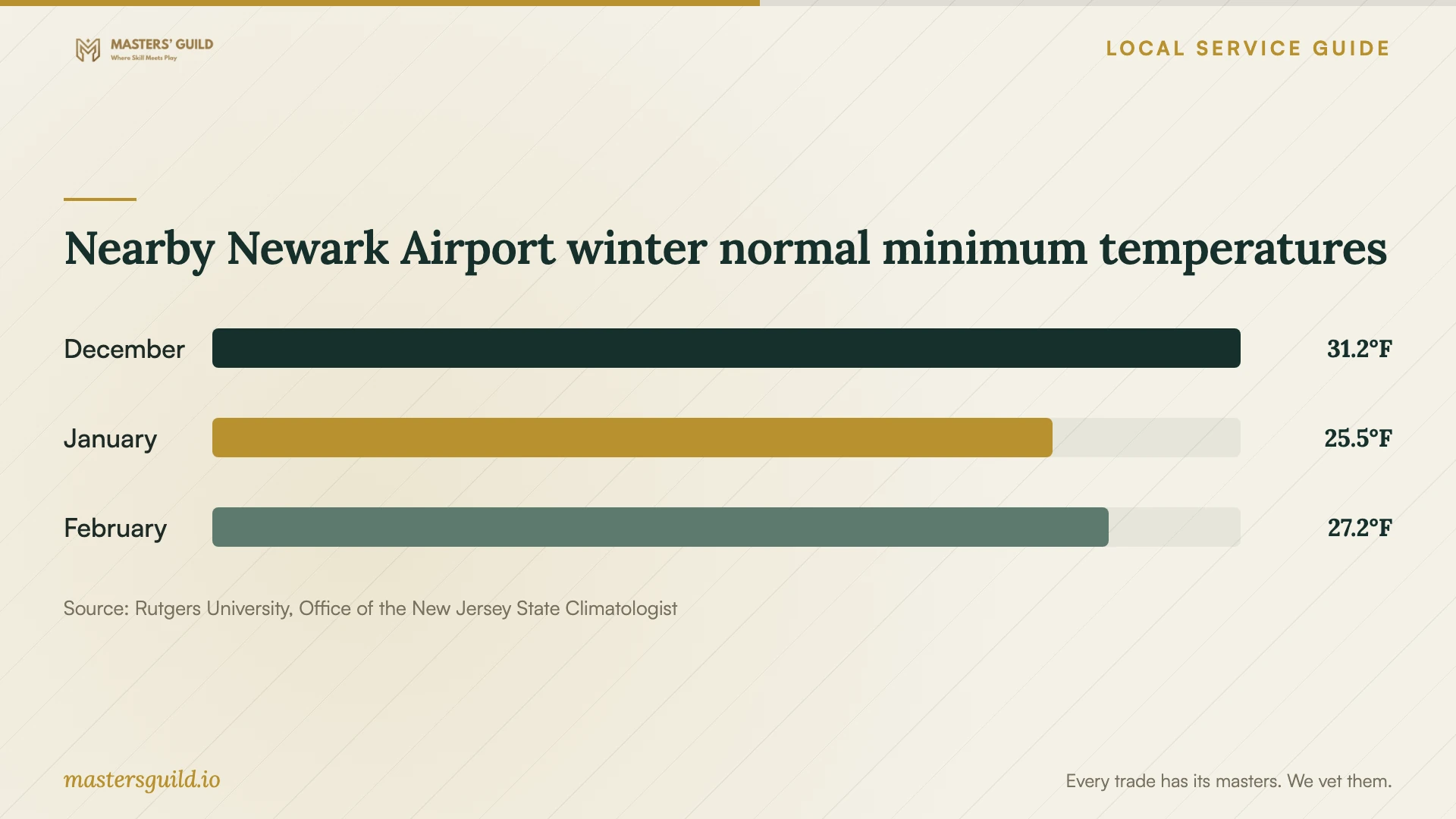
Rutgers publishes 1991–2020 temperature normals for nearby Newark Liberty International Airport. Its monthly normal minimum temperatures fall below freezing in December, January, and February. These regional averages support discussing cold-weather scheduling, but they do not predict conditions at your property on the appointment date. [5]
Ask the contractor to name the forecast conditions that would trigger postponement and explain how they will leave steps and walking routes ready for use. Confirm a backup date and any preparation you should delay until the appointment is firm.
Nearby Newark Airport winter normal minimum temperatures
Local details that affect your job
Preservation review can precede construction-permit questions
For a protected address, ask preservation staff whether the cleaning requires a Certificate of No Effect or Certificate of Appropriateness before scheduling the crew. Jersey City's preservation guidance requires approval for covered work before it begins, regardless of whether a construction permit is required. [1] [4]
Curb space needs its own plan
Check the signs beside the proposed truck location and give the contractor the restrictions before accepting an arrival time. Jersey City's Parking Division administers parking permits and provides no-parking-sign and meter-bag information. Confirm the applicable arrangement rather than assuming the homeowner's parking permission covers a work vehicle. [3]
Discuss the street drain before cleaning
JCMUA identifies street-corner catch basins as entry points to the combined sewer system and explains its heavy-rain overflow risk. Ask the contractor to identify collection and disposal arrangements in the quote; the utility's stormwater explanation provides no cleaning-wastewater discharge authorization. [2]
Resolve these questions before accepting an appointment
| Your situation | Next step | What to settle |
|---|---|---|
| Historic district or landmark property | Consult city preservation staff | Whether the proposed cleaning needs preservation approval before work |
| Truck needs curb access | Review posted signs and consult the Parking Division as needed | Applicable parking arrangements and who organizes them |
| Wash water could reach a street catch basin | Request collection and disposal details | How the contractor will handle water around the combined sewer system |
| Cleaning includes several materials | Request a method and test-area agreement for each | Expected finish, exclusions, and stopping conditions |
Your hiring checklist
- Photograph each surface, stain, and area of existing damage.
- Confirm ownership or building-management permission for shared areas.
- Resolve historic-property review before fixing the work date.
- Get the cleaning method, test-area agreement, and exclusions in writing.
- Agree on water supply, collection, and disposal arrangements.
- Confirm truck parking, hose routes, and resident access.
- Review insurance, total price, payment terms, and the weather contingency.
Frequently Asked Questions
Does pressure washing require a city permit?
The supplied ordinary-maintenance guidance does not name pressure washing, so it does not establish a blanket exemption. Ask Construction Code about an uncertain scope. For protected properties, resolve preservation approval as a separate question because the city preserves those requirements even for permit-exempt maintenance. [1] [4]
What should I budget for the job?
Request property-specific written quotes. The supplied official sources do not publish local pressure-washing prices. Give each contractor the same photographs, surface list, access information, and cleanup requirements so you can compare complete totals.
Can the contractor rinse everything into the street drain?
Do not assume permission. JCMUA explains how catch basins connect to the combined sewer system but does not establish an acceptable disposal route for cleaning wastewater. Ask the contractor to confirm the applicable requirements and explain the proposed collection and disposal method. [2]
How should I prepare for the crew?
Agree on preparation with the contractor: move furniture and vehicles, secure pets, close windows, and arrange access to the agreed water connection. Identify delicate items and existing leaks. Confirm when residents can use the washed steps and paths again.
Sources and scope
This guide combines the sources below with practical planning guidance. Figures apply to the stated geography and period; request a written quote for your property.