
Local service guide
Plan concrete work in Jersey City, NJ
Arrange concrete work by defining the surface, checking the approval route and getting written quotes for the same scope. In Jersey City, sidewalk repair goes through Infrastructure, backyard cement requires zoning approval, and Zoning handles new driveway approval. Resolve those questions before accepting a demolition or pour date. [1]
Define the job before requesting quotes
Prepare a short description with measurements, photos and the intended use. Identify whether you want a walking surface, vehicle access, steps or a backyard sitting area. Photograph cracks, uneven edges, standing water and the route from the street to the work area. Ask the contractor to inspect the site before committing to a final scope.
For repair proposals, ask what condition the contractor intends to correct and what will remain afterward. Request separate options for retaining the existing surface and removing it where the contractor considers both appropriate. If steps or concrete connected to the building show movement, ask whether a design professional should assess them before you select a repair.
Settle approvals before booking demolition
Jersey City gives different instructions for sidewalks, backyards and driveways. Its permit FAQ directs sidewalk repair or replacement, sidewalk closures and dumpster permits to Infrastructure. For backyard cement or pavers, it requires zoning approval even though Construction Code does not require a permit for that installation. [1]
Submit zoning applications through the Jersey City Online Permitting and Licensing Portal. The Division of Zoning says it does not accept applications in person. For a proposal with construction documents, its Zoning Review Application process lets a planner review the project and identify further approvals. [2]
Ask the contractor to list who will submit each application, pay the fees and respond to review comments. Keep copies of approvals with the agreed drawing or scope. Before authorizing removal, confirm that the proposed dimensions and use match what the city has approved.
Compare complete written scopes
Request itemized proposals and compare the included work alongside the total. Ask each bidder to describe demolition and disposal, excavation, base material and compaction, slab thickness, concrete specifications, reinforcement where proposed, joints and finish. Have the contractor explain the planned drainage direction and the transitions at doors, steps and adjoining surfaces.
Discuss delivery access during the site visit. Ask where the truck and equipment will stand, how the crew will move material to the pour, and how workers will protect entrances and neighboring property. Put responsibility for access arrangements, cleanup and any proposed closure or dumpster applications in writing.
Set your budget using site-specific written quotes. Ask bidders to identify allowances, exclusions and how they will price unexpected conditions after removal. Request proof of insurance and a written explanation of warranty coverage and exclusions before signing.
Agree on weather protection and reopening
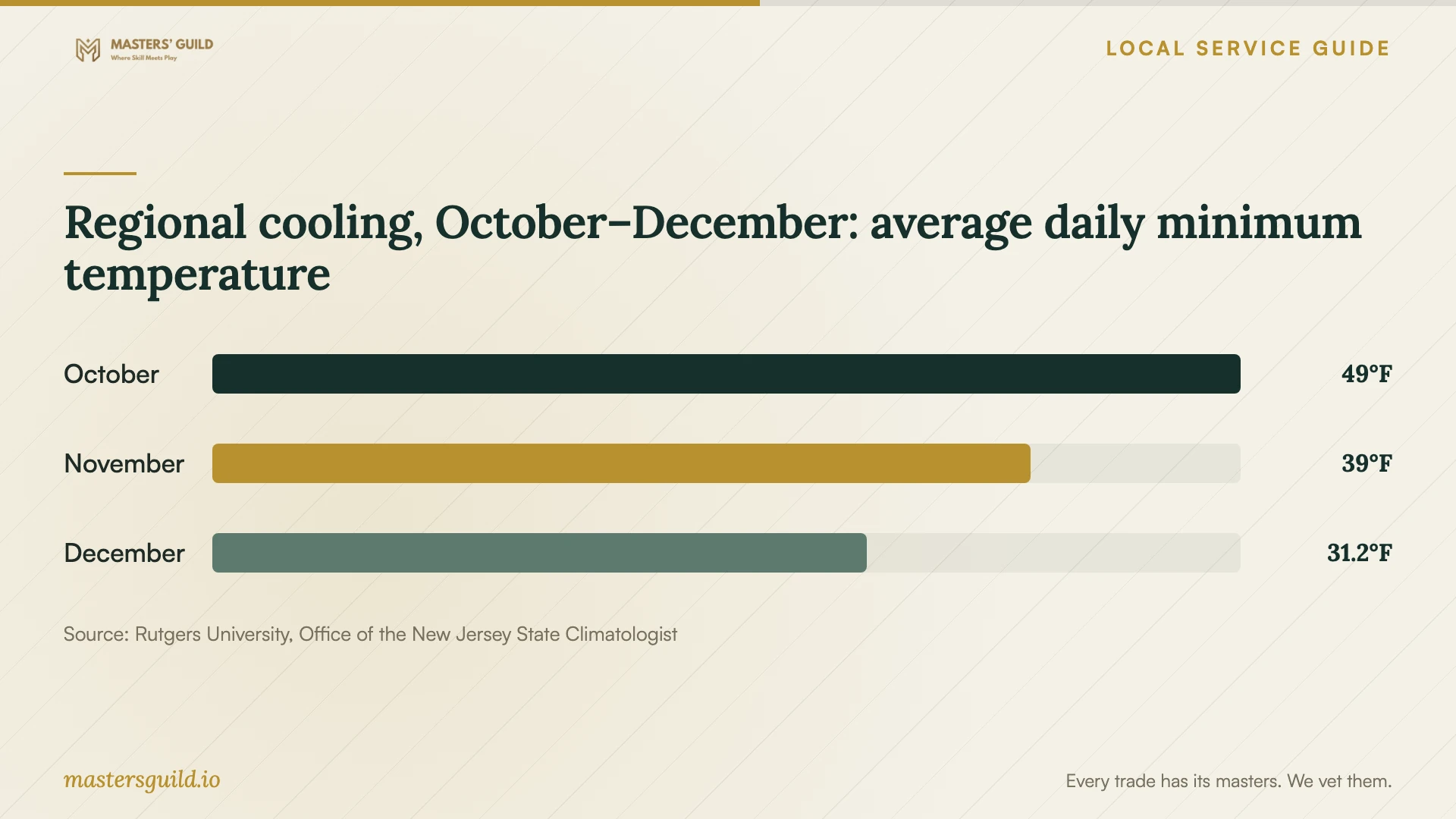
Nearby Newark Liberty International Airport’s 1991–2020 normals show monthly average daily minimum temperatures of 49.0°F in October, 39.0°F in November and 31.2°F in December. These regional averages provide seasonal context; they do not forecast conditions at your property or establish a suitable pour date. [3]
For an autumn or winter proposal, ask the contractor to explain temperature monitoring, protection during curing and the conditions that would trigger postponement. Request written instructions for pedestrian use, vehicle use and care after the crew leaves. Arrange another entrance or parking location for the period the contractor specifies.
Regional cooling, October–December: average daily minimum temperature
Local details that affect your job
Check driveway legality before designing a parking pad
The Division of Zoning says it approved no new front yard parking spaces after 2000 and limits curb cuts in residential R zones to 10 feet. To obtain a formal determination of driveway or front yard parking legality, submit a Zoning Determination Letter - Driveway application. An entry on the city’s approved driveway list does not replace formal approval. Confirm the status before commissioning a pad or widening. [2]
Raise tree protection during the site visit
The city’s zoning page states that Forestry permits cover public or private tree removal and activity within the Protected Root Zone of a City tree. Zoning also requires front and rear property photos to check for existing trees. If excavation or material staging would occur near a tree, ask Zoning which Forestry review applies before agreeing to that work area. [2]
Separate backyard approval from street-side permissions
For backyard cement, obtain zoning approval despite the Construction Code permit exemption stated in the city FAQ. If the crew also proposes a sidewalk closure or dumpster, follow the separate Infrastructure application route identified by the city. Ask the contractor to account for both the installation and its street-side arrangements. [1]
Which approval question comes first?
| Proposed work | City guidance | Next step |
|---|---|---|
| Sidewalk repair or replacement | The permit FAQ directs applicants to Infrastructure. | Confirm the permit route and any closure arrangements. |
| Backyard cement or pavers | Zoning approval is required; Construction Code does not require a permit for the installation described in its FAQ. | Obtain zoning approval before setting the work date. |
| New driveway | Zoning handles driveway approval. | Confirm the proposed access and parking use with Zoning. |
| Existing driveway with uncertain legal status | The city uses a Driveway Zoning Determination Letter to provide formal approval of legality. | Resolve the status before commissioning changes. |
Your hiring checklist
- Record dimensions, intended use, drainage concerns and access photos.
- Confirm the approval route for the exact proposed scope.
- Assign application responsibilities and fees in writing.
- Compare demolition, base preparation, concrete specifications, joints and finish.
- Ask how the crew will protect trees, entrances and adjoining property.
- Agree on weather postponement and curing protection.
- Obtain written reopening instructions, payment terms and warranty details.
Frequently Asked Questions
Can I pour a concrete backyard without approval?
The city says backyard cement does not require a Construction Code permit, but it does require zoning approval. Submit the zoning application through the online portal and confirm the requirements for your proposal. [1] [2]
Does an existing curb cut prove my driveway is legal?
Obtain a formal determination through a Zoning Determination Letter - Driveway application. The city says even inclusion on its approved driveway list does not replace formal approval. [2]
What should I ask about a concrete repair quote?
Ask which defect the contractor will address, what preparation the work includes, how the contractor will handle drainage, and what appearance or movement may remain. Request a written explanation of the repair’s limits and warranty.
How long should I keep off new concrete?
Ask your contractor for separate written instructions for walking and driving on the finished surface. Have the contractor account for the selected concrete, curing method and expected weather when setting those dates.
Sources and scope
This guide combines the sources below with practical planning guidance. Figures apply to the stated geography and period; request a written quote for your property.