
Local service guide
Tree cutting and arborist services in Jacksonville
Tree cutting in Jacksonville starts with confirming who controls the tree and choosing between pruning, assessment and removal. Request a city inspection for a suspected street or ditch right-of-way tree before hiring a crew. For a private hazardous tree, discuss signed risk documentation with an ISA-certified arborist before relying on Florida’s residential permit exemption. Compare written quotes with matching access, hauling and stump-work terms. [1] [2]
Confirm responsibility before requesting removal
Start with the tree’s location. Jacksonville describes the common street right of way as the area in front of a home, with widths that vary by street. The city also inspects requested trees along rights of way beside city-maintained ditches. Report the location and concern through 630-CITY at (904) 630-2489 and ask the forester to determine whether the tree occupies city property. [1]
Resolve uncertain ownership before authorizing private cutting. Photograph the trunk, pavement and nearby ditch from a safe position. Describe your concern, identify the tree on a sketch and keep the city’s response with your project records.
City foresters base ditch-tree removal decisions on an onsite risk assessment. The city explains that ditch trees help control erosion. Its crews may leave a dead trunk or stump after removing the hazard, so confirm the approved work before planning landscaping around the ditch. [1]
Choose an assessment before committing to removal
If you need help choosing between retention and removal, request a written assessment before accepting a cutting contract. Ask the assessor to identify the tree, explain the concern and describe possible treatments. Request a separate assessment price so you can consider the recommendation before committing to the work.
For Florida’s residential hazardous-tree exemption, the owner must possess documentation from an ISA-certified arborist or Florida licensed landscape architect. The statute requires a signed onsite assessment following its specified tree risk assessment procedures. It defines unacceptable risk as a situation where removal is the only practical means of reducing risk below moderate. [2]
The statute limits qualifying residential property to a single-family detached building on a lot actively used for single-family residential purposes, with a conforming or legally recognized nonconforming use. For qualifying work, local government cannot require notice, an application, approval, a permit, a fee, mitigation or replanting. The exemption does not apply to specifically delegated mangrove-protection authority. [2]
Ask the assessor to explain how your property and tree meet those requirements. Keep the signed assessment before authorizing work that relies on the exemption. [2]
Resolve permits and agree on the pruning plan
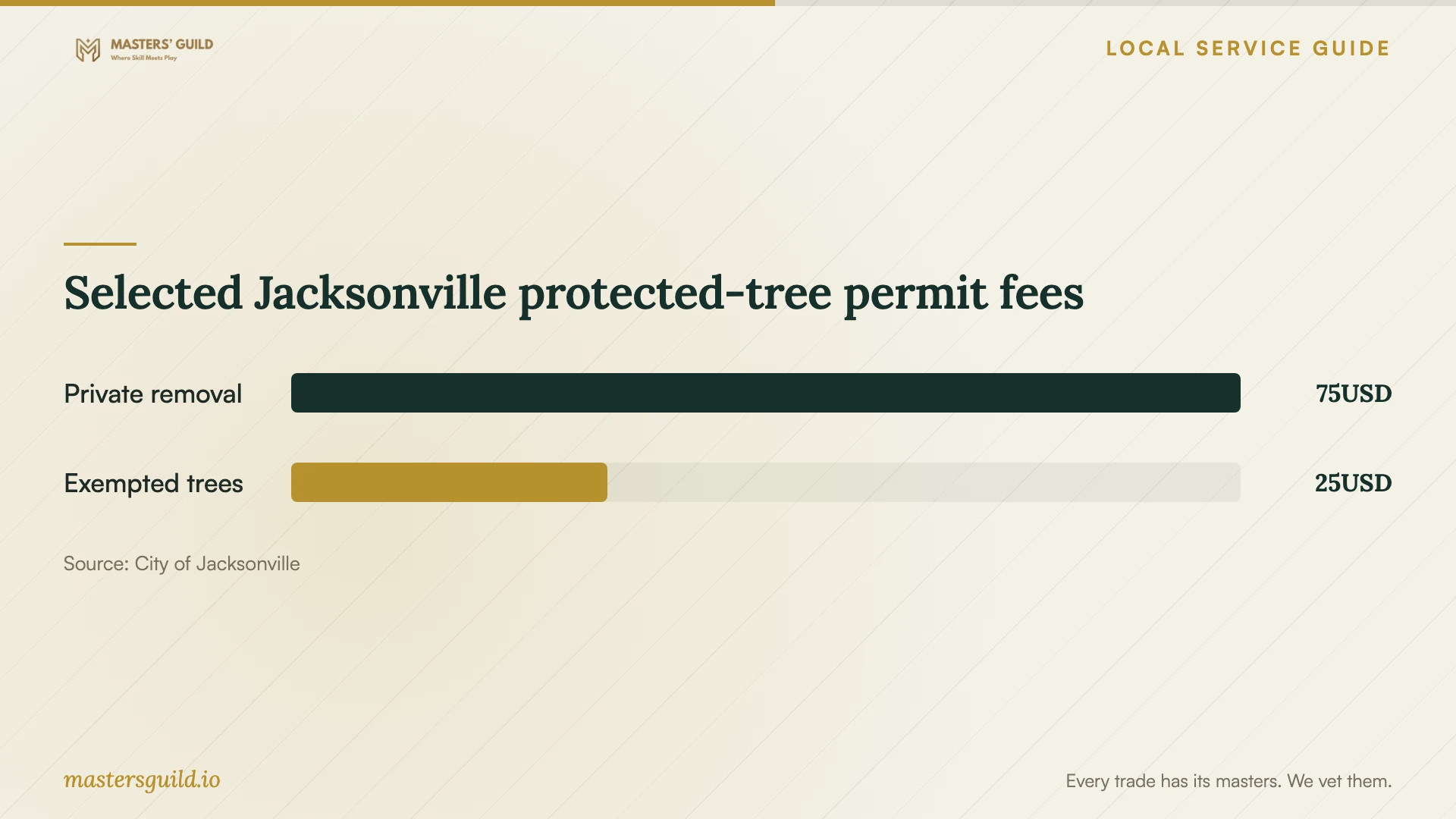
For work outside the documented exemption, ask the city which protected-tree requirements apply. Jacksonville lists $75 for removal or relocation of private protected trees and $0 for protected-tree removal on individual lots defined in Section 656.1205(b)(1). A fee entry alone does not establish which category fits your tree or whether you need approval. [3]
If a city forester denies removal of a tree on city property, Jacksonville describes a homeowner-funded permit option through the Building Inspection Division. Ask about that process before committing to a private removal contract. [1]
For pruning, ask the bidder to identify the branches they intend to cut and explain the purpose. Jacksonville’s Urban Forestry staff describes topping as destructive for any tree species and says annual crape myrtle topping offers no benefits. Request a different pruning recommendation if a quote proposes topping to control size. [1]
Compare complete quotes and prepare access
Give each bidder the same photographs and identify each tree on a sketch. Request a written scope separating pruning or removal, hauling, stump grinding and cleanup. Specify whether you want logs left onsite, chips removed, grindings hauled away or the stump area prepared for planting.
Ask who will assess the tree and who will lead the cutting crew. Request proof of liability insurance and an explanation of workers’ compensation coverage. Discuss how the crew will protect paving, fences and nearby plants, including any work by subcontracted crane operators or haulers.
Walk the proposed equipment route with the contractor. Discuss gate clearance, parked vehicles, irrigation and access across neighboring land. Flag overhead wires and agree on who will coordinate with the utility before cutting begins. Record access arrangements, permit responsibility, payment stages and change-order terms in the contract.
Request an onsite quote for your budget. Use the published permit fees as administrative references and ask the contractor to price labor, equipment, hauling and stump work separately. Confirm which government charges apply before accepting the total. [3]
Selected Jacksonville protected-tree permit fees
Local details that affect your job
Report cracked sidewalks before booking removal
Jacksonville says it usually declines removal of a healthy city tree solely because it may be cracking a sidewalk or driveway. Report sidewalk damage through 630-CITY for a separate division to assess repairs. Start with that review rather than assuming the city will authorize tree removal. [1]
Expect limits on ditch-bank cleanup
City Urban Forestry focuses its removal budget on hazards. On city-maintained ditch banks, crews remove an approved tree to the point where it no longer poses a hazard and leave dead trunks or stumps for wildlife habitat. Ask the forester what will remain before planning further work. [1]
Ask about a permit after a city denial
After a city forester denies removal of a tree on city property, a homeowner can request a City tree removal permit through the Building Inspection Division. The city assigns the expense to the homeowner. Resolve that approval before arranging private removal. [1]
Choose your first step
| Situation | First step | Reason |
|---|---|---|
| Tree beside the street or a city-maintained ditch | Request inspection through 630-CITY | A city forester determines whether the tree lies within the city right of way. |
| Private tree you believe poses unacceptable risk | Discuss signed onsite documentation with an ISA-certified arborist or Florida licensed landscape architect | Florida’s residential exemption has specific property and risk-assessment requirements. |
| Healthy city tree associated with sidewalk cracking | Report sidewalk damage through 630-CITY | The city usually declines removal for infrastructure cracking alone. |
| City has denied removal of its tree | Ask Building Inspection about a City tree removal permit | The city describes a homeowner-funded permit route after denial. |
Your hiring checklist
- Identify each tree and explain the work you want.
- Resolve uncertain street or ditch ownership before authorizing cutting.
- Request a written assessment if you need help choosing between retention and removal.
- Keep signed risk documentation and any city approval with the contract.
- Request insurance information and identify the crew leader.
- Match quotes for hauling, stump work, cleanup and equipment access.
- Agree on utility coordination, property protection and payment stages.
Frequently Asked Questions
Can an arborist’s note exempt my removal from a permit?
The documentation must meet Florida’s statutory requirements. It must include a signed onsite assessment by an ISA-certified arborist or Florida licensed landscape architect, address unacceptable risk under the specified procedures and concern qualifying single-family detached residential property. Ask the assessor to address each requirement. [2]
Does a zero-dollar tree permit fee mean I can skip approval?
Do not infer approval requirements from the fee. Jacksonville lists a $0 category for protected trees on individual lots defined in Section 656.1205(b)(1). Ask the city whether that category applies and what process your work requires. [3]
Should I ask a contractor to top my crape myrtle?
Jacksonville’s Urban Forestry staff advises against topping and says annual crape myrtle topping offers no benefits. Ask for a pruning plan that identifies the intended cuts and explains how the contractor will maintain the tree’s form. [1]
Sources and scope
This guide combines the sources below with practical planning guidance. Figures apply to the stated geography and period; request a written quote for your property.