
Local service guide
Kitchen Remodeling in Jacksonville, FL
Arrange Kitchen Remodeling in Jacksonville by defining your layout, checking contractor credentials, and assigning responsibility for permits and inspections before demolition. Ask each bidder to price the same cabinet, appliance, plumbing, electrical, and ventilation scope. The city requires permits for regulated alterations and rewiring, and its permit holder must request required inspections. Confirm the requirements for your proposed work before committing to a construction start. [1] [4] [5]
Define the kitchen you want bidders to price
Start with a written description of what stays and what moves. Identify the sink, dishwasher, range, refrigerator, cabinets, lighting, and hood. Tell bidders whether you want to retain the layout, relocate appliances, remove a wall, or change an exterior opening. Include photographs and a measured sketch, then ask each bidder to visit before finalizing a proposal.
Name cabinet construction, door finish, countertop material, backsplash coverage, and appliance models where you have selected them. For undecided products, ask bidders to state an allowance and describe what it covers. Request separate prices for optional changes, such as an island or a different cabinet package, so you can approve a scope that fits your budget.
Check the contractor and the people doing trade work
Use the city's Contractor License and Complaint Search page as your starting point. It provides access to state and Duval County license searches, workers' compensation policy or exemption records, and complaint resources. Check the proposed contractor and ask who will perform the plumbing, electrical, and mechanical work. [4]
Ask for the business name that will appear on the contract, relevant license details, insurance documentation, and the name of your project contact. Request examples of comparable kitchen work and ask references how the contractor handled changes, cleanup, and communication. Get the payment schedule, warranty terms, exclusions, and written change-order procedure before signing.
Resolve permits before setting demolition dates
Jacksonville requires permits for construction that changes structures and for work regulated by local codes, including rewiring. Its FAQ lists an exemption for replacement of plumbing fixtures after the stop, excluding water heaters. Ask the Building Inspection Division how that exemption applies to your exact sink or faucet work; do not treat it as permission to relocate pipes. [1]
The city accepts permit application packages online. For renovations, it asks applicants to provide complete mechanical, electrical, and plumbing plans and to identify trades they are not changing. Have the contractor describe the full scope, including any proposed hood route or structural alteration, before submitting. [1]
At retrieval on October 16, 2026, the city FAQ advised allowing 25 to 30 business days for a first building-permit review and about 10 business days or less for resubmissions. It directs applicants to their plans examiner for current turnaround times. Treat those figures as review guidance, then ask your contractor for a schedule that also accounts for product delivery and construction. [1]
Compare complete quotes and municipal fee allowances
Ask each bidder to separate demolition, disposal, cabinetry, counters, finishes, trade work, and permit costs. Identify who purchases appliances and who handles delivery, installation, and damaged products. Ask how the contractor will price concealed damage if crews discover it after opening a wall or removing cabinets.
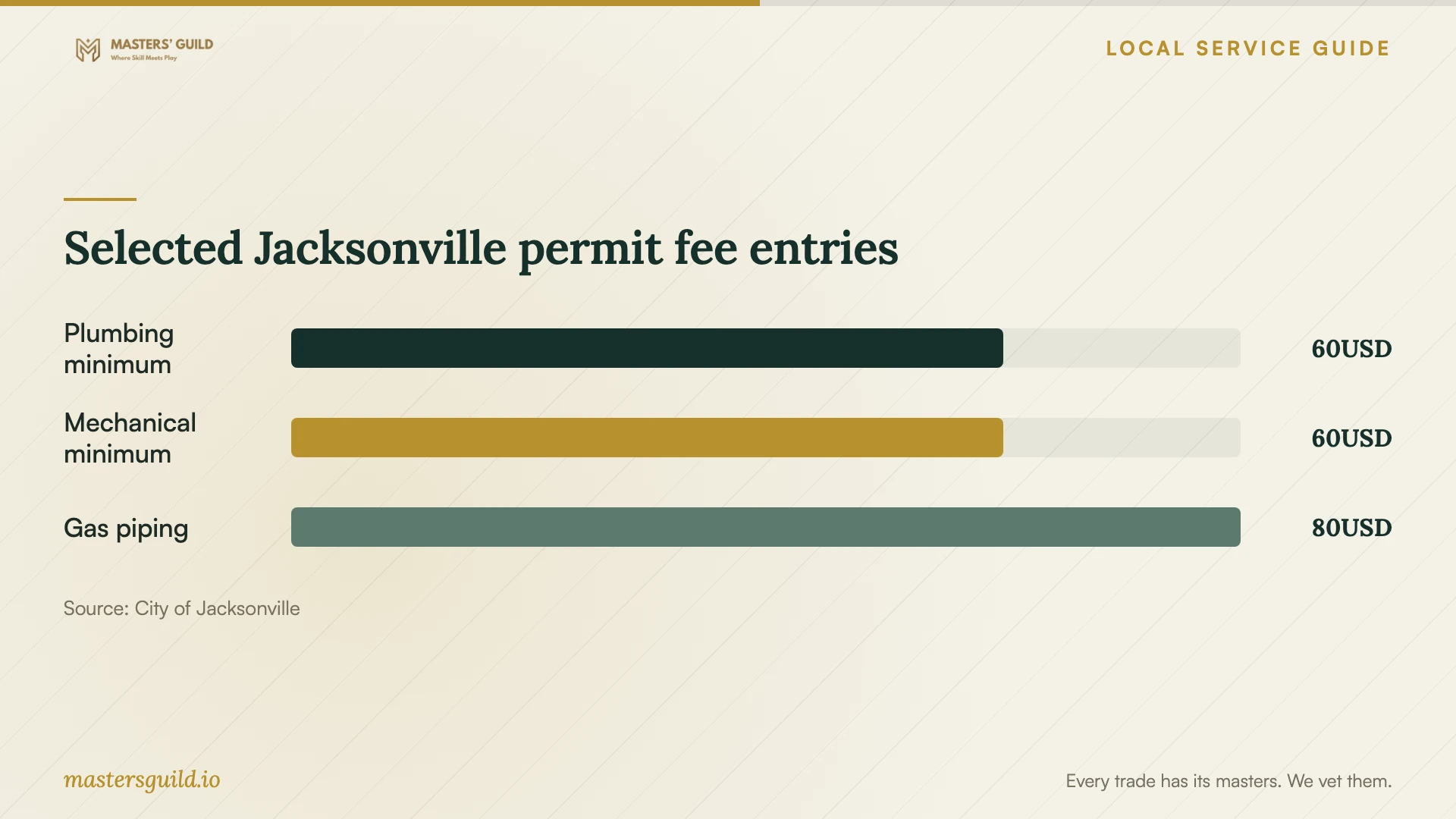
Jacksonville publishes separate electrical, plumbing, and mechanical permit fees. Its alteration fee schedule also includes a building permit calculation, minimums, and plan-review charges. Ask the bidder which permits the allowance includes and whether the contractor will reconcile the allowance against actual city charges. The selected fees in the chart do not establish a kitchen remodeling price. [3]
Plan access, inspections, and kitchen downtime
Assign someone to arrange inspection access. For an occupied home, the city requires a representative aged 18 or older who can provide access to the areas needing inspection. The city also requires approved permit documents onsite in a weatherproof container. Ask your contractor to explain who will prepare the site and track inspection results. [1]
Before demolition, agree on dust containment, work hours, material storage, and a temporary place to prepare meals. Ask for separate milestones for demolition, trade work, inspections, cabinets, countertop measurement, installation, and completion. At handover, review the punch list with the contractor and request inspection records, product information, and warranty contacts.
Selected Jacksonville permit fee entries
Local details that affect your job
Historic approval can affect exterior kitchen choices
For a property within a locally designated historic district or a locally designated landmark, Jacksonville requires a Certificate of Appropriateness for exterior work. Before ordering a kitchen window or exterior door, or approving a new exterior hood opening, confirm the property's designation and the proposed work with Historic Preservation staff. Ask whether staff or commission review applies; the city publishes a scope-based review matrix. [2]
Prepare the Notice of Commencement before inspections
The city FAQ says most jobs over $5,000 require a Notice of Commencement. Its inspection guidance requires the filed notice onsite and a copy with the permit number submitted to the Building Inspection Division before requesting inspections. Ask the contractor to confirm applicability and assign filing, submission, and posting duties before the first inspection. [1] [5]
Match your proposed work to the next step
| Proposed work | Next step before approval |
|---|---|
| Cabinet finish, hardware, or countertop changes | Describe the full scope to the contractor and confirm permit needs with the city before assuming an exemption. |
| Sink or faucet replacement | Ask whether the city's fixture-after-the-stop exemption applies; identify any proposed pipe changes. |
| Rewiring or structural alterations | Have the contractor establish permit requirements and include the work in the application. |
| Exterior window, door, or vent work at a designated historic property | Confirm Certificate of Appropriateness requirements before ordering or scheduling exterior work. |
| Work ready for concealment | Have the permit holder arrange required inspections before crews close the work. |
Your hiring checklist
- Write down the layout, products, and finishes each bidder should include.
- Identify the contractor and proposed trade subcontractors for credential checks.
- Confirm permit responsibility and historic approval needs for the exact scope.
- Ask for itemized prices, allowances, exclusions, and change-order terms.
- Confirm product availability before agreeing to demolition.
- Assign inspection access and onsite-document responsibilities.
- Plan temporary food preparation, dust containment, and material storage.
- Request inspection records and warranty contacts at handover.
Frequently Asked Questions
How much should I budget for a kitchen remodel?
Get site-specific proposals for a defined scope. The supplied city sources establish municipal fees and procedures, but they do not provide a local kitchen remodeling price range. Ask bidders to separate product allowances, labor, permit costs, and optional upgrades. [3]
Does keeping the same layout remove permit requirements?
Confirm requirements for the actual work. Jacksonville lists rewiring among permit-triggering repairs and provides a limited exemption for plumbing fixture replacement after the stop, excluding water heaters. A retained layout alone does not establish that your whole project qualifies for an exemption. [1]
Does an interior kitchen remodel require historic approval?
The city's COA guidance addresses exterior and site work at locally designated historic properties. Discuss any kitchen work that changes windows, exterior doors, or exterior vent openings with Historic Preservation staff before committing to those changes. [2]
Who schedules inspections?
The permit holder must request required inspections. Jacksonville determines required inspections during application review and supplies a listing when it issues the permit. Ask your contractor to include those inspection stages in the construction schedule. [5]
Sources and scope
This guide combines the sources below with practical planning guidance. Figures apply to the stated geography and period; request a written quote for your property.