
Local service guide
Pet Sitting and Walking in Jackson, MS
For Pet Sitting and Walking in Jackson, MS, choose a sitter who can follow your pet’s routine, agree on visit times and the full price, and practice home access before booking. Include weather alternatives and emergency permission in the written handoff. Mississippi State University Extension recommends cooler-hour dog exercise and avoiding hot surfaces, so ask how the sitter will adapt outdoor care. [2]
Choose care around your pet’s routine
Write down feeding, toilet breaks, exercise, litter cleaning, and medication tasks before comparing sitters. Include arrival windows and the gaps between visits. Ask your veterinarian to help set the schedule if your pet has a medical condition or needs care at fixed times.
For overnight care, request arrival and departure times plus any daytime absences. For drop-ins, ask whether the visit includes a walk and how much time the sitter will spend with your pet. Request an itemized total covering added pets, medication tasks, transport, holiday dates, and extra visits. Compare quotes for the same care plan.
Use the meet-and-greet to practice harness fitting, gate handling, and leaving the house. Describe pulling, escape attempts, fear of strangers, and reactions to other animals. Ask who will cover a missed visit and arrange an introduction to that backup person.
Agree on weather changes before the first visit
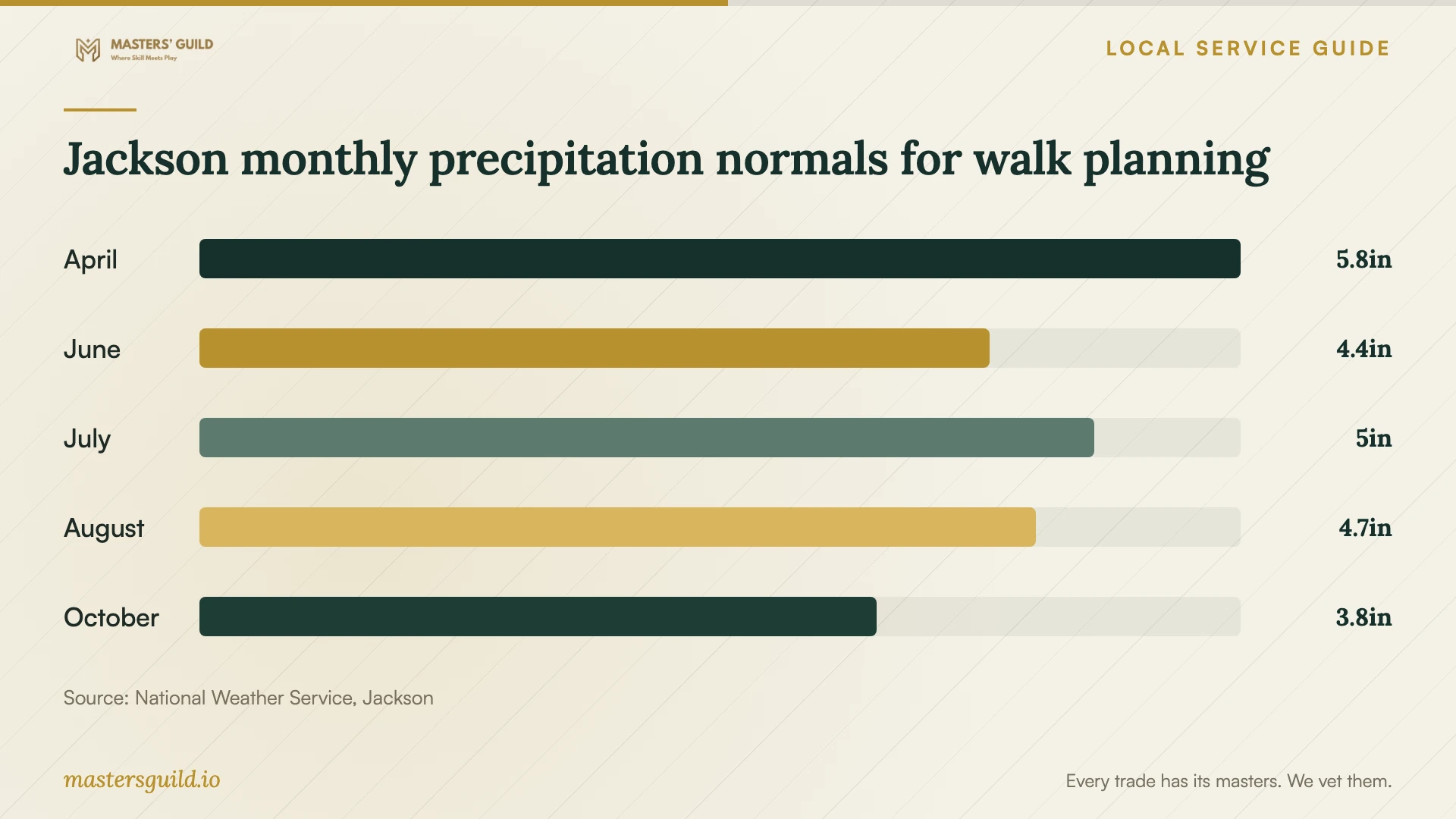
Plan both outdoor and indoor care. Jackson’s National Weather Service precipitation table reports monthly rainfall normals, including 5.84 inches in April and 3.80 inches in October for 1991–2020. Those historical averages provide context for a rain plan; they do not predict conditions on your booking dates. Ask the sitter to check the forecast and agree on wet walks, towel drying, and route changes. [1]
MSU Extension recommends cooler-hour dog exercise, fresh water, shade, and avoiding hot asphalt because hot surfaces can burn paws. Agree on how the sitter will shorten outdoor exercise while preserving needed toilet breaks and indoor care. Ask your veterinarian to set limits suited to your pet. [2]
For dogs, MSU Extension lists excessive panting, excessive drooling, bright-red gums, and unsteadiness among early heat-stress signs. It advises resting animals showing heat stress, taking them indoors or cooling them, and providing water. For serious dog heat-stroke symptoms such as vomiting, nonresponse, or collapse, it calls for immediate emergency veterinary care. Leave veterinary contacts and permission to seek urgent treatment if you cannot answer. [2]
For cats, MSU Extension lists restless behavior, panting, drooling, moist or sweaty paw pads, and excessive grooming as heat-stress signs. Include these cat-specific signs in a cat-care handoff, along with instructions to rest the animal, move it indoors or cool it, and provide water. Ask your veterinarian to explain when the sitter should seek urgent care. [2]
Check handling, medication, and home access
Ask for references relevant to your booking, such as cat care, medication administration, or handling a dog that reacts to other dogs. Request proof of insurance and ask which activities the policy covers. Watch the sitter handle your pet and discuss any task they cannot perform.
Keep veterinarian-approved medication instructions separate from household notes. Include the prescribed amount, timing, storage, and response to a missed dose or refusal. Ask the sitter to demonstrate the task. Arrange another caregiver if they cannot follow the instructions.
Test the key or entry code together. Explain alarm controls and doors that must stay closed. Agree on arrival messages and visit reports covering food, water, toilet activity, medication, and concerns. Specify whether the sitter may bring another person into your home or transport your pet.
Prepare an emergency handoff
Leave your travel contact, a nearby backup person, your regular veterinarian, and your chosen emergency veterinary facility. Confirm contact details before leaving. Record transport permission, payment arrangements, and the decisions the sitter may make if you cannot answer. Confirm that your backup person can help throughout the booking.
Include vaccination records and instructions to avoid unfamiliar animals. Mississippi’s health department advises keeping pets under control and away from strays. For a human bite, scratch, or animal exposure, it recommends washing the wound with soap and water and obtaining prompt medical attention. Ask the sitter to obtain the other animal owner’s contact details when possible. [4]
Jackson monthly precipitation normals for walk planning
Local details that affect your job
Put Jackson 311 in the sitter’s handoff
The City of Jackson accepts non-emergency animal-control issues through 311 by phone or online request. Include that reporting route for non-emergency concerns involving loose or unfamiliar animals. The city directs residents to call 911 for emergencies requiring immediate assistance. Leave veterinary contacts alongside these municipal instructions so the sitter can seek treatment for your pet. [5]
Approve Parkway outings with the right equipment
If the sitter proposes a regional Natchez Trace Parkway outing, ask them to name the route and obtain your permission for transport. National Park Service rules allow pets on Parkway trails and viewpoints, require a leash six feet or shorter and waste cleanup, and restrict building entry to service animals. These requirements apply to the Parkway, not throughout Jackson. Supply the leash and waste bags, and ask the sitter to carry water. [3]
Confirm rabies status with your veterinarian
Mississippi’s health department states that a licensed veterinarian must administer rabies vaccinations to dogs and cats over three months of age. Ask your veterinarian to confirm your pet’s vaccination schedule and status before care begins. Leave the record and instructions for contacting the veterinarian after an encounter with a stray or wild animal. [4]
Match your booking to the care you need
| Your need | Care to request | Confirm before booking |
|---|---|---|
| A workday toilet and exercise break | A scheduled walk | Arrival window, route, harness, and weather alternative |
| Feeding, litter care, or pet checks | Drop-in visits | Tasks, time with your pet, and gaps between visits |
| Company overnight during travel | Overnight care | Arrival, departure, daytime absences, and backup coverage |
| Medication at prescribed times | A sitter who can perform the task | A demonstration and written veterinarian instructions |
| A proposed Natchez Trace outing | An outing you approve in advance | Leash six feet or shorter, waste cleanup, and transport permission |
Your hiring checklist
- List care tasks, arrival windows, and gaps between visits.
- Request an itemized total and cancellation terms.
- Practice harness fitting, entry, and gate handling.
- Agree on rain alternatives, cooler-hour walks, and indoor care.
- Leave vaccination records and veterinarian-approved medication instructions.
- Confirm visit updates and backup coverage.
- Approve transport, routes, and outing equipment.
- Leave emergency contacts, treatment permission, and payment arrangements.
Frequently Asked Questions
How much should I budget?
Request quotes for your dates, pets, tasks, visit frequency, and time per visit. Ask for extras and cancellation terms in writing. Compare the full booking total for the same care plan; the cited sources do not establish a Jackson price range.
Should a summer visit include a full outdoor walk?
Agree on a flexible plan with your sitter and veterinarian. MSU Extension recommends cooler-hour dog exercise, shade, water, and avoiding hot surfaces. Specify how the sitter should preserve toilet breaks and provide indoor care when outdoor exercise needs to change. [2]
Can the sitter take my dog to the Natchez Trace Parkway?
Approve the outing and transport first. The Parkway permits pets on trails and viewpoints with a leash six feet or shorter and requires waste cleanup. Only service animals may enter Parkway buildings. Ask the sitter to identify the route and carry water. [3]
Who handles a loose-animal concern?
Jackson 311 accepts non-emergency animal-control reports. The city directs residents to call 911 for emergencies requiring immediate assistance. For pet treatment, contact the veterinary facility named in your handoff. [5]
Sources and scope
This guide combines the sources below with practical planning guidance. Figures apply to the stated geography and period; request a written quote for your property.