
Local service guide
Duct and Vent Cleaning in Jackson, MS
Consider Duct and Vent Cleaning in Jackson, MS when an inspection finds substantial visible mold inside hard-surface ducts or on HVAC components, an infestation in the ducts, ducts clogged with excessive dust or debris, or particles released from supply registers. EPA advises correcting the underlying cause before cleaning. Compare written estimates for the complete affected system before choosing a provider. [1]
Start with evidence inside the system
Have the inspector show you the affected duct or component. EPA identifies duct infestation, substantial visible mold on hard-surface ducts or system components, and excessive clogging or particles discharged through supply registers as reasons to consider cleaning. A dusty return grille needs a different assessment from contamination inside the system. [1]
Request an explanation before accepting a mold diagnosis based on appearance. EPA says an expert may need laboratory analysis to confirm suspected mold. Discuss unexplained health symptoms with your doctor; EPA says duct cleaning has not been shown to prevent health problems. [1]
Choose moisture diagnosis when the house feels damp
For a home that feels cool but clammy, request an HVAC performance assessment. Mississippi State University Extension explains that oversized equipment can cool a home before removing enough moisture. It also recommends inspecting ducts for leaks and incomplete connections. Ask the contractor to distinguish humidity and airflow problems from deposits that warrant cleaning. [2]
Include the cooling coil, condensate pan, drain and nearby insulation in the inspection. EPA advises correcting leaks and standing water and sealing and insulating ducts in unconditioned spaces. For wet or moldy duct insulation, request a replacement assessment and a plan to prevent recurrence. [1]
Compare the complete scope and total price
Use the same job description when requesting estimates. EPA recommends at least three written estimates and an agreement covering total cost and scope before work begins. Identify each HVAC system, supply and return ducts, registers, plenums, blower, coils and drain pans. EPA warns that an uncleaned contaminated component can contaminate the system again. [1]
Request separate line items for cleaning, repairs, replacement materials and optional treatments. Include access arrangements, exclusions and how you will approve additional work. If you also want dryer exhaust cleaning, describe that work as a separate item and ask the provider to confirm its route and termination.
Use inspection-based quotes to set your budget. Ask an hourly bidder to estimate the hours or days required and identify possible interruptions, as EPA recommends. Compare each proposal against the same component list before choosing a price. [1]
Match qualifications and methods to your home
MSBOC's commercial HVAC classification includes duct cleaning. Its commercial mechanical classification includes duct cleaning and equipment sanitizing that require partial system disassembly. The board lists separate residential HVAC and mechanical classifications. Describe a standalone residential cleaning scope to MSBOC if you need clarification about the applicable requirements. [3]
For residential construction or improvement projects, MSBOC requires residential mechanical and HVAC subcontractors to hold its license. Request the business's license details and an insurance certificate. The board says active license holders must maintain general liability insurance. [4]
Have the cleaner identify your duct materials and explain the tools it will use. EPA recommends outdoor vacuum exhaust or HEPA vacuum equipment for indoor exhaust, soft-bristled brushes for fiberglass duct board and fiberglass-lined ducts, and sealing and reinsulating access openings after cleaning. [1]
Review chemical treatments as a separate decision. Ask the provider to identify the duct material, explain why treatment is necessary, and show the product label authorizing the proposed use. Have the provider explain the precautions and alternatives before you approve treatment. EPA advises understanding the benefits and risks and following the product's label directions. [1]
Prepare access and verify the result
Clear access to registers, returns and the air handler. Share previous leak locations, renovation history and photographs of your concerns. Agree on equipment downtime, furniture protection and where pets will stay before the crew arrives.
Ask the crew to demonstrate the cleaned components through accessible openings or photographs. EPA recommends visual inspection and checking that registers are secure, access openings are sealed and the system operates after cleaning. Retain the proposal, invoice and photographs, including any unresolved findings. [1]
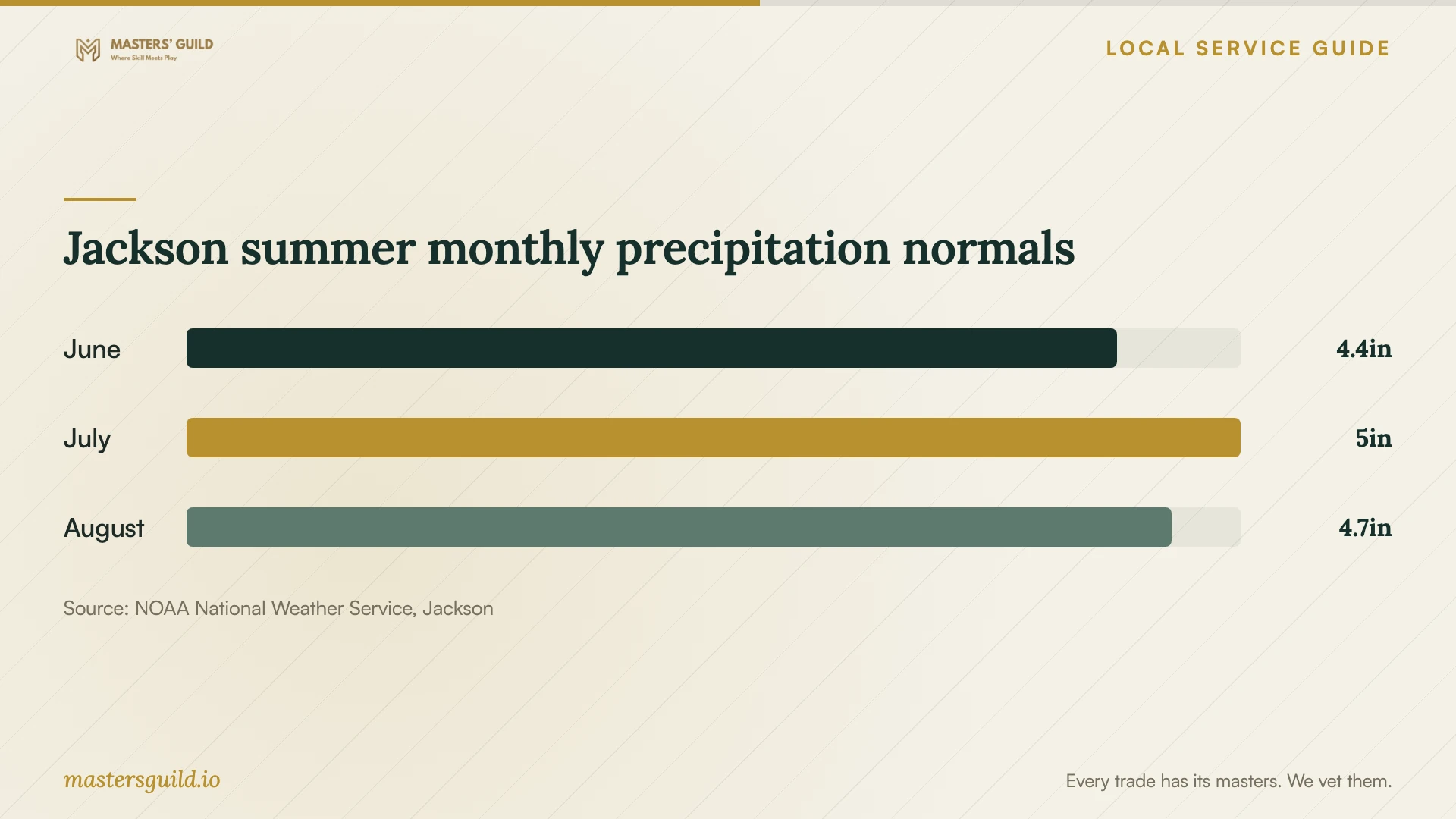
Jackson summer monthly precipitation normals
Local details that affect your job
Clarify Mississippi project licensing before booking
If cleaning forms part of residential construction or an improvement project, identify who will perform the mechanical or HVAC work and verify the applicable license. MSBOC's residential subcontractor rule covers those trades on such projects. For standalone cleaning, especially a proposal involving repairs or disassembly, describe the work to the board at 601-354-6161 and ask which requirements apply. [3] [4]
Use Mississippi humidity guidance to choose the visit
Mississippi State University Extension explains that residents rely on air conditioning for cooling and moisture removal. For a Jackson home with recurring clamminess, request a diagnostic visit that examines humidity removal, equipment sizing, duct connections and condensate drainage. Ask for separate repair and cleaning recommendations before approving repeated cleanup. [2]
Match the finding to the next step
| Inspection finding | Next step | Before approving work |
|---|---|---|
| Dust on a return grille | Clean the accessible grille and review filter care | Request evidence of any contamination inside the system |
| Duct infestation, excessive clogging or particles from supply registers | Consider a cleaning assessment | Correct the underlying cause and define the affected system |
| Suspected substantial mold on hard duct surfaces | Request identification and moisture diagnosis | Have the provider show the growth and explain any confirmation needed |
| Wet or moldy duct insulation | Request a replacement assessment | Include correction of the moisture source |
| Cool but clammy rooms | Request HVAC performance diagnosis | Review sizing, humidity removal and duct connections |
Your hiring checklist
- Describe the concern and request photographs of the inspection findings.
- Identify each HVAC system and the components included in the quote.
- Separate cleaning, repairs, replacement and dryer exhaust work.
- Confirm applicable Mississippi qualifications and request an insurance certificate.
- Review duct materials, dust collection and access-hole repairs.
- Agree on access, equipment downtime and pet arrangements.
- Inspect the result and retain the written scope, invoice and photographs.
Frequently Asked Questions
How often should I have my ducts cleaned?
EPA recommends cleaning as needed. Use inspection findings to decide, while continuing filter changes and HVAC maintenance. Dust on a return grille alone does not establish contamination inside the ducts. [1]
What should I send when requesting an estimate?
Describe the problem, identify the HVAC systems and share accessible photographs. Mention previous leaks, renovation work and access constraints. Request confirmation of the scope and total price after inspection.
Does EPA certify duct cleaners?
No. EPA says it does not certify, endorse or approve duct-cleaning companies. Ask about relevant licenses, references and experience with your duct materials. [1]
Will duct cleaning lower my energy bills?
EPA finds little evidence that cleaning ducts alone improves system efficiency. Its guidance distinguishes duct cleaning from cleaning dirty coils, fans and heat exchangers, which may improve efficiency. Request a diagnosis before accepting savings promises. [1]
Sources and scope
This guide combines the sources below with practical planning guidance. Figures apply to the stated geography and period; request a written quote for your property.