
Local service guide
Arranging snow removal in Irving, TX
For snow removal in Irving, choose a provider who puts driveway clearing, walkway treatment, ice response and return visits in writing. Request an ice-treatment trigger separate from snow depth, then compare an event-based quote with any seasonal offer. Before booking repeat treatment, check your sprinkler controller: the city warns that accidental winter activation can cause icing. [1]
Choose service terms that cover ice
Have the provider describe separate responses for loose snow, packed accumulation and ice. Request a proposal naming the surfaces, equipment or hand work, treatment material and conditions that trigger a visit. If the provider uses a snowfall threshold, establish who measures it and how you request treatment when your steps freeze before that threshold.
TxDOT describes highway pretreatment with brine as a way to prevent ice from bonding to pavement. Its crews also use salt, sand, chemical deicers and plows during winter weather. Use those distinctions to discuss prevention, traction and removal with a residential contractor. Have the contractor explain which materials and methods suit your driveway surface. [4]
Specify the route you need first, such as the front door to a parked vehicle. Include steps, landings and gates in the written scope. Have the provider identify surfaces it will leave untreated and explain how you should handle access while work continues.
Compare event-based and seasonal quotes
Request prices for the same marked areas and response terms. For an event-based offer, establish whether the charge covers one visit or the full storm. For a seasonal offer, review visit limits, ice-only events, material allowances and charges after the included work runs out.
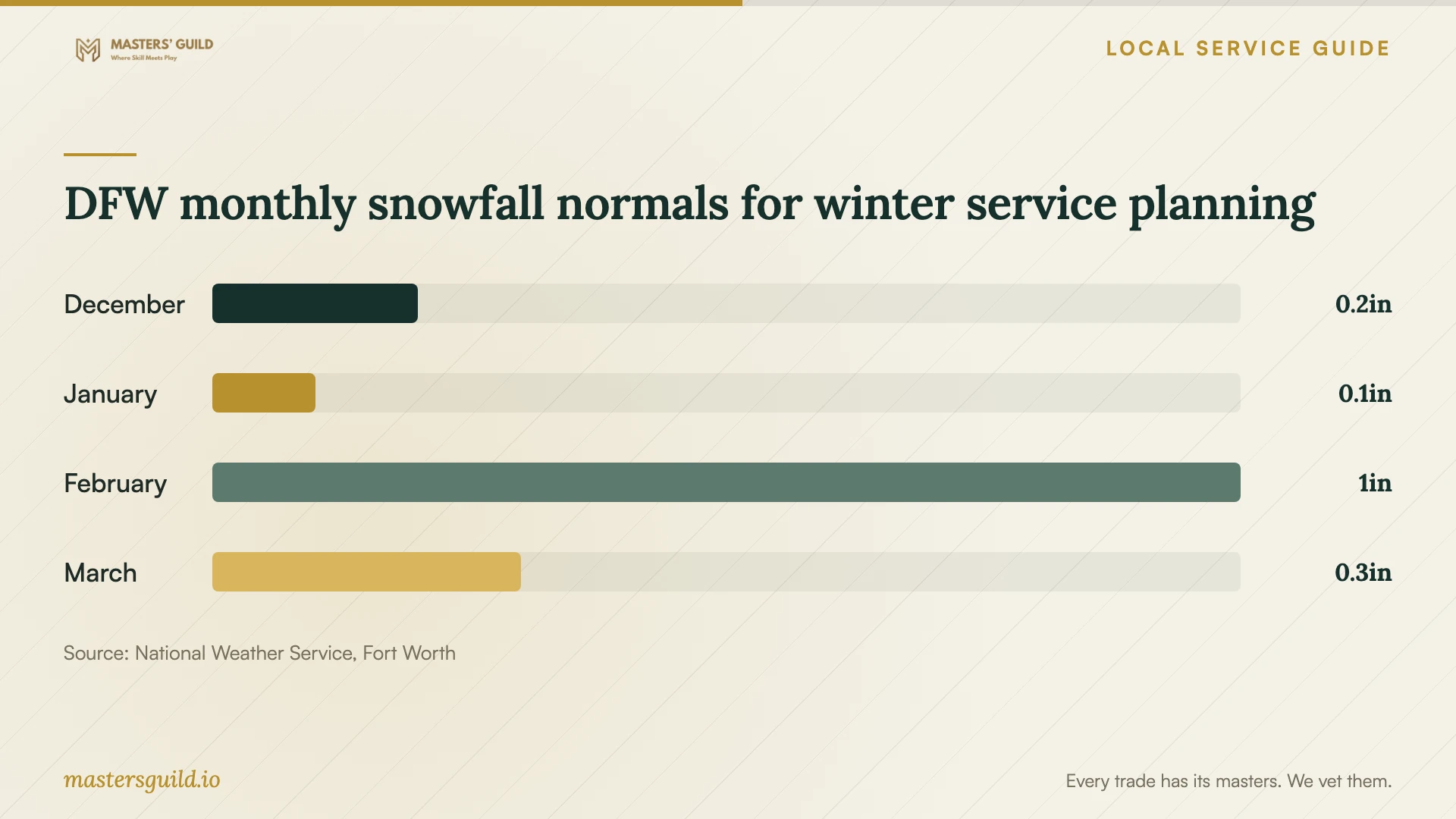
The National Weather Service reports a 1991–2020 annual snowfall normal of 1.6 inches for DFW, with a February normal of 1.0 inch. These regional figures do not measure snowfall at your address. When comparing seasonal fees, examine the promised availability and ice response alongside that snowfall context. [2]
Have each bidder separate clearing, treatment, minimum callout charges and return visits. Request a total that includes any applicable tax, and review cancellation terms before signing. Obtain a written quote based on your property's dimensions, surfaces and requested coverage.
Prepare the property and agree on access
Send photos and dimensions before requesting a firm quote. Mark pavement edges, steps, drains, irrigation heads and existing damage. Identify decorative paving or other surfaces that need the provider's review. Agree on a snow placement area and discuss how the crew will keep the entrance, garage access and drainage route clear.
Confirm who moves vehicles and opens gates, whether the crew needs you at home and how it will report completion. Request proof of insurance covering the proposed work and a written process for reporting damage. For a shared driveway or managed property, confirm responsibility with the owner or association before authorizing work.
Agree on how the provider communicates delays and whether it offers a completion window or a target time. TxDOT discourages driving during inclement weather and identifies bridges and overpasses as vulnerable to icing. Check highway conditions before leaving, even after the crew clears your driveway. [4]
Arrange follow-up before the first visit
Put the return-visit rule in the agreement. Establish whether the provider checks the property after treatment, waits for your request or returns when agreed conditions occur. Specify who authorizes extra material and whether a second callout carries a separate charge.
For a patch that keeps returning, investigate the water source before authorizing more treatment. Review sprinkler operation using the city's winter guidance. If you suspect a leak or drainage problem, arrange a repair assessment alongside the clearing work. [1]
DFW monthly snowfall normals for winter service planning
Local details that affect your job
Turn off automatic winter irrigation
Irving recommends turning off the irrigation controller and watering manually no more than once per month when temperatures will remain well above freezing. The city says keeping the controller off helps prevent accidental activation that could cause icing. Check the settings before a treatment visit and tell the contractor about sprinkler overspray near your driveway or entrance. [1]
Use the city's irrigation check-up for suspected overspray
Irving residents can receive a free irrigation system check-up through the city's Irrigation Assistance Program. A licensed irrigation technician evaluates issues including programming errors, leaks and broken or misaligned heads. Consider that assessment if sprinkler water keeps reaching the area you need cleared. [1]
Separate roadway reporting from condition information
Irving lists 972-721-2201 for street repairs and related problems during normal business hours, and Police Dispatch at 972-721-2518 for emergency or hazardous conditions after business hours and on weekends. In its signs and pavement markings guidance, the city lists 800-558-9368 for TxDOT-maintained roads such as Irving Boulevard. Keep that number tied to signs and markings concerns. For highway condition information before travel, TxDOT directs motorists to DriveTexas or its Travel Information Line at 1-800-452-9292. Use those information resources to assess travel plans and discuss possible access delays with your contractor. [3] [4]
Match the agreement to your access needs
| Your situation | Scope to request | Term to settle |
|---|---|---|
| You want help when an event occurs | Event-based clearing and treatment | One-visit versus full-event billing |
| You need an entrance route cleared first | Priority walkway, steps and landing | Response window and delay notice |
| You want a seasonal agreement | Defined clearing and ice-treatment coverage | Visit limits, exclusions and extra charges |
| Ice returns near sprinkler coverage | Treatment plus review of the water source | Controller settings and irrigation assessment |
Your hiring checklist
- Photograph and measure the driveway, entrance route, steps and landings.
- Mark surface damage, pavement edges, drains and irrigation heads.
- Define separate triggers for snow clearing and ice treatment.
- Confirm materials, surface suitability and snow placement.
- Compare callout minimums, treatment charges and return-visit terms.
- Agree on vehicle movement, gate access and delay notifications.
- Request proof of insurance and a written damage-reporting process.
Frequently Asked Questions
Should I book a seasonal contract?
Compare it with an event-based offer using the same surfaces and response terms. Establish what you pay for during a winter with few clearing visits and whether ice-only treatment counts toward any limit. Choose based on your access needs and the written coverage.
Can I request ice treatment without snow clearing?
Request a separate ice-only scope and price. Specify the areas, treatment trigger and return-visit rule. TxDOT describes pretreatment and removal in its highway operations. Confirm the services and surface-specific methods a residential contractor proposes for your property. [4]
Does the snowfall chart show how many visits I will need?
No. It shows DFW monthly snowfall normals from 1991–2020. It does not measure your property's accumulation, ice-treatment needs or future storms. Use it to discuss seasonal coverage, then agree on service triggers for your property. [2]
Sources and scope
This guide combines the sources below with practical planning guidance. Figures apply to the stated geography and period; request a written quote for your property.