
Local service guide
Pest Control in Irving, TX: Hiring and Planning
To arrange Pest Control in Irving, choose a Texas-licensed business, ask who will perform the work, and match the treatment to the identified pest. Texas requires licenses for businesses and individuals performing structural pest control for hire and distinguishes general pest control from termite control. Before booking, request a written scope covering affected areas, preparation, follow-up visits and total charges. For mosquitoes or animals in the attic, account for Irving’s surveillance program and local trapping rules before approving the work. [1] [2] [3]
Match the contractor to the pest
Ask the contractor to identify the pest and explain the evidence before you approve treatment. Send clear photographs, the locations of sightings and a record of when you first noticed activity. Describe previous treatments, including products you applied yourself, and ask whether the contractor needs an inspection before quoting.
The Texas Department of Agriculture includes ants, roaches, mosquitoes, rats and mice within its pest control category. Its termite control category covers termites and other wood-destroying organisms through methods other than fumigation. Ask for the business license details and the credentials or supervision arrangement for the person attending your home. For suspected wood damage, ask about termite qualifications rather than assuming a general pest visit covers the inspection. [1]
Describe the result you want: treatment of an identified indoor infestation, mosquito reduction around the yard, or removal of animals and repair of entry points. Ask the contractor to separate these tasks in the proposal so you can see what you are buying.
Compare written scopes and total charges
Request an itemized quote for your property rather than planning around an unsupported local average. Ask the contractor to state the target pest, rooms or outdoor areas covered, proposed method, preparation requirements and return-visit plan. Have them distinguish an initial treatment charge from recurring service charges.
For a maintenance agreement, ask which pests the provider includes, what triggers an extra charge and how you request a return visit. Read the renewal and cancellation terms. For a stated guarantee, ask whether it covers retreatment, repairs or another remedy, and which conditions you must meet.
For rodent or attic work, request separate descriptions of trapping, monitoring, carcass removal, cleanup and entry-point repairs. Ask who will check equipment and when the contractor plans to close openings. Compare proposals against the same list of tasks instead of treating all rodent quotes as equivalent.
Plan mosquito work around water and city assistance
Irving operates a year-round mosquito program that includes surveillance, treatment or removal of standing water, larval control and adult mosquito spraying. Residents can request an overnight trap on their property, but the city specifies that these requested traps test for West Nile virus-carrying mosquitoes only. Use that distinction when deciding whether you need city surveillance assistance, a private yard assessment or both. [2]
Before requesting a yard treatment quote, walk the property and note containers, drainage problems and water you cannot drain. Irving advises residents to empty, remove, cover or turn over containers holding standing water and to change water in pet dishes, wading pools and birdbaths several times a week. Ask the contractor which water sources you should address and what work they propose for the remaining areas. [2]
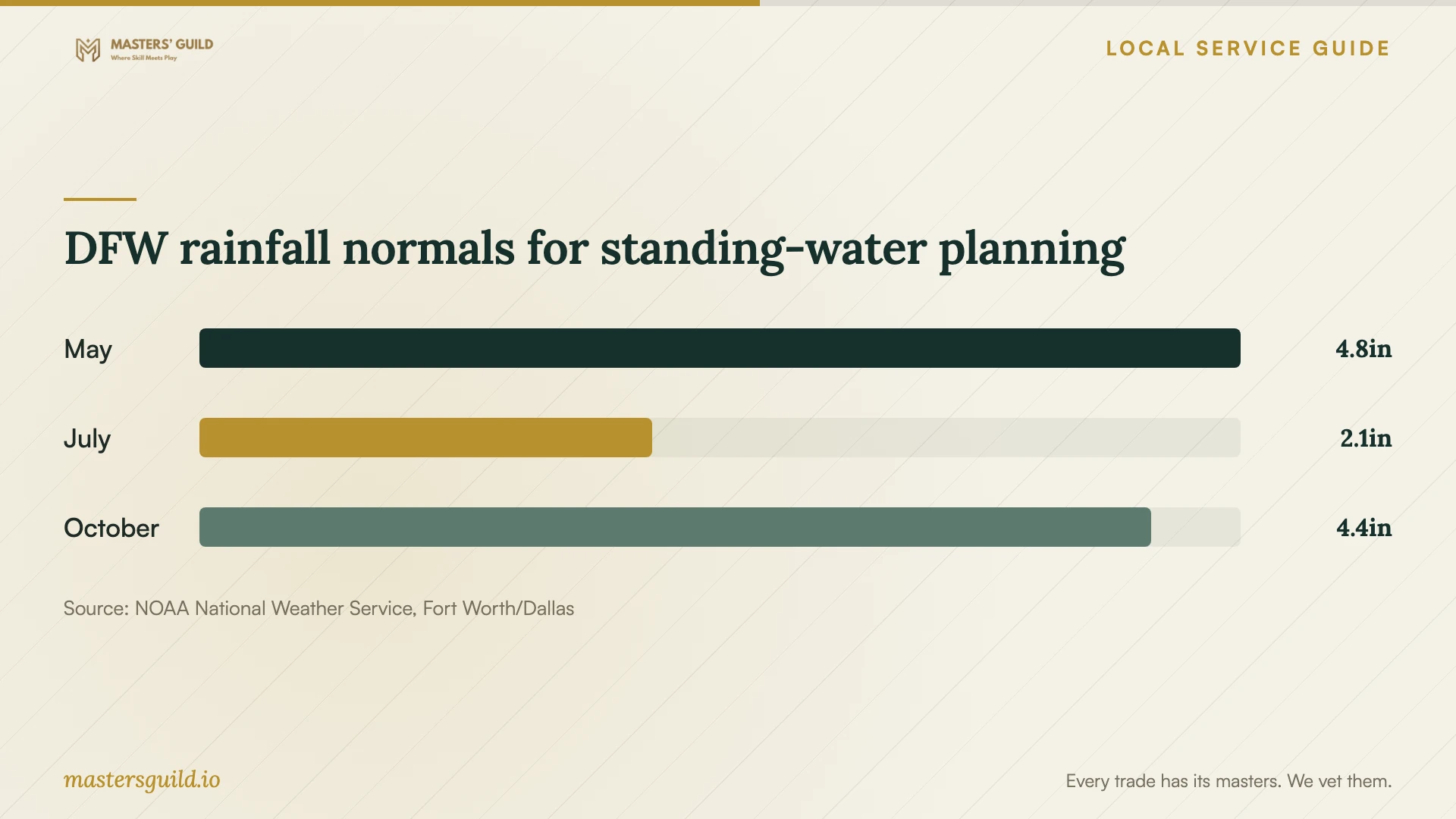
The regional rainfall chart provides a reason to revisit that water check in autumn as well as spring. The National Weather Service reports an October normal of 4.37 inches at DFW, compared with 4.78 inches in May. Use the figures as background for drainage planning; base treatment timing on conditions at your home and the contractor’s instructions. [4]
Prepare the home and agree on follow-up
Before the appointment, tell the contractor about children, pets, aquariums and any exposure concerns. Request written preparation and re-entry instructions for the proposed treatment. Ask what to move, cover or leave untouched, and arrange access to the areas the contractor needs to inspect.
Agree on how you will judge progress and when to report continued activity. Ask what sightings the contractor expects after treatment, which signs warrant a return visit and whether you should avoid cleaning particular treated areas. Keep the treatment record, invoice and written instructions together.
DFW rainfall normals for standing-water planning
Local details that affect your job
Request the right kind of city mosquito help
For mosquito concerns, Irving’s program offers residents property trap requests for overnight West Nile surveillance. The city also says it schedules ground spraying when it finds virus-carrying mosquitoes. Describe your concern as a surveillance request when contacting the city, and ask a private provider to specify the yard treatment and follow-up you would purchase. [2]
Check the plan for attic wildlife before approving relocation
Irving’s animal ordinance restricts transport of animals subject to statewide rabies quarantine, including live coyotes, raccoons and foxes, with specified exemptions. It also requires checks of humane traps at least every two hours during daylight or every eight hours overnight. Before approving wildlife work, ask the contractor to identify the species, explain lawful disposition and assign responsibility for trap checks. [3]
Require precautions for rodent traps and bait
Irving permits rodent and insect extermination on a person’s property, or with the property owner’s written consent, subject to manufacturer label instructions and reasonable precautions against contact by people and non-target animals. Ask the contractor to explain equipment placement, protection for pets and removal of equipment after the job. [3]
Choose the scope to request
| Your concern | Scope or assistance to discuss | Question before booking |
|---|---|---|
| Ants or roaches indoors | Texas pest control category | Which areas and follow-up visits will you include? |
| Suspected termites or wood damage | Texas termite control category | Who will inspect, and what evidence supports the proposed treatment? |
| Mosquito concerns around the home | Irving overnight West Nile surveillance trap request; private treatment scope if desired | Am I requesting virus surveillance, yard treatment or both? |
| Rats or mice | Control with precautions against contact by people and non-target animals | Who handles monitoring, removal and entry-point repairs? |
| Raccoon or other attic wildlife | Species identification, trap checks and lawful disposition | How will you comply with local trapping and transport restrictions? |
Your hiring checklist
- Photograph the pest or signs of activity and list affected areas.
- Request business license details and the attending worker’s credentials.
- Ask for pest identification and a written treatment scope.
- Compare initial charges, recurring charges and return-visit terms.
- Discuss children, pets, aquariums and treatment preparation.
- Assign responsibility for trap checks and equipment removal.
- Keep the invoice, treatment record and follow-up instructions.
Frequently Asked Questions
Does a general pest control license cover termite work?
Texas lists pest control and termite control as separate license categories. Ask the provider to explain the qualifications covering your termite inspection or treatment before accepting the proposal. [1]
Can Irving test mosquitoes on my property?
The city says residents can request a trap on their property. Staff set requested traps overnight for West Nile virus surveillance only. Ask about that service when your concern involves mosquito surveillance. [2]
Can I have a trapped raccoon taken somewhere else?
Do not assume relocation is available. Irving restricts transport of live raccoons and other specified animals subject to statewide rabies quarantine, with exemptions. Ask the contractor to explain the lawful disposition before setting a trap. [3]
Should I choose a single treatment or recurring service?
Ask for a proposal addressing the pest the contractor identifies. Compare the single-treatment scope with the recurring plan’s included pests, visit schedule, return-visit terms and cancellation conditions. Choose after the provider explains how each option addresses your home.
Sources and scope
This guide combines the sources below with practical planning guidance. Figures apply to the stated geography and period; request a written quote for your property.