
Local service guide
Mold Removal in Irving, TX: Hiring and Repair Planning
Arrange Mold Removal in Irving by identifying the moisture source, checking the proposed assessor’s and remediator’s Texas credentials, and agreeing on the repair scope before work begins. Texas generally separates assessment from remediation on the same project, with exemptions that depend on the circumstances. If removal includes demolition or rebuilding, confirm Irving’s permit requirements before accepting a start date. [1] [3]
Choose the assessment and cleanup scope
Start with the wet area and its cause. TDLR advises fixing the underlying moisture problem, removing mold and keeping the home dry. It identifies pipe leaks, roof leaks, sewage backups and overflows as possible moisture sources. Tell the assessor where you noticed staining or odor, when it appeared and whether anyone has repaired the leak. [1]
Ask what a proposed mold test will change. TDLR says identifying the species in a residence is generally unnecessary and that testing is not required before cleaning or remediation. If you pay for sampling, ask a licensed consultant to explain the interpretation criteria and the recommendations they would make from the results before collecting samples. [1]
For hidden damage or recurring odor, ask the assessor to explain the investigation boundaries before you authorize opening walls. Request a written description of the rooms, materials and suspected moisture sources they will examine. Agree on how they will obtain approval if they discover damage outside that scope.
Check Texas credentials and project responsibilities
Use TDLR’s license search through its mold program page to check the people and companies named in the proposal. Ask the contractor to identify the responsible Mold Remediation Contractor and the Mold Assessment Consultant preparing the protocol. TDLR says a person or company holding both types of license generally cannot assess and remediate the same project. [1]
Ask anyone proposing unlicensed work to identify the exemption they intend to use. TDLR describes minimum-area, homeowner and other exemptions, including distinctions for rental properties. A licensed remediator handling less than 25 contiguous square feet still must follow the applicable law and rules, including a work plan based on a licensed consultant’s protocol; that small project does not require notification. [1]
Licensed assessors and remediators must give the client and property owner the Consumer Mold Information Sheet before mold-related activity begins. Request it with the contract, along with a clear explanation of who handles assessment, removal, leak repair and completion review. [1]
Compare quotes and agree on access
Request separate amounts for assessment, any sampling, remediation, disposal, moisture-source repairs and rebuilding. Ask each bidder to identify exclusions and explain how they will price additional damage. Compare the affected materials and completion requirements before comparing totals.
Ask how the crew will contain the work area, protect belongings and manage access to bathrooms, bedrooms and exits. Have the contractor explain whether you can remain in the home during each phase and what would change that recommendation. Agree on arrangements for children and pets before the crew arrives.
Confirm which materials the contractor intends to clean and which they intend to discard. TDLR distinguishes cleanable nonporous surfaces from absorbent materials such as drywall, carpet and insulation that may need removal. It says painting over mold or applying bleach to drywall without removing the mold source does not provide an effective solution. [1]
Set completion requirements before removal starts
Arrange formal clearance before the cleanup if you want that service. TDLR says a consultant who did not prepare a remediation protocol in advance cannot declare that the project achieved clearance. The agency distinguishes formal clearance from a later inspection that may document an absence of evidence of mold damage. [1]
Ask which completion documents you will receive and who will sign them. Discuss the Certificate of Mold Damage Remediation with the licensed team rather than assuming any cleaner can issue one. TDLR states that only a licensed remediator can provide that certificate, and it describes separate consultant certification options in certain circumstances. [1]
Keep the assessment, protocol, work plan, change approvals, leak-repair records and completion documents together. Before authorizing rebuilding, ask the consultant and repair contractor to explain what remains unfinished and who has responsibility for it.
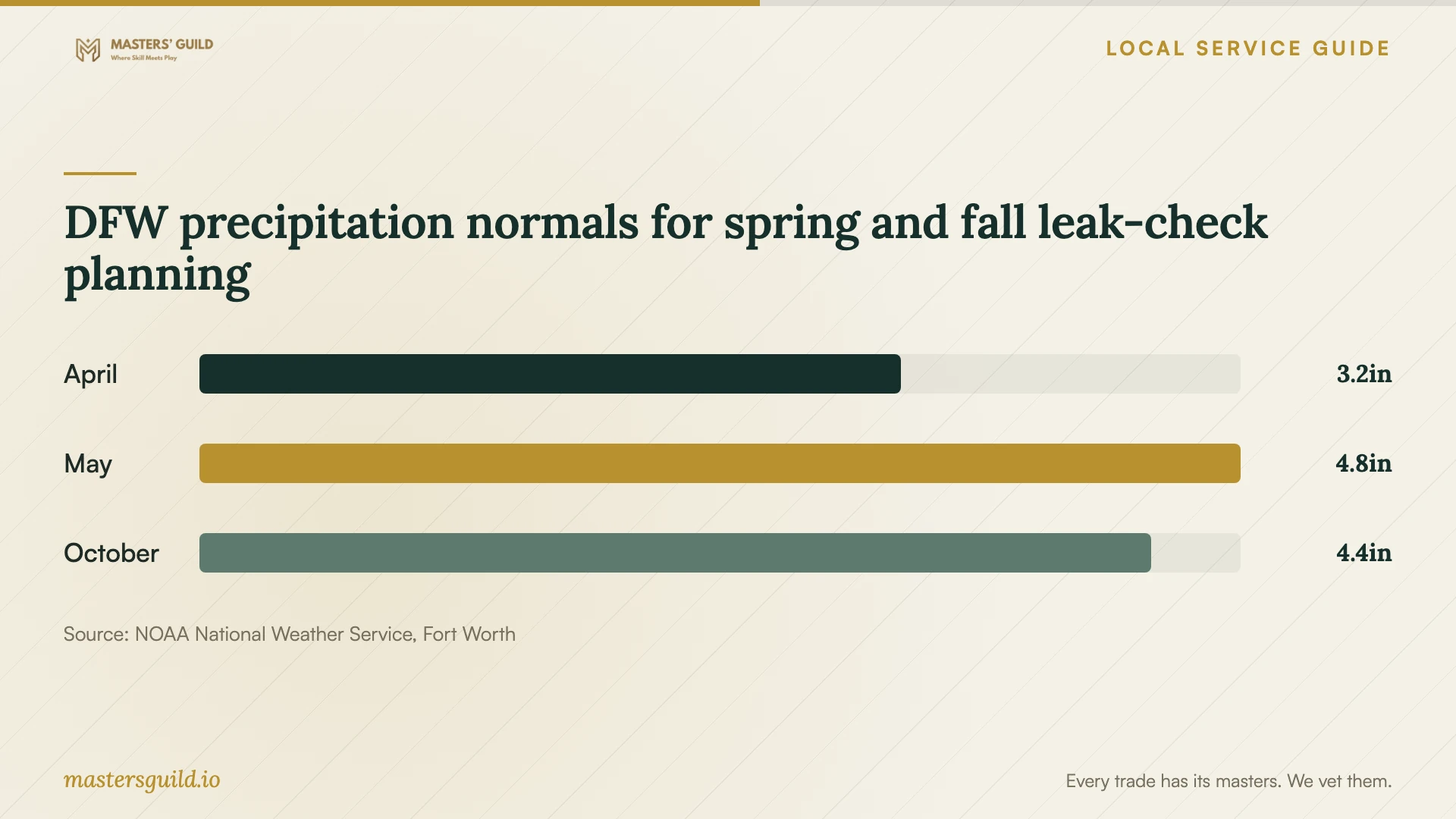
DFW precipitation normals for spring and fall leak-check planning
Local details that affect your job
Confirm Irving permits for demolition and rebuilding
Irving requires building permits to erect, enlarge, alter, move, demolish or repair a structure. The city exempts cosmetic work such as painting, carpeting and cabinetry. Give the Inspections Department the proposed removal and rebuilding scope and ask which permits apply. If you plan to do permitted work yourself, the city requires a Dallas Central Appraisal District homestead exemption before applying for residential permits, except roof permits. [3]
Allow for the city’s permit and inspection process
Irving uses My Government Online for permit applications, payments, inspection scheduling and inspection results. The city lists about three business days for residential permit approval, including remodels, and identifies incomplete submissions and delayed contractor responses as possible causes of delay. It sets a 6 a.m. weekday cutoff for scheduling same-day inspections online and does not perform weekend inspections. Ask your repair contractor to include these steps in the rebuilding schedule. [4]
Confirm state notification responsibilities
For projects subject to Texas mold notification requirements, TDLR identifies 25 contiguous square feet or more as the notification threshold and charges a $25 filing fee. Ask the licensed remediator whether your project requires notification and who will submit it. For an emergency in which delay would increase contamination from water damage, the licensee determines the emergency and must notify TDLR by the following working day. [2]
Choose the next step for your situation
| Situation | Next step | Point to confirm |
|---|---|---|
| Visible mold with a known leak | Arrange moisture repair and define the cleanup scope. | Species testing is not required before remediation or cleaning. |
| Contractor proposes a small-project exemption | Ask which Texas exemption applies. | A licensed remediator still follows the rules on projects under 25 contiguous square feet. |
| You want formal clearance | Engage the consultant before remediation. | The consultant must prepare the protocol in advance to declare clearance. |
| Removal includes structural repair or demolition | Confirm permits with Irving Inspections. | The city requires permits for structural repairs and demolition. |
| Cleanup requires replacing finishes | Separate cosmetic work from structural work in the scope. | Irving exempts painting, carpeting and cabinetry from permits. |
Your hiring checklist
- Photograph visible damage and write down when you first noticed leaks, staining or odor.
- Give bidders the same room list and repair history.
- Ask each provider to identify the assessor, remediator and moisture-repair contractor.
- Request an itemized scope, exclusions and a written change-approval process.
- Confirm responsibility for city permits, state notification and inspection scheduling.
- Agree on room access, belongings protection and arrangements for pets.
- Specify completion review and document delivery before signing.
Frequently Asked Questions
Does every mold job require a Texas license?
Texas provides exemptions based on area, ownership and other circumstances. Ask the provider to explain the exemption for your property and scope. Do not assume a licensed remediator can waive the rules on a small job; TDLR says licensed remediators must comply even below 25 contiguous square feet. [1]
How much should I budget?
Get a property-specific written quote after defining the affected materials and moisture repairs. Ask for separate assessment, removal and rebuilding amounts, plus the process for approving hidden damage. Treat a quote that leaves out leak repair or reconstruction as an incomplete project budget.
Can I get clearance after doing the cleanup myself?
TDLR says a consultant who did not prepare a protocol before remediation cannot declare formal clearance. A licensed consultant may perform a later inspection and provide the separate certification described by TDLR if the property meets its conditions. Discuss the documentation you need before starting. [1]
How can I reduce the chance of mold returning?
Repair the moisture source and dry affected areas. TDLR recommends keeping indoor humidity no higher than 50 percent and using an air conditioner or dehumidifier as needed. Ask your repair contractor how you should monitor the repaired area and respond if moisture returns. [1]
Sources and scope
This guide combines the sources below with practical planning guidance. Figures apply to the stated geography and period; request a written quote for your property.