
Local service guide
Carpet cleaning in Irving, TX: Booking Guide
Arrange carpet cleaning in Irving by giving each cleaner the same room list, problem areas, furniture requirements, and completion deadline. Compare itemized totals and agree on drying instructions before booking. For ordinary residential cleaning, include applicable sales tax in your budget. Describe leaks or soaked carpet at the outset so the provider can assess water-damage work and its different billing treatment. [1]
Give cleaners a scope they can price
Send a room list, approximate dimensions, stair count, and photographs of stains or damaged areas. Ask how the cleaner defines a room and prices oversized spaces. Identify the areas you want cleaned and any furniture you expect the crew to move.
Ask for a written estimate that identifies the cleaning method, minimum visit charge if any, included work, optional treatments, and total due. For a stain or pet odor, request an inspection and an explanation of the expected result before approving treatment. Agree on who can authorize additional charges.
Ask about liability insurance and the process for reporting damage. Keep the agreed scope with your invoice, including any exclusions and follow-up terms. Compare revised totals if providers have quoted different areas or services.
Read the Texas tax lines
The Texas Comptroller’s general rule makes ordinary residential carpet cleaning taxable. Its guidance also lists upholstery cleaning, protective chemical applications, and odor-control chemical treatments as taxable. Providers collect 6.25 percent state sales tax plus applicable local sales tax on taxable charges. Ask whether the estimate includes that tax. [1]
For residential water-damage work, the Comptroller lists water extraction and carpet repairs as nontaxable. Request distinct charges for extraction, repairs, cleaning, chemical treatments, and disposal. The guidance explains separate billing for taxable and nontaxable services; a combined charge can complicate the tax calculation. [1]
A water-damage job does not qualify for disaster relief just because a flood occurred. The Comptroller describes a carpet-cleaning exemption for property damaged in a natural disaster when the Governor or President declares the area a disaster area. The customer must provide an exemption certificate identifying disaster damage, and the provider must bill labor apart from materials. Materials remain taxable, and the exemption excludes waste removal. Ask the provider whether your job meets these conditions. [1]
Set a drying plan around your household
Share the carpet manufacturer’s care instructions if you have them. Point out repaired seams, loose edges, previous treatments, and delicate furniture. Ask the cleaner to explain the proposed method and give room-specific instructions for walking on the carpet and replacing furniture.
State your deadline for using bedrooms or admitting movers and guests. Agree on the expected drying window, any equipment or ventilation arrangements, and a contact if dampness persists beyond that window. Arrange a route through the home that avoids cleaned areas.
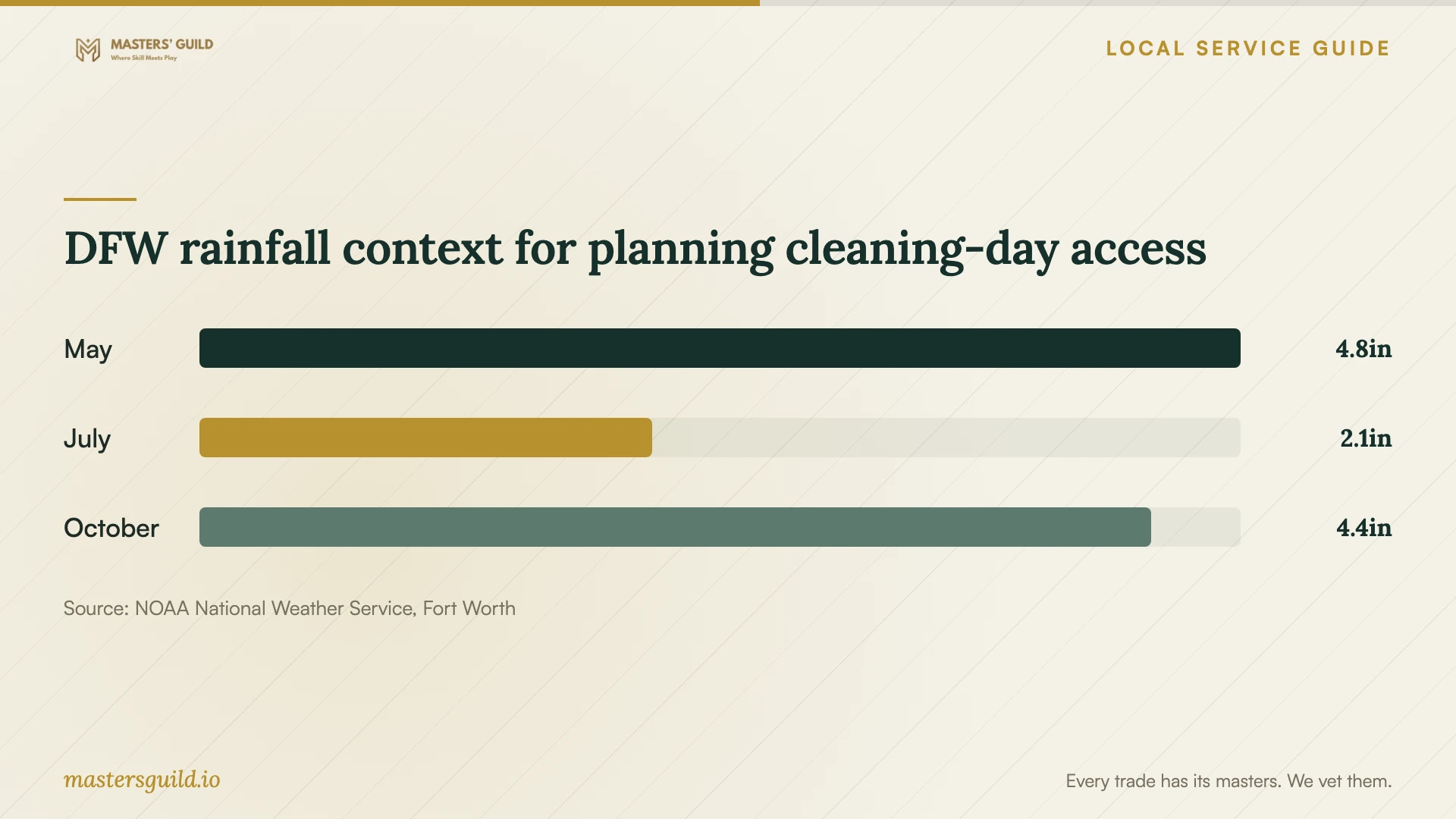
For regional access planning, National Weather Service data show DFW normal precipitation of 4.78 inches in May and 4.37 inches in October for 1991–2020. Check the appointment-day forecast and discuss covered entry and wet shoes with the crew. Those regional averages do not establish a drying time for your carpet. [3]
Confirm access and the wastewater route
Agree on parking, hose or equipment access, stairs, and furniture responsibilities. For a managed building, check access arrangements with management. Clear small objects, secure pets, and show the crew any surfaces you want protected.
Irving’s published sewer article includes provisions addressing chemical waste draining toward storm sewers and detergents that cause excessive foaming in the treatment system. The same page flags Ordinance 2026-11336, adopted September 24, 2026, as amending the article. Without the amendment text and effective-date provisions, these displayed restrictions cannot establish the complete current requirements. [2]
Ask the provider to identify how it will collect recovered water and confirm current city requirements for the intended disposal location. Resolve that question before equipment setup. Avoid choosing a drain for the crew based on convenience.
Arrange restoration assessment for soaked carpet
Tell the provider where the water came from, when the wetting began, and whether you suspect contamination. EPA advises drying wet materials within 24–48 hours where possible to prevent mold growth. That water-damage guidance is not a promised drying window for routine cleaning. [4]
EPA explains that extraction alone will not dry carpet and that the padding also needs drying. Ask how the provider will assess the backing, pad, and floor, and how it will determine when drying is complete. For suspected sewage or other contaminated water, seek a professional with that expertise. EPA advises against fans until someone determines that the water is clean or sanitary. [4]
DFW rainfall context for planning cleaning-day access
Local details that affect your job
Separate residential restoration charges in Texas
For a home water-damage invoice, request separate extraction and repair charges from cleaning and chemical treatments because Texas assigns them different tax treatment. If the damage relates to a declared natural disaster, ask about the exemption certificate and separate labor/material billing before approving the invoice. Ordinary leak damage alone does not establish eligibility. [1]
Resolve Irving’s sewer amendment before disposal
The city’s published sewer page lists a September 24, 2026 amendment affecting Article VII. Treat the displayed disposal provisions as published code text, not verified current law. Ask the cleaner to confirm the current requirements for its collection and disposal route with the city when needed, before work begins. [2]
Choose the right assessment
| Condition | Arrange | Ask before approving |
|---|---|---|
| Routine soil or traffic marks | Cleaning assessment and written estimate | Which areas and furniture tasks does the total include? |
| Specific stain or pet odor | Inspection and treatment proposal | What result should I expect, and what follow-up do you offer? |
| Soaked residential carpet | Water-damage assessment | How will you assess and dry the carpet, padding, and floor? |
| Suspected sewage contamination | Professional assessment by someone with contaminated-water expertise | How will you assess contamination before using fans? |
Your hiring checklist
- Send rooms, dimensions, stairs, and photographs of problem areas.
- Share carpet care instructions and previous treatment details.
- Request the total due and written approval terms for extras.
- Agree on furniture moving, parking, and building access.
- Confirm wastewater collection and the intended disposal location.
- Arrange drying instructions and a follow-up contact.
- Describe water damage or suspected contamination before booking.
Frequently Asked Questions
How much should I budget?
Obtain an itemized quote for your rooms and their condition. Ask about minimum charges, oversized rooms, stairs, furniture moving, and optional treatments. Compare the total due for an identical scope.
Should I approve deodorizing or carpet protection?
Ask the cleaner to explain the purpose, product, expected result, and separate price. State any product preferences before the visit and approve treatments after discussing the problem areas.
Can I schedule cleaning just before movers arrive?
Explain the moving deadline before booking. Ask the cleaner to allow for its expected drying window and give instructions for furniture placement. Choose another appointment if you cannot accommodate those instructions.
Sources and scope
This guide combines the sources below with practical planning guidance. Figures apply to the stated geography and period; request a written quote for your property.