
Local service guide
Pressure Washing in Irvine, CA: Hiring and Planning
Arrange Pressure Washing in Irvine by comparing written scopes that name the surfaces, cleaning method, water supply and wash-water handling. Have the contractor explain containment before you accept a quote: the City says its storm drains release untreated water into channels, creeks and the ocean. If the crew will use your hose connection, request an expected water volume and check your household water budget before booking. [1] [2]
Define the work before comparing quotes
Send each contractor the same photographs and a surface list. Separate the driveway, entry path, patio, walls and outdoor furniture you want cleaned. Include approximate dimensions, access through gates, steps and the location of your water connection. Have the contractor confirm measurements before you accept the final scope.
Describe the result you want. Request separate treatment options for visible stains rather than assuming a general wash includes stain removal. Have the contractor identify marks they expect to remain and explain limits on the result. Get a written price for the agreed work, with optional treatments listed apart from the base scope.
Compare responsibility as well as price. Specify who moves planters, clears furniture, protects adjacent areas and restores the space afterward. Request proof of insurance and clarify who will perform the work. Keep the accepted scope and photographs together for the completion inspection.
Agree on wash-water handling before work starts
The City of Irvine distinguishes storm drains from indoor drains: the storm drain system releases untreated water into flood control channels, creeks and the ocean. Walk the cleaning area with the contractor and identify where water could leave the property. Request written containment, collection and disposal arrangements. [1]
For industrial and commercial sites in Orange County, H2OC identifies soaps, detergents, cleaning solvents, oil and grease among runoff pollutants. In that industrial and commercial guidance, the program instructs operators to discharge wash water from cleaning filters, grills, floor mats and garbage bins to the sanitary sewer system. [3]
That instruction does not establish residential disposal requirements or permission to use a particular sewer connection. For a home driveway, patio, grill or bin, have the contractor confirm an approved disposal route and any required permission with the relevant authority before work starts. Price grill or bin cleaning as a separate task so you can review its method and waste handling. [3]
Check the water supply and household budget
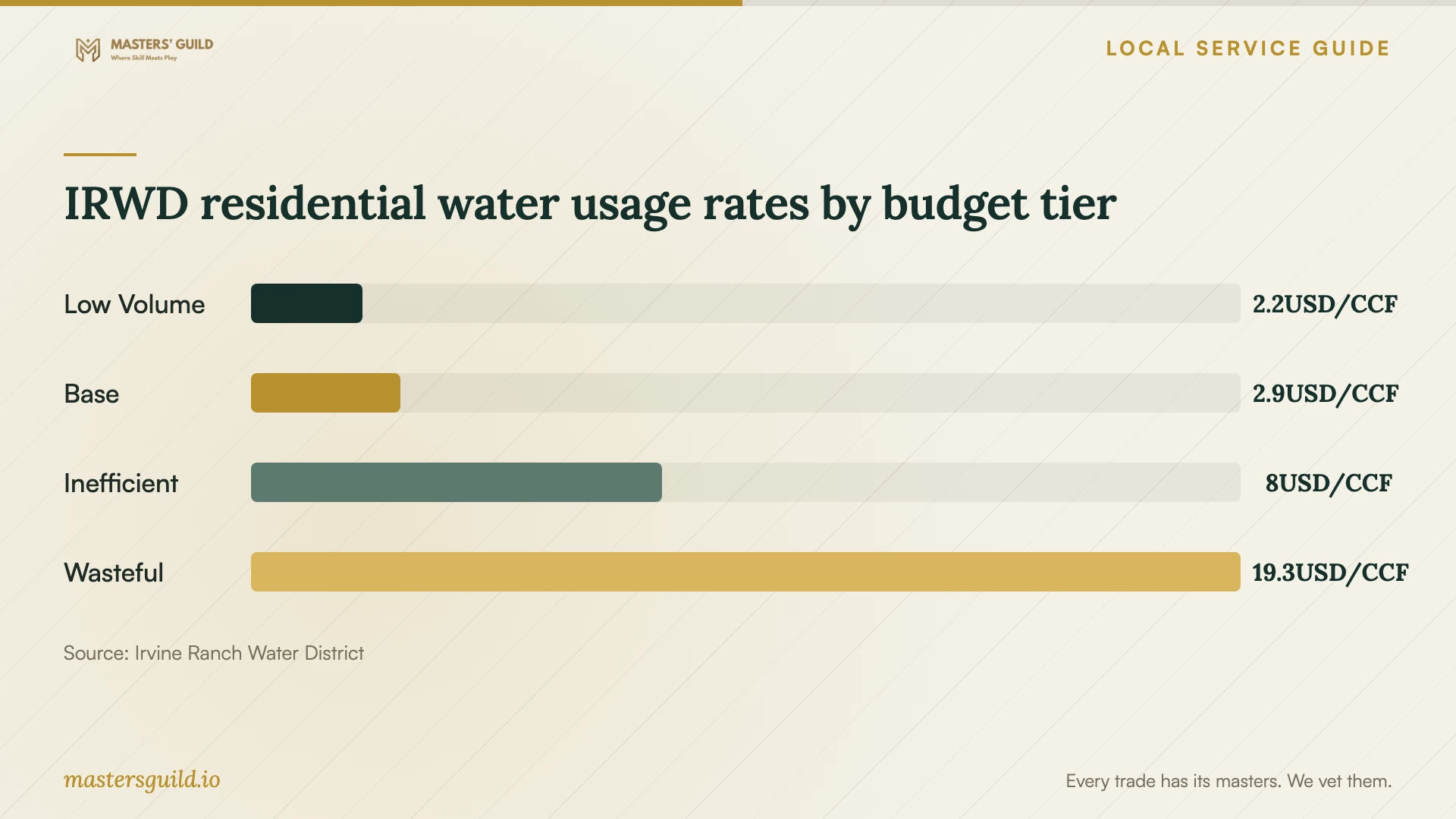
IRWD assigns residential customers a monthly water budget and charges usage by budget tier. Effective July 1, 2026, its published rates range from $2.18 per CCF in the Low Volume tier to $19.32 per CCF in the Wasteful tier. One CCF equals 748 gallons. These are utility usage charges, separate from the contractor’s cleaning price. [2]
If your property has an IRWD residential account, review your bill and confirm whether the contractor brings water or uses your supply. Request an expected volume in gallons, including rinsing. Consider that volume alongside your household’s other water use. Have the contractor state whether the quote includes a supplied-water charge. [2]
IRWD bases household budgets on factors including residents, landscape area and weather. The utility says outdoor budgets decrease in winter and increase in summer. Check the budget printed on your bill when planning the visit rather than assuming your household has the same allowance each month. [2]
Prepare the property and agree on completion
Have the contractor identify the material and finish of each surface before choosing equipment or cleaning products. Point out loose coatings, cracks, prior repairs and areas where water has entered before. Agree on a small test area and inspect it together before authorizing the remaining work.
Before the visit, arrange vehicle parking, gate access and permission to use any shared water connection. If an association or property manager controls the work area, confirm access and scheduling requirements with them. Keep pets and children away from the agreed work zone, and decide how household members will enter and leave during cleaning.
At completion, inspect the agreed surfaces with the contractor. Compare remaining marks with the exclusions in the quote, check adjacent areas and confirm that the crew has removed collected waste and equipment. Record any follow-up work before closing out the job.
IRWD residential water usage rates by budget tier
Local details that affect your job
Plan collection before cleaning near a street drain
Irvine’s storm drain system releases untreated water into channels, creeks and the ocean. Before booking work near a gutter or drain inlet, have the contractor explain where they will contain and collect runoff. Include that arrangement in the accepted scope. [1]
Check your IRWD budget before authorizing hose use
IRWD residential rates depend on monthly water-budget use, with over-budget tiers beginning at 101%. Request the contractor’s expected water volume and review your current budget before agreeing to use the household supply. Confirm that these residential rates apply to your account. [2]
Questions to resolve before accepting a quote
| Your situation | Ask the contractor | Before booking |
|---|---|---|
| The cleaning area slopes toward a street drain | How will you contain and collect the wash water? | Record the runoff plan; Irvine storm drains discharge untreated water. |
| The crew plans to use your IRWD residential supply | How many gallons do you expect to use? | Check your monthly budget and applicable usage tier. |
| You want a residential grill or garbage bin included | Which disposal route will you confirm with the relevant authority? | Confirm an approved route and any required permission; H2OC’s cited sewer instruction covers industrial and commercial sites. |
| You have several materials or finishes | Which method will you use on each surface? | Agree on test areas and exclusions. |
| Quotes include different tasks | Can you itemize the same scope? | Compare cleaning, optional treatments, water handling and cleanup. |
Your hiring checklist
- Send photographs, approximate dimensions and a surface list to each contractor.
- Request the cleaning method and a test area for each material or finish.
- Identify drain inlets and request written containment and disposal arrangements.
- Have the contractor confirm an approved residential disposal route and any required permission with the relevant authority.
- Confirm the water source, expected gallons and any supplied-water charge.
- Separate optional stain treatments from the base cleaning price.
- Agree on furniture moving, access, property protection and cleanup; review insurance documentation.
- Arrange a completion inspection against the accepted scope.
Frequently Asked Questions
What should a pressure-washing quote include?
Request named surfaces, dimensions, methods, stain-treatment options, water supply, containment, disposal and cleanup. Have the contractor identify exclusions and describe the result they expect. Keep optional work separate so you can compare offers for the same job.
Can the contractor rinse dirty water into the street drain?
Require the contractor to explain containment and confirm an approved disposal route before work starts. Irvine says its storm drains carry untreated water to channels, creeks and the ocean. The City’s drainage explanation does not authorize cleaning-water disposal. [1]
How much will using my water add to the job?
For an IRWD residential account, the usage charge depends on volume and your monthly budget tier. Published rates effective July 1, 2026 range from $2.18 to $19.32 per CCF, or 748 gallons. Request expected gallons and review your bill; these rates do not establish the contractor’s service price. [2]
Does H2OC’s sewer instruction cover cleaning my home grill or bin?
The cited H2OC page gives that instruction for industrial and commercial sites. It does not establish residential disposal requirements or authorize a particular sewer connection. Have your contractor confirm an approved route and any required permission with the relevant authority for your residential job. [3]
Sources and scope
This guide combines the sources below with practical planning guidance. Figures apply to the stated geography and period; request a written quote for your property.