
Local service guide
Lawn mowing in Irvine: equipment, timing and quotes
Lawn mowing in Irvine starts with choosing a provider who uses equipment that meets the city's gas-equipment restrictions, identifies your grass and agrees on cutting height, visit frequency and clipping disposal. The city's published phase-in schedule extends its gas-powered landscaping-equipment ban to residents and small businesses in January 2026. Before booking, request a written scope covering the mower, trimmer and cleanup equipment, plus separate prices for the first visit and recurring maintenance. [1]
Specify compliant equipment before accepting an offer
The City of Irvine describes a phased ban on gas-powered garden equipment. Its guidance places the resident and small-business phase in January 2026, after earlier restrictions on gas leaf blowers and equipment used by large businesses. For a booking in October 2026, ask the provider to confirm compliance for mowing, edging and cleanup. [1]
Request the equipment types in the quote rather than accepting a broad description such as lawn service. Ask how the crew will finish your property if a battery runs out and whether they need access to an outlet. Include gate width, steps and any access restrictions in your request so the provider can propose an equipment setup before arrival.
Set cutting height before choosing weekly or biweekly visits
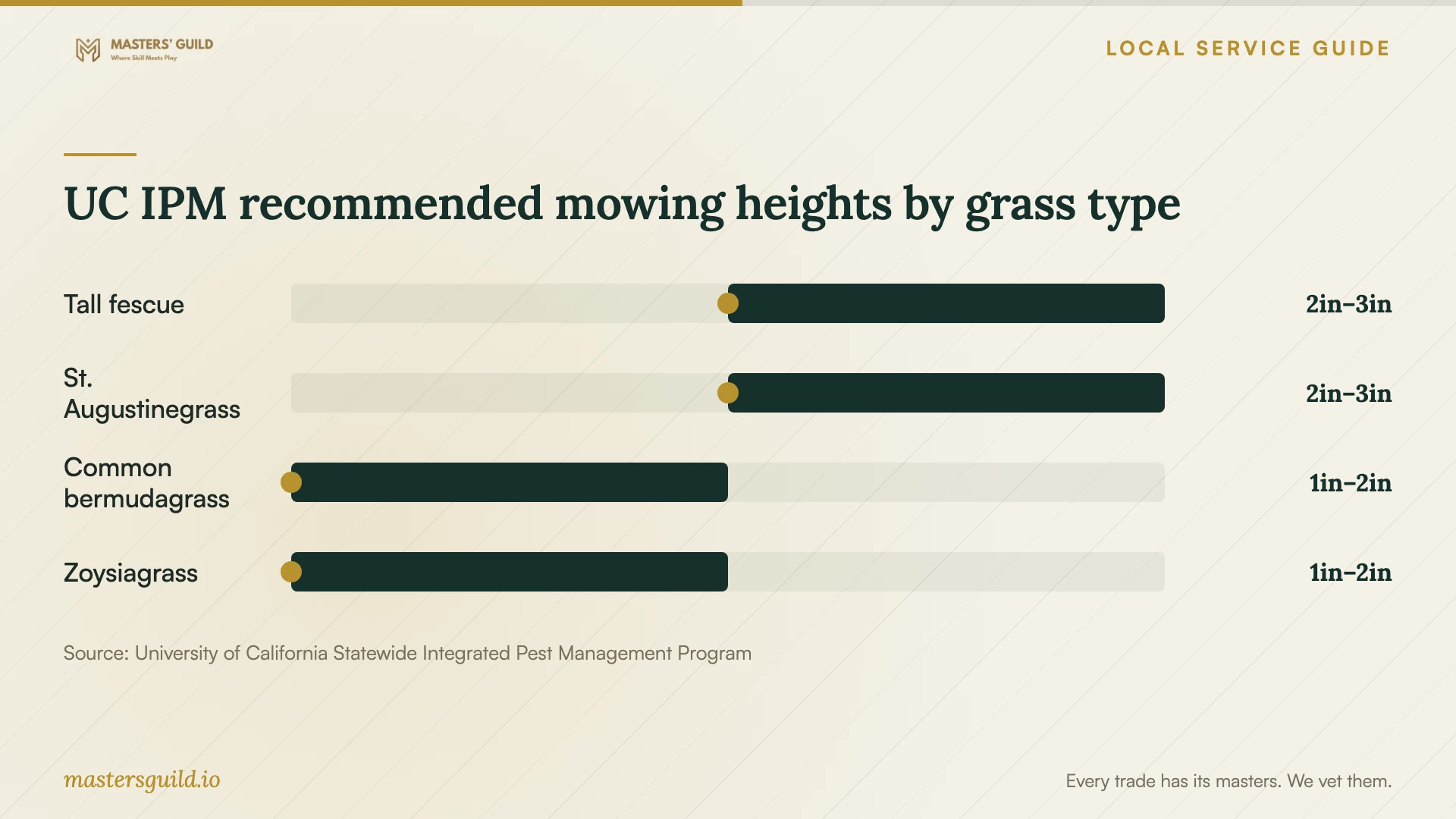
Ask the provider to identify your turf before setting the mower height. UC IPM publishes different ranges for different grasses: tall fescue and St. Augustinegrass at 2 to 3 inches, and common bermudagrass and zoysiagrass at 1 to 2 inches. Use the chart as a starting point for that conversation rather than assuming all lawns need the same cut. [4]
UC IPM advises removing about one-third of the leaf surface per mowing and adjusting frequency to growth and season. It also warns that mowing too short and too often can create thin patches where weeds establish. Ask the provider to explain how the proposed interval will preserve the agreed height. [4]
For an overgrown first visit, request a separate recovery plan and price. Tell the provider you want to preserve the grass rather than cut it to the recurring target in one pass. Agree on how you will approve an extra visit, and review the interval after you have seen the first cuts.
Compare quotes using the same scope
Send each provider the same photos and approximate mowable area. Show the front and back lawns, narrow passages, slopes, beds and obstacles. Ask each person to itemize mowing, edging, trimming around obstacles, hard-surface cleanup and clipping handling. Keep hedge work, fertilizer, weed treatment and sprinkler repair as separate items unless you want them included.
Request a per-visit price, the expected visit schedule and any charge for the first overgrown cut. For a monthly plan, ask how the provider handles missed visits, weather delays and changes in frequency. Confirm whether disposal costs are included. Use property-specific written offers to set your budget.
Ask for proof of insurance and clarify who will perform the work. Record how the provider will report damage, notify you before arrival and obtain approval for added work. Keep the accepted scope and photos so you can compare the completed visit with what you requested.
Coordinate mowing with irrigation and cleanup
IRWD bases its watering guide on heavy clay soil, which it describes as the most common soil in its service area. It recommends cycle-and-soak watering, with pauses between sprinkler runs to allow absorption. Its suggested times are maximum starting points for full-sun areas, so check your sprinkler type and conditions before adopting them. [2]
If you use IRWD's guide, its October turf schedule for standard spray heads calls for three watering days per week, with two three-minute cycles on each day. This is irrigation guidance, not a mowing schedule. Ask the mower to flag wet areas or isolated stressed patches, and agree that controller changes need your approval. [2]
For households with three-cart service, Irvine lists untreated grass among accepted organics-cart materials. Agree whether the provider will leave clippings on the lawn, collect them into your eligible cart or haul them away. If the lawn has received pesticide treatment, confirm disposal instructions with your waste service before using the cart. [3]
Prepare for the first visit and review the result
Clear toys, hoses and loose objects from the lawn. Mark sprinkler heads and explain which areas belong to you if landscaping borders shared space. Arrange pet access, unlock the agreed gate and confirm any association requirements that affect the visit. Tell the provider where to place collected clippings.
After the first cut, check the agreed height, edges, cleanup and gate closure. Photograph any concern and ask the provider to explain the correction before the next visit. If you suspect crabgrass, request identification and discuss equipment cleaning: UC IPM advises cleaning mowers after cutting infested turf to avoid moving seeds to other sites. [4]
UC IPM recommended mowing heights by grass type
Local details that affect your job
The gas-equipment phase affects your booking
Irvine's municipal guidance schedules the gas-powered landscaping-equipment ban for residents and small businesses from January 2026. Ask a prospective crew to confirm compliant mowing, trimming and cleanup equipment before you accept its offer. [1]
Your clipping plan depends on collection service
Irvine's three-cart guidance accepts untreated grass in the organics cart. Tell the provider whether your home has this collection arrangement and authorize cart use in advance. For pesticide-treated material, obtain disposal instructions rather than assuming the same acceptance rule applies. [3]
Check patchy stress before adding irrigation
IRWD advises checking irrigation operation when stress appears in isolated areas before increasing watering times. Ask the mowing provider to report patch locations and visible sprinkler problems, then arrange troubleshooting as a separate task if needed. [2]
Choose the scope that matches your lawn
| Your situation | Request | Confirm before booking |
|---|---|---|
| You need routine mowing | Mowing, edging and cleanup with compliant equipment | Equipment types, visit price and clipping plan |
| Grass outgrows the proposed interval | A schedule based on growth and the one-third removal guideline | Target height and approval for frequency changes |
| The first cut involves overgrown grass | A separately priced recovery plan | Whether the provider proposes additional visits |
| Only isolated areas show stress | An irrigation check before increasing watering times | Separate scope and approval for adjustments |
| You want collected clippings left at home | Use of an eligible organics cart for untreated grass | Your collection arrangement and permission to use the cart |
Your hiring checklist
- Send photos, approximate lawn area and access measurements with your quote request.
- Ask the crew to confirm compliant mower, trimmer and cleanup equipment.
- Agree on grass identification, target height and a growth-based visit schedule.
- Request separate prices for the first cut, recurring visits and optional work.
- Specify clipping handling, cart permission and any hauling charge.
- Require approval before irrigation adjustments or added treatments.
- Clear the lawn, mark sprinkler heads and arrange gates and pets.
- Review height, edges and cleanup after the first visit.
Frequently Asked Questions
Can my provider use a gas mower?
Irvine's published guidance extends the gas-powered landscaping-equipment ban to residents and small businesses in January 2026. For an October 2026 booking, ask the provider to confirm that its mower and other equipment comply with the city's restrictions. [1]
Should I book weekly or biweekly mowing?
Choose the interval after identifying the grass and observing its growth. UC IPM recommends removing about one-third of the leaf surface and changing frequency with the season. Ask the provider to explain how either interval will maintain your agreed cutting height. [4]
Does mowing include sprinkler repair or weed treatment?
Ask the provider to list those tasks in the quote if you want them. Keep mowing, irrigation troubleshooting and treatments as separate line items, and require your approval before added work.
Can the crew put grass clippings in my organics cart?
Irvine lists untreated grass as accepted material for residents with three-cart collection. Confirm your collection service and authorize cart use before the visit. Ask your waste service for instructions if pesticide treatment affects the material. [3]
Sources and scope
This guide combines the sources below with practical planning guidance. Figures apply to the stated geography and period; request a written quote for your property.