
Local service guide
Duct cleaning in Irvine, CA: Hiring and Planning
Arrange duct cleaning in Irvine after an inspection identifies substantial contamination, then compare written estimates that cover the affected heating and cooling system. EPA recommends cleaning as needed for substantial visible mold, pests, or excessive debris, rather than on a routine schedule. Ask the cleaner to show you the problem and explain how they will correct its cause before you approve work. [1]
Decide whether cleaning addresses your problem
Ask the inspector to distinguish dust on the grille from contamination inside the system. EPA identifies substantial visible mold on hard surfaces, vermin infestation, and excessive dust or debris as reasons to consider cleaning. If a provider alleges mold, ask to see its location. An expert may need laboratory analysis to confirm that a substance is mold. [1]
Describe the problem before requesting a price: debris blowing from a supply register, a suspected moisture problem, or contamination discovered during maintenance. Ask the inspector to photograph the relevant locations and explain which components need attention. Keep those photographs with the estimate so you can compare the proposed work.
EPA reports that duct cleaning has not been shown to prevent health problems and that little evidence supports efficiency improvements from cleaning ducts alone. If someone in your household has unexplained symptoms, discuss them with a doctor rather than accepting a cleaner's health diagnosis. [1]
Get a quote with a defined system scope
EPA advises homeowners to obtain estimates from at least three providers and agree on total cost and scope before work begins. For a contaminated system, ask about supply and return ducts, registers, coils, drain pans, the blower, and the air-handler housing. EPA warns that leaving a contaminated component uncleaned can recontaminate the system. [1]
Give each bidder the same description of your equipment and access arrangements. Request separate line items for inspection, cleaning, component maintenance, and any proposed repairs. Ask whether the price covers all identified components, how the company will handle additional findings, and whether you must approve changes in writing.
Request a written estimate for your system, contamination findings, and access requirements. Use that estimate to plan your budget. Confirm the expected work duration, arrival window, equipment setup location, and any period when you cannot use the heating or cooling system.
Check cleaning methods and proposed treatments
Ask how the cleaner will contain removed debris. EPA recommends vacuum equipment that exhausts outside the home, or HEPA vacuum equipment when exhaust remains indoors. It also recommends protecting furnishings and sealing and reinsulating access holes after cleaning. [1]
Have the provider identify your duct materials before choosing a method. EPA recommends soft-bristled brushes for fiberglass duct board and internally fiberglass-lined metal ducts. It recommends replacing wet or moldy insulation and correcting the moisture source because cleaning cannot resolve that condition. [1]
Ask for a separate explanation of any proposed biocide or interior coating. EPA cautions that research has not established the effectiveness and potential adverse health effects of these treatments in duct cleaning. Ask to review the product label, its permitted use, and the reason physical cleaning and moisture correction would not suffice. [1]
Prepare access and agree on completion checks
Before the appointment, clear a route to the equipment and the registers the crew needs to reach. Agree on furniture protection and arrangements for pets. If you need building-management permission for equipment placement or access, obtain it before confirming the appointment. Tell the provider about any access limits while they prepare the estimate.
Agree on the inspection you will receive at completion. EPA recommends a visual check of the system and asking the provider to show each cleaned component. Its checklist includes clean registers, sound fiberglass material, secure access doors, and proper system operation after cleaning. [1]
Keep before-and-after photographs, the final scope, and any repair recommendations. Ask the crew to identify work they could not complete and give you a reason before you accept the job as finished.
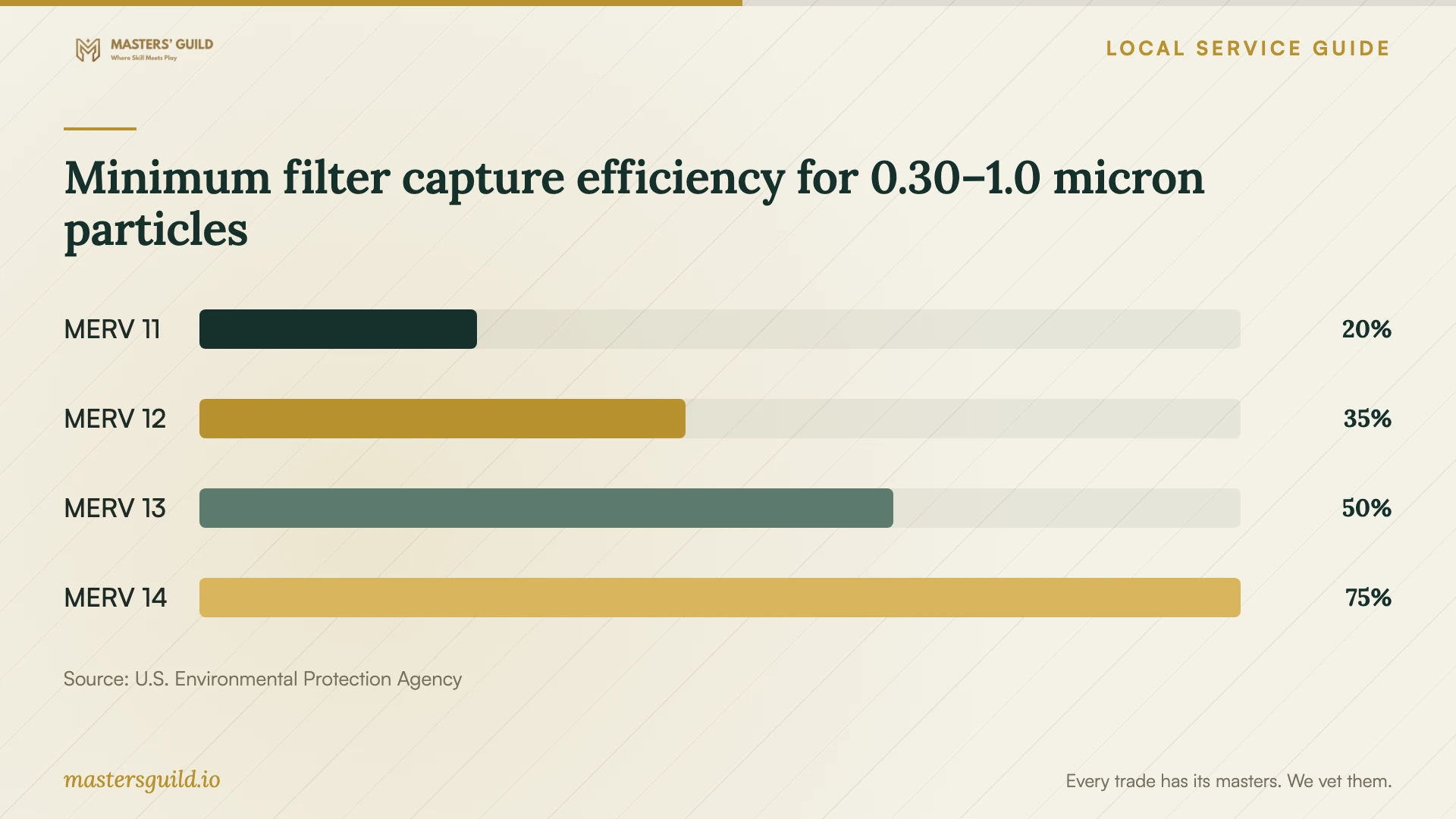
Minimum filter capture efficiency for 0.30–1.0 micron particles
Local details that affect your job
Use regional smoke guidance before booking cleaning
For smoke planning in Irvine, use South Coast AQMD's regional guidance and its air-quality app or advisories to check conditions. The agency recommends keeping a high-efficiency filter available, using a portable HEPA cleaner, and closing the air conditioner's fresh-air intake when that option exists during smoky conditions. Ask your HVAC technician to confirm your filter compatibility and recirculation controls. These steps address smoke exposure; ask a duct inspector for separate evidence of contamination before adding a cleaning job. [2] [3] [1]
Separate indoor ash cleanup from duct work
After wildfire ash reaches your home, South Coast AQMD's regional cleanup guidance recommends a HEPA-filter vacuum for indoor ash and warns against leaf blowers. Tell prospective cleaners whether you need surface ash cleanup, inspection of the heating and cooling system, or both, and request separate scopes. EPA recommends investigating substantial debris inside ducts and correcting the underlying cause. Regional ash advice does not establish that every smoke-affected home needs duct cleaning. [2] [1]
Choose the next step from the inspection findings
| Finding | Next step | Question to ask |
|---|---|---|
| Dust on return grille only | Clean the accessible grille; investigate further if other concerns remain. | Can you show contamination inside the system? |
| Substantial debris or particles leaving supply registers | Consider cleaning after identifying and correcting the cause. | Which components need cleaning and why? |
| Suspected mold on hard surfaces | Ask for visible evidence and consider expert confirmation. | Where is the growth, and what caused the moisture? |
| Wet or moldy duct insulation | Arrange assessment for replacement and moisture correction. | Which insulation needs replacement? |
| Wildfire smoke concern | Follow regional filtration guidance and check system compatibility. | Can my equipment accommodate this filter and recirculate indoor air? |
Your hiring checklist
- Record the problem you want the provider to investigate and gather any photographs.
- Ask the inspector to show the contamination and identify the duct material.
- Request comparable written estimates with included components and exclusions.
- Ask how the crew will contain debris and protect your furnishings.
- Review proposed chemicals or coatings before authorizing their use.
- Confirm equipment access, appointment timing, and pet arrangements.
- Agree on completion photographs and a walkthrough before work starts.
Frequently Asked Questions
Should I book cleaning every year?
EPA recommends duct cleaning as needed rather than as routine annual maintenance. Ask for evidence of substantial contamination before agreeing to a recurring cleaning schedule. [1]
Does a dusty vent mean the ducts need cleaning?
EPA explains that return registers collect dust as air passes through them. Dust on the grille alone does not establish heavy contamination inside the ducts. Clean the accessible register and ask for inspection evidence if you remain concerned. [1]
Should I upgrade to MERV 13 after a smoke event?
South Coast AQMD recommends MERV 13 or higher filters for smoke particles. EPA advises choosing a rating your system fan and filter slot can accommodate. Ask an HVAC technician to confirm compatibility and follow the manufacturer's replacement guidance. [2] [3]
How do I check that the cleaner completed the job?
Ask the provider to show the cleaned components and compare them with the agreed scope. EPA recommends visual inspection, checking that registers and access doors are secure, and verifying system operation after cleaning. [1]
Sources and scope
This guide combines the sources below with practical planning guidance. Figures apply to the stated geography and period; request a written quote for your property.