
Local service guide
Concrete Work in Irvine: Permits and Hiring
Arrange Concrete Work in Irvine by defining the area, drainage and access needs before requesting bids. Ask the City whether your scope qualifies for its flatwork permit exception, consult your HOA, and choose a contractor whose license classification covers the work. CSLB identifies C-8 as the concrete specialty classification. Put preparation, finish, curing and return-to-use instructions in the written agreement before scheduling demolition. [1] [3]
Define the job before comparing bids
Give each bidder the same sketch and photographs. Mark the proposed edges, doors, garage entrance, drains and places where you have seen standing water. Explain whether you want to replace an existing slab, extend it or repair a defect. Request an assessment of the damage before choosing a treatment.
Request a written scope covering demolition and disposal, excavation, base preparation, slab thickness, reinforcement, joint layout and finish. Have the contractor explain each specification for your intended use. Price optional color or decorative work separately so you can compare the same main scope across bids.
Walk through access before accepting an offer. Show the contractor gate openings, parking restrictions and the route from the street to the work area. Agree on who protects adjacent paving and landscaping, where crews stage materials, and how household members enter the home during construction.
Confirm the permit exception for the complete scope
Irvine's permit-exemption list includes platforms, walks and driveways not more than 30 inches above grade and not over a basement or story below. The City requires exempt work to conform to technical codes and applicable city, county and state ordinances. Describe the whole project when requesting a determination, including associated drainage or utility changes. [1]
Discuss retaining walls and patio covers as separate parts of the project. Irvine's retaining-wall exception covers walls no more than 4 feet high, measured from the bottom of the footing to the top, unless they support a surcharge or impound flammable liquids. Patio covers require a permit regardless of size. Have staff review these elements before treating the project as exempt flatwork. [1]
Resolve HOA and street-side work before scheduling
The City directs homeowners to consult their HOA about whether a project complies with the association's CC&Rs. If you belong to an association, submit the proposed dimensions, finish and visible changes before authorizing work. Find out whether the association wants contractor documents or a construction access plan, and keep its response with your contract. [1]
Flag proposed work at the sidewalk, curb or driveway approach when contacting the City. Request a determination about encroachment permitting for that scope. Irvine tells encroachment applicants to email their application package to its right-of-way permit address, put the permit type in the subject line and await instructions. Staff then email a link for fee payment and additional documents. [2]
Check concrete qualifications and insurance
CSLB defines a C-8 concrete contractor as one who forms, pours, places, finishes and installs specified concrete work, including pavement and flatwork. Request the contractor's license number and confirm that the classification covers your scope. If the project includes walls, utility work or other construction, identify who will perform each part and check their qualifications for it. [3]
CSLB requires active C-8 concrete contractors to carry workers' compensation insurance or valid self-insurance certification whether or not they have employees. Request current coverage information and match the business name to the contractor you plan to hire. Also request liability insurance documentation and clarify who will work on site. [4]
Have bidders explain exclusions, payment milestones and the process for approving changes. Name the person responsible for required applications and inspections in the agreement. Before signing, agree on how you will document completed work and raise concerns about finish, drainage or damage to adjacent surfaces.
Agree on curing and access after the pour
Request a curing plan with separate instructions for walking, moving furniture and parking vehicles on the slab. FHWA's archived pavement guidance explains that concrete property development varies with materials, proportions and temperature. Get project-specific return-to-use instructions from your contractor rather than choosing a parking date from a general calendar interval. [5]
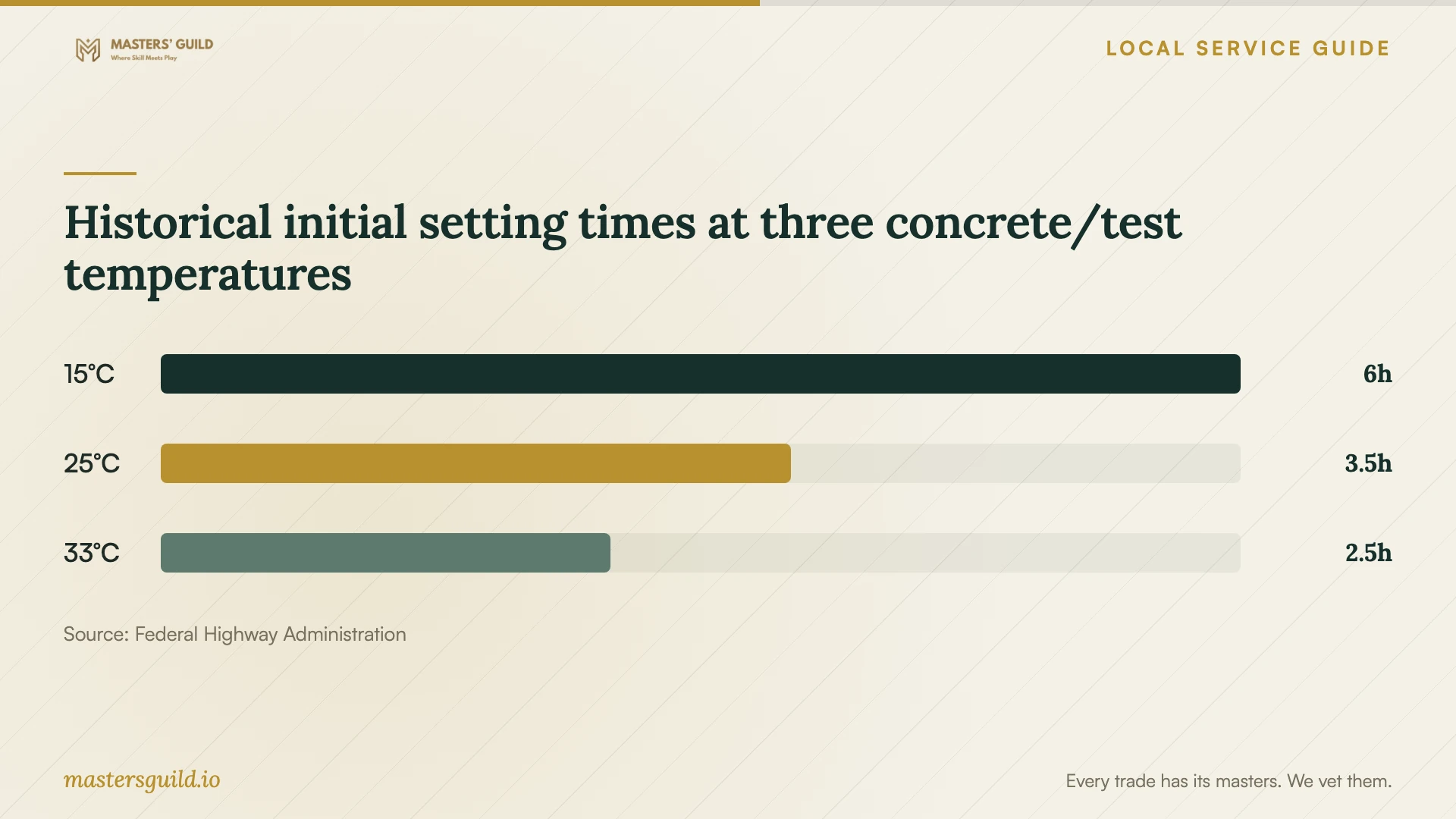
The chart uses the first Pinto and Hover (2000) data series reproduced in FHWA Table 1. FHWA extracted the underlying values from published graphs. The chart concerns initial setting time at different concrete/test temperatures, not air-temperature forecasts or vehicle readiness. Use it to frame questions about pour timing; have the crew explain its moisture-loss protection and leave written care instructions. [5]
Historical initial setting times at three concrete/test temperatures
Local details that affect your job
Get a scope-specific answer from Irvine
Call Irvine's permit information line at 949-724-6313 with the slab height, what lies beneath it and any associated work. Ask whether the complete project fits the listed flatwork exception. For planning or zoning questions, the City lists 949-724-6308. Keep the response with your bid documents and share it with the contractor before agreeing to a start date. [1] [2]
Use the separate encroachment submission route
If the City determines that an encroachment permit applies, email the application package to [email protected] and identify the permit type in the subject line. Irvine tells applicants to await further instructions, then use the emailed link to pay fees and supply additional documents. Assign responsibility for submission and follow-up in your agreement. [2]
Choose the next step for your concrete project
| Project situation | Decision before hiring | Question to resolve |
|---|---|---|
| Walk or driveway within the listed flatwork exception | Confirm the exception applies to the complete scope. | Is it no more than 30 inches above grade, with no basement or story below? |
| Slab plus patio cover | Plan for the patio cover's permit requirement regardless of size. | Who prepares the application and coordinates the related work? |
| Retaining wall beside the concrete | Check the 4-foot limit from footing bottom to wall top, surcharge support and flammable-liquid impoundment exclusions. | Does the complete wall scope qualify for the exception? |
| Work at a sidewalk, curb or driveway approach | Ask the City whether encroachment permitting applies. | Who submits the application package and follows up with staff? |
| Existing slab with damage or ponding | Request an assessment before choosing repair or replacement. | What cause will the contractor address, and what work does the bid include? |
Your hiring checklist
- Photograph damage and standing-water locations; mark the proposed work on a sketch.
- Confirm the permit route with the City using the complete scope.
- Obtain your HOA's response before authorizing proposed changes.
- Ask whether street-side work needs encroachment permitting and assign application responsibility.
- Compare bids with the same preparation, thickness, reinforcement, joints and finish.
- Check the contractor's license classification and request current insurance documentation.
- Agree on access, cleanup, curing care and separate return-to-use instructions.
Frequently Asked Questions
Do I need a permit to replace a concrete driveway?
Irvine lists driveways no more than 30 inches above grade and not over a basement or story below as exempt. Confirm that your complete scope fits the exception. The City requires exempt work to comply with technical codes and applicable ordinances. [1]
Does a City permit exception settle HOA approval?
Consult your HOA about the proposed work. Irvine's exemption page directs homeowners to check their association's CC&Rs. Keep the HOA response with the City's permit determination and share both with the contractor. [1]
Can a concrete contractor with no employees skip workers' compensation?
CSLB requires active C-8 concrete contractors to carry workers' compensation insurance or valid self-insurance certification even without employees. Request current coverage information before signing. [4]
How soon can I park on new concrete?
Get a written vehicle-use instruction for your slab from the contractor. FHWA's pavement guidance explains that materials, proportions and temperature affect property development. The historical initial-setting chart does not establish when a residential driveway can support a vehicle. [5]
Sources and scope
This guide combines the sources below with practical planning guidance. Figures apply to the stated geography and period; request a written quote for your property.