
Local service guide
Carpet cleaning in Irvine: hiring and preparation
Carpet cleaning in Irvine starts with a written scope: identify the rooms, stains, furniture handling, total charge and drying arrangements before booking. Ask how the cleaner will collect and dispose of extracted water. If you have a leak, persistent dampness or suspected mold, arrange a moisture assessment before treating the job as routine cleaning. EPA advises fixing the water problem and notes that moldy carpet may require disposal. [3]
Get a quote you can compare
Give each cleaner the same description: rooms and approximate dimensions, stairs, visible spots, pet accidents and furniture you want moved. Send photographs of problem areas and identify any previous treatments you used. Ask the cleaner to separate basic cleaning from optional treatments and state the total before work begins.
Request the cleaning method, expected appointment length and a drying estimate for your home. Ask what could change the price after inspection and require your agreement before extra work. For a move-out appointment, confirm the landlord’s documentation requirements and leave time to inspect the result before handing over keys.
Confirm wastewater handling and property access
Ask where the cleaner will park, how equipment will reach the rooms and how they will protect doors and shared walkways. If you live in a managed property, check access arrangements with management before scheduling. Give the cleaner any restrictions you receive so they can confirm whether their proposed setup will work.
Irvine distinguishes indoor drainage to wastewater treatment plants from storm drainage that releases untreated water toward the ocean. Ask the cleaner how they will contain extracted wastewater and verify an appropriate disposal destination. The City’s drainage page does not identify an approved carpet-cleaning wastewater disposal point, so do not assume that a nearby drain is suitable. [1]
Agree on drying arrangements before the visit
Tell the cleaner when you need to use each room again. Ask what ventilation or drying equipment they recommend, who supplies it and when you should contact them if the carpet remains damp. Plan a route through the home that lets you avoid the cleaned areas until the cleaner says they are ready for use.
EPA recommends keeping indoor relative humidity below 60 percent, ideally between 30 and 50 percent, and using air conditioning or dehumidifiers when needed. Its guidance also supports air movement and opening windows when practical. Ask the cleaner to base your plan on conditions at the appointment rather than promising a fixed drying time from the season alone. [3]
Separate cleaning from leaks and mold
Describe any recent leak, recurring damp patch or musty smell before requesting routine service. EPA explains that mold can hide beneath carpets and pads and that porous materials such as carpet may need disposal if they become moldy. Ask for an assessment of the moisture source and affected materials before agreeing to a cleaning-only scope. [3]
EPA’s 24–48-hour drying guidance concerns water-damaged materials after leaks or spills. It is not a routine carpet-cleaning drying estimate. For sewage or other contaminated-water damage, EPA advises using a professional experienced in cleaning and repairing buildings affected by contaminated water. [3]
If you also see standing water outside in the public right-of-way, request City maintenance assistance. Irvine assigns standing-water concerns in those areas to its Public Drainage Program. Keep that request separate from the assessment of your carpet and indoor moisture source. [1]
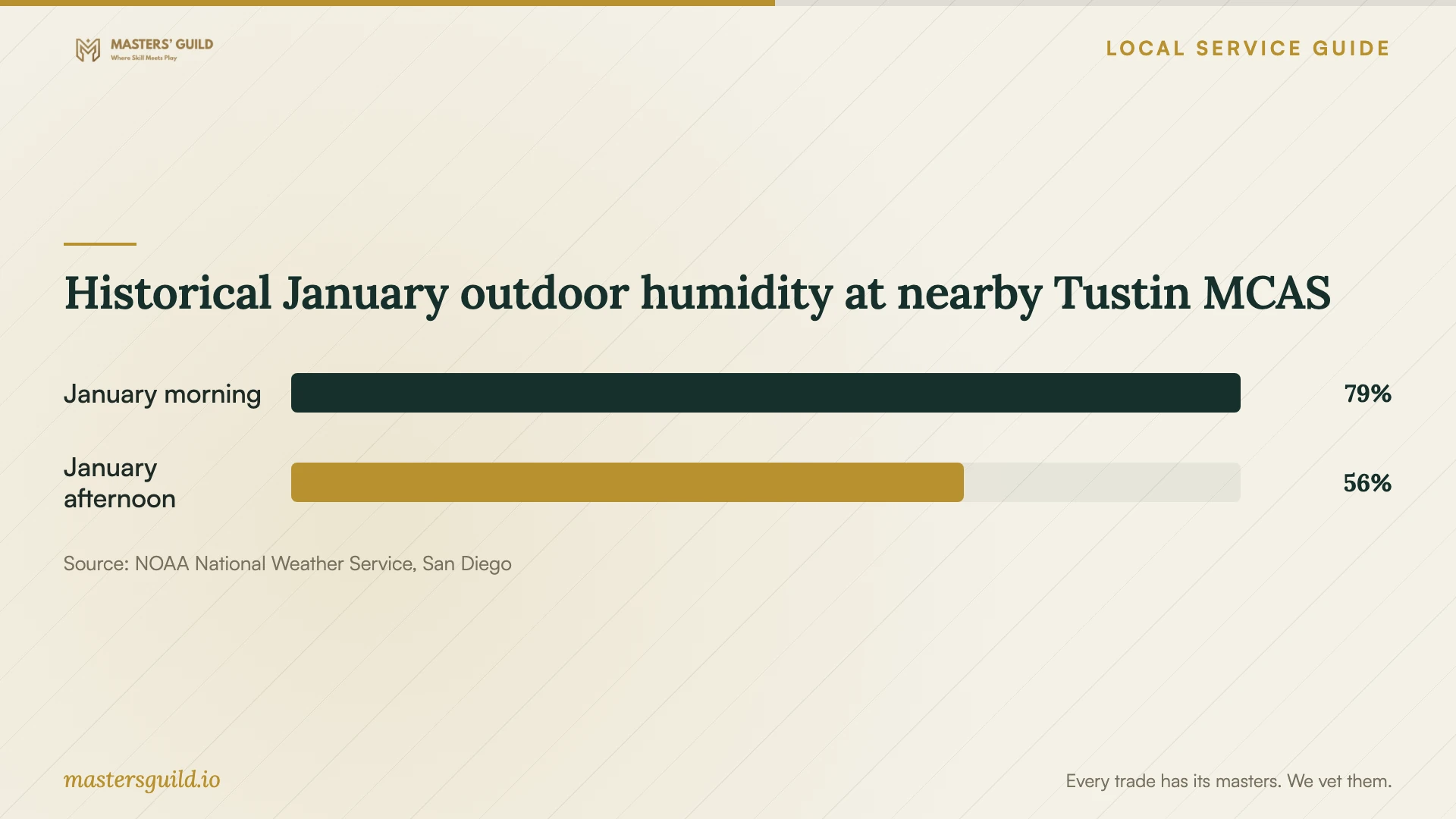
Historical January outdoor humidity at nearby Tustin MCAS
Local details that affect your job
Check the wastewater route before equipment arrives
Irvine’s storm drains discharge untreated water into flood-control channels, creeks and the ocean. Before booking, ask the cleaner to explain collection and disposal arrangements, including how they will keep extracted water away from street drainage. Verify the proposed disposal destination separately; the City page explains the drainage systems but supplies no carpet-cleaning disposal authorization. [1]
Report standing water in the public right-of-way
The City’s Public Drainage Program handles standing-water concerns in City right-of-way areas. If that describes the outdoor problem you observe, call City maintenance at 949-724-7600 to request an assessment. Describe the location and any indoor dampness separately when arranging carpet work; a carpet-cleaning appointment does not replace the public drainage request. [1]
Choose the scope before booking
| Your situation | What to arrange | Question to ask |
|---|---|---|
| Routine cleaning with no known moisture problem | A written cleaning scope and drying plan | What does the total include, and what needs inspection first? |
| Equipment will operate near street drainage | Wastewater collection and a verified disposal destination | How will you keep extracted water out of storm drainage? |
| Standing water in the City right-of-way | A City maintenance assessment | Can maintenance assess this public drainage concern? |
| Leak damage, mold or recurring dampness | An assessment of the water source and affected materials | Does this require drying, removal or remediation beyond cleaning? |
| Sewage or other contaminated-water damage | A professional experienced with contaminated-water damage | What relevant cleanup and repair experience do you have? |
Your hiring checklist
- List rooms, stairs, approximate dimensions and problem spots.
- Disclose leaks, persistent dampness, odors and previous spot treatments.
- Request an itemized total and agree on approval for added work.
- Confirm parking, equipment access and any property-management restrictions.
- Ask how the cleaner will collect wastewater and verify its disposal destination.
- Agree on furniture handling, drying arrangements and follow-up contact.
- Remove small belongings and photograph areas you want inspected.
Frequently Asked Questions
How much should I budget?
Request written quotes for your actual rooms and treatments. Compare the total, minimum charge if any, furniture handling and proposed extras. Do not approve added work until the cleaner explains its scope and price.
Does the 24–48-hour guidance mean my carpet should stay wet that long?
EPA gives that timeframe for drying water-damaged areas and items to prevent mold growth. It does not establish an acceptable routine cleaning dry time. Agree on a drying estimate and follow-up instructions with your cleaner. [3]
Should I open windows after cleaning?
Discuss conditions at your appointment. EPA recommends ventilation when practical and air conditioning or dehumidifiers when needed. Historical outdoor humidity measurements cannot determine whether opening your windows will help on a particular day. [2] [3]
Can cleaning save moldy carpet?
EPA says porous materials such as carpet may require disposal because mold can be difficult or impossible to remove completely. Ask an experienced professional to assess the carpet, pad and moisture source before approving cleaning. [3]
Sources and scope
This guide combines the sources below with practical planning guidance. Figures apply to the stated geography and period; request a written quote for your property.