
Local service guide
Planning yard cleanup in Indianapolis
Arrange yard cleanup in Indianapolis with a written scope that separates lawn leaves, garden beds, branches, and hauling. Decide what the crew should preserve, then confirm where removed material will go. Indiana restricts landfill disposal of yard waste, and Decatur Township’s guidance for Marion County and Indianapolis excludes leaf burning. Specify composting, mulching, or removal for collected leaves. [1] [3]
Define the cleanup before requesting quotes
Walk the property and photograph the front lawn, back lawn, beds, fence lines, and existing debris piles. Describe each task: collect lawn leaves, pull identified weeds, gather fallen branches, or remove a pile. Request separate prices for mowing, shrub pruning, tree work, and new mulch so you can compare the cleanup portion of each offer.
Choose the finish you want for each area. You might want a cleared lawn and walkways while keeping selected leaves and standing stems in planted beds. Purdue Extension advises a balanced fall cleanup: remove leaves from the lawn, retain disease-free leaves in beds, and preserve some stems and seed heads that support beneficial insects and wildlife. [4]
Show the crew which plants to keep before anyone starts pulling or cutting. Use photos or temporary markers for dormant plants, bulbs, and areas you want left untouched. Have the bidder identify uncertain plants with you before including them in bed clearing. Write the preservation instructions into the scope.
Agree on disposal before the crew arrives
Indiana’s Department of Environmental Management describes yard waste as vegetative material from landscaping maintenance and land clearing. Its guidance identifies leaves, brush, and woody material longer than 3 feet as subject to the landfill disposal ban. It lists exceptions, including grass and contained woody material shorter than 3 feet. Confirm acceptance with the receiving facility rather than assuming a statutory exception settles your disposal arrangements. [1]
Have the contractor name the destination for each material and include any disposal charge in the quote. Request separate handling for plant debris and unrelated rubbish. If the crew will leave bags or bundles for collection, confirm your collection service’s current pickup schedule, accepted materials, container requirements, and quantity limits before choosing that arrangement.
For an on-site option, IDEM lists composting organic material generated by your own activities on your property among activities exempt from composting-facility registration. Choose a compost area and agree on its boundaries before work begins. Tell the crew which material you want placed there and which material you want removed. [1]
Plan the visit and any return work
Choose between one cleanup visit and a staged plan. Request an initial visit to clear the areas you use, with an optional return after more leaves fall. Specify whether the return has a separate charge and whether the contractor needs your approval before scheduling it. Keep your bed-preservation instructions consistent across visits.
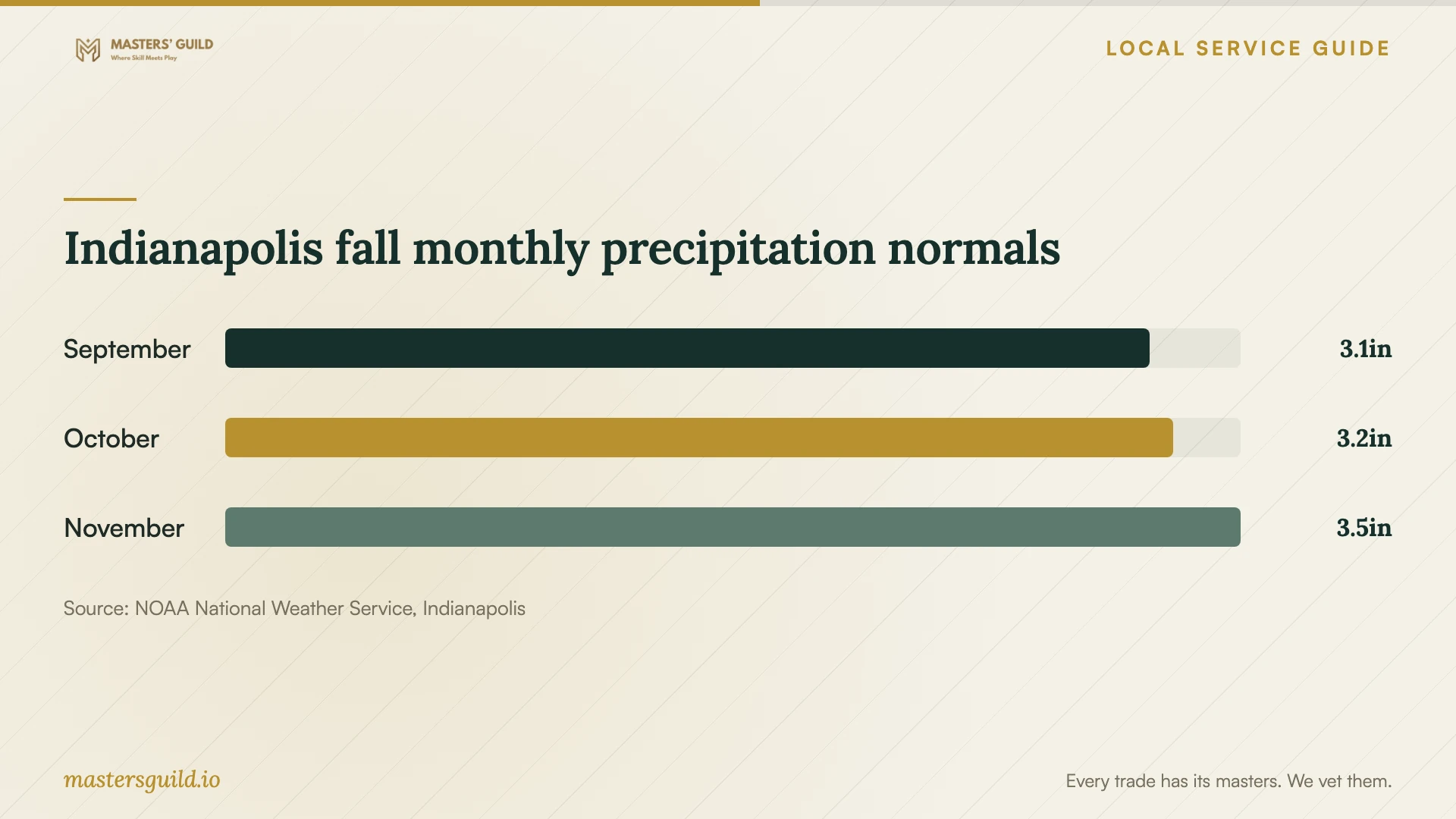
The National Weather Service publishes Indianapolis precipitation normals of 3.22 inches for October and 3.45 inches for November, based on 1991–2020 averages. Check the actual forecast and ground condition when choosing a workday. These historical monthly totals do not predict rain on your appointment date. Agree on rescheduling arrangements and identify areas where you do not want equipment crossing wet ground. [2]
Tell the contractor about gate width, stairs, parking access, pets, and equipment restrictions. Photograph the access route as well as the debris. For large limbs, hanging branches, or work near overhead wires, request a separate assessment before including them in a routine cleanup agreement. Keep those tasks outside the agreed cleanup scope until you have a plan for them.
Compare the complete price and inspect the result
Obtain property-specific written quotes based on the same photos and task list. Request a total price tied to the agreed scope. For hourly work, confirm whether the rate covers the whole crew or each worker, and set a spending limit that requires your approval to exceed. Have the contractor list equipment, bags, loading, hauling, and disposal charges.
Request proof of insurance and the name of the person responsible for the job. Agree on how you will approve extra work if the crew finds concealed rubbish or a larger debris pile than the photos showed. Get a written change price before expanding the scope. Decide whether the crew should pause that part of the work while awaiting your response.
Before the crew leaves, inspect the areas listed in the quote. Check that workers cleared the agreed lawn and paths, preserved marked beds, removed the promised debris, and closed the gates. If you cannot attend, request completion photos from the same viewpoints as your original photos. Discuss any unfinished task with the person responsible for the job.
Indianapolis fall monthly precipitation normals
Local details that affect your job
Marion County guidance excludes leaf burning
Decatur Township publishes burn guidance labeled for Marion County and Indianapolis. It describes barrel burning of dried limbs, twigs, and branches under specified conditions, but excludes leaves and trash. Its recreational-fire guidance also excludes leaves and trash. Reject a proposal to burn collected leaves and have the bidder price removal, mulching, or composting. [3]
Indiana disposal rules change the hauling scope
IDEM’s statewide guidance applies to yard waste from residential sources and distinguishes restricted materials from exceptions such as grass and contained woody debris shorter than 3 feet. Have your hauler identify the material and intended destination before quoting disposal. Do not assume shortening branches resolves the disposal plan for leaves collected with them. Confirm how the contractor will separate and deliver the materials. [1]
Choose the scope for your yard
| Situation | Suggested arrangement | Confirm before hiring |
|---|---|---|
| You can collect the lawn leaves yourself | Handle collection and request hauling help if needed | Material destination and whether loading is included |
| Leaves cover the lawn and planted beds | Request selective cleanup; Purdue supports retaining disease-free leaves in beds | Beds and standing stems workers should preserve |
| You have leaves and mixed woody debris | Request material-specific removal under Indiana disposal guidance | Destination, branch handling, and disposal charges |
| A bidder proposes burning leaves | Request removal, mulching, or composting; local burn guidance excludes leaves | A revised scope and price without leaf burning |
| You want another visit after more leaves fall | Request an initial visit with an optional return | Return price and your approval before scheduling |
Your hiring checklist
- Photograph each work area, debris pile, and access route.
- Mark plants, stems, and beds the crew should preserve.
- List leaf collection, weeding, branch gathering, and hauling as separate tasks.
- Confirm the destination and acceptance requirements for removed material.
- Check collection requirements before agreeing to leave bags or bundles for pickup.
- Request a total price or an approval limit for hourly work.
- Agree on weather rescheduling and the price of any return visit.
- Inspect the agreed areas or request matching completion photos.
Frequently Asked Questions
Should a cleanup crew remove all leaves and dead stems?
Specify the areas you want cleared. Purdue Extension recommends removing leaves from lawns while retaining disease-free leaves in beds where appropriate. It explains that dead flower stems can shelter overwintering pollinators and seed heads can feed wildlife. Mark what you want preserved before work starts. [4]
Can the contractor burn the collected leaves?
Decatur Township’s guidance for Marion County and Indianapolis excludes leaves and trash from both barrel burning and the recreational fires it describes. Request a composting, mulching, or removal plan for collected leaves. [3]
Can yard debris go into a landfill?
Indiana restricts yard-waste landfill disposal and lists exceptions. IDEM identifies leaves, brush, and woody material longer than 3 feet as covered by the ban, while exceptions include grass and contained woody material shorter than 3 feet. Have the contractor confirm the receiving facility’s requirements for your materials. [1]
How should I compare cleanup quotes?
Give bidders the same photos and task list. Request prices that include loading, hauling, disposal, and any return visit. For hourly work, confirm whether the rate covers the crew or each worker and set a spending limit. Get any scope changes and their prices in writing before approving them.
Sources and scope
This guide combines the sources below with practical planning guidance. Figures apply to the stated geography and period; request a written quote for your property.