
Local service guide
Tree cutting and arborist services in Indianapolis
Tree cutting in Indianapolis starts with deciding whether you need an arborist assessment, pruning, removal, or storm cleanup. Ask for a written scope and proof of insurance before arranging work. If branches involve electrical lines, coordinate with the utility first. AES Indiana recommends professional trimming around the pole-to-home service line and offers a free temporary shutoff by appointment. [1]
Choose an assessment before committing to removal
Describe your concern before asking for a cutting price: a branch over the roof, a damaged trunk, a change in lean, or a tree you want to retain. Ask the arborist to explain the condition, the proposed work, and any follow-up inspection. Request separate recommendations for preserving the tree and removing it where both options merit consideration.
AES advises property owners to inspect mature trees in spring, when foliage leaves the structure visible, and after major storms. Its warning signs include broken or dangling branches, cracks at branch attachments, trunk cavities, and cracked or heaving soil beside the tree. Use those observations to describe the problem; consult a certified arborist for professional advice. [1]
Ask who will assess the tree and who will supervise the crew. Request proof of liability insurance and workers’ compensation coverage, and ask the provider to explain any coverage exception. If someone claims an arborist certification, request the credential details. Treat these as separate checks rather than accepting a general statement that the company has credentials.
Resolve electrical clearance before scheduling the crew
Keep away from downed power lines and report them to AES at 317-261-8111. AES also warns property owners against trimming a tree with power lines running through it. Explain the line involvement when requesting an assessment so the contractor can coordinate the work with the utility. [1] [2]
For AES customers, the property owner must keep the service wire from the pole to the home clear. AES recommends a professional tree service and will assist by shutting off power to that service line without charge. Call 317-261-8111 a few days ahead to arrange the appointment, then confirm the timing with your contractor. [1]
For planned utility trimming, raise concerns before crews arrive. The Indiana Utility Regulatory Commission says its rules for investor-owned electric utilities require at least two weeks’ notice. The guidance includes limits on topping and removing more than 25 percent of a tree without permission, with exceptions for emergencies or safe and reliable service. These rules govern utility trimming, rather than your private tree-service contract. [3]
Compare complete quotes, including the cleanup
Ask each contractor to quote the same marked trees and agreed work. Specify pruning or removal, access through gates, equipment placement, protection for nearby structures, and the condition you expect the yard to be in afterward. For removal, request separate line items for hauling wood, stump work, and restoring the disturbed area.
Check what the utility has already done before buying cleanup. After routine trimming, AES hauls away debris but leaves logs greater than four inches in diameter at the tree base, cut to handling length. After emergency line clearance, AES leaves debris cleanup to the customer and suggests asking the insurer whether it covers a cleanup crew. [2]
Agree on whether you want logs retained, chips removed, or wood hauled away. For stump work, state the requested depth, whether the contractor will remove grindings, and who will supply soil or seed. Ask for written approval before the crew adds work beyond the agreed scope.
Prepare for stump work and weather interruptions
Before root excavation, stump removal involving digging, or replacement planting, confirm the locate arrangements. Indiana 811 says your contractor must contact 811 for a digging project. The contractor must also contact non-member utilities and check positive response, the system showing whether utilities have marked their facilities or reported no conflict. [4]
Indiana 811 requires at least two full working days’ notice before excavation, excluding weekends and state and national legal holidays. A ticket submitted after 7 a.m. Eastern does not count that working day toward notice. Some privately owned facilities fall outside member utility marking, so identify any need for a private locator before setting the excavation date. [4]
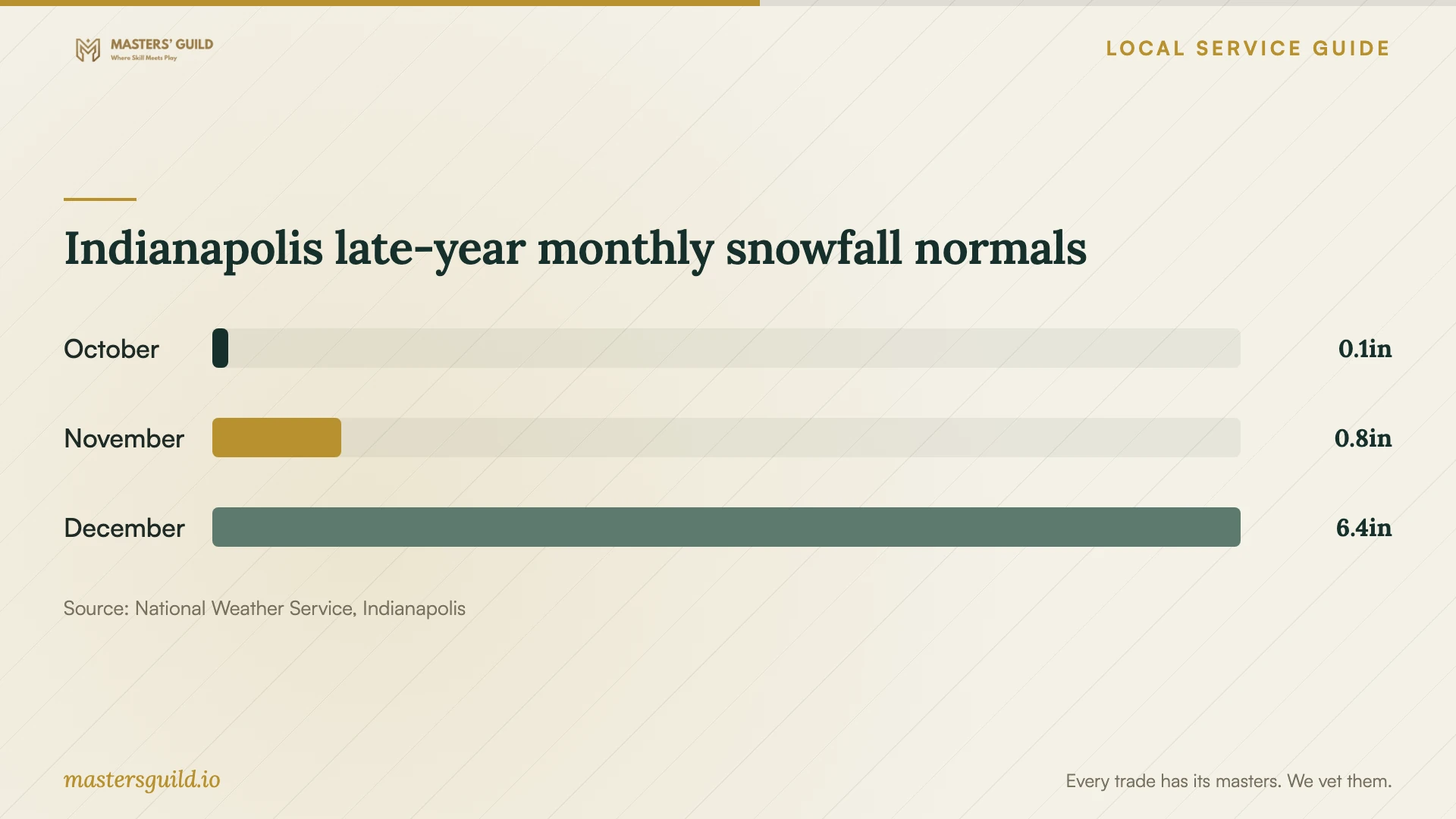
Discuss weather postponements and equipment access when booking. The National Weather Service’s Indianapolis normals show snowfall increasing through late autumn into December, as the chart illustrates. Ask how the contractor will handle unsuitable ground conditions and rescheduling. Choose pruning timing with the arborist based on the tree and proposed work. [5]
Indianapolis late-year monthly snowfall normals
Local details that affect your job
AES service-line coordination
For work around your AES pole-to-home service wire, arrange the free temporary shutoff before the tree crew arrives. AES asks customers to call 317-261-8111 a few days in advance. Put responsibility for confirming that appointment in the job scope. [1]
Emergency clearance leaves a cleanup job
AES does not clear debris after emergency tree trimming. Before accepting a private cleanup quote, identify the wood and branches you want removed and ask your insurer about coverage. For questions about utility clearance, AES lists 317-261-8128, staffed weekdays from 7 a.m. to 4 p.m. [2]
Resolve planned utility-trimming disputes before cutting
The IURC says utilities cannot trim outside an easement or right of way without customer consent. If you cannot resolve a trimming disagreement with your investor-owned utility, contact the IURC Consumer Affairs Division. Its guidance recommends resolving disputes before trimming occurs. [3]
Choose the next step for your tree job
| Situation | Next step | Confirm before work |
|---|---|---|
| Cracks, dangling branches, or heaving soil | Arrange a certified arborist assessment | The recommended work and reasons for it |
| Branches around an AES service wire | Coordinate professional trimming and an AES shutoff | Appointment timing and crew responsibility |
| Debris after AES emergency clearance | Define a separate cleanup scope | Hauling requirements and possible insurance coverage |
| Stump or root excavation | Have the contractor arrange utility locates | Utility responses and any private facilities |
Your hiring checklist
- Identify each tree and describe whether you want assessment, pruning, removal, or cleanup.
- Request the assessing arborist’s credential details and the contractor’s insurance documentation.
- Confirm who will coordinate any required utility appointment.
- Mark the agreed access route and discuss protection for fences, paving, and structures.
- Specify hauling, retained logs, chips, stump work, and yard restoration in writing.
- For excavation, ask the contractor to confirm locate tickets, utility responses, and private-locate arrangements.
- Agree on weather postponements, added-work approval, and payment terms before work starts.
Frequently Asked Questions
How should I compare tree-service prices?
Give contractors the same tree list and requested outcome. Compare written totals alongside hauling, stump work, access arrangements, and restoration. Ask each bidder to identify exclusions so you can decide whether a separate cleanup or stump quote is necessary.
Will AES remove branches near my house wire?
AES assigns responsibility for keeping the pole-to-home service line clear to the property owner and recommends a professional tree service. AES offers a free temporary service-line shutoff; schedule it a few days ahead at 317-261-8111. [1]
Does utility tree trimming include hauling everything away?
AES distinguishes routine work from emergency clearance. During routine trimming, it hauls debris but leaves logs greater than four inches in diameter, cut to handling length. After emergency trimming, the customer handles debris cleanup. [2]
Does my contractor handle 811 for digging?
Yes. Indiana 811 says the contractor must contact 811. Before excavation starts, confirm the ticket, contact with non-member utilities, and checked utility responses. Ask about private facilities because member utilities do not mark all privately owned lines. [4]
Sources and scope
This guide combines the sources below with practical planning guidance. Figures apply to the stated geography and period; request a written quote for your property.