
Local service guide
Plumbing Services in Indianapolis: Hiring and Permits
Arrange Plumbing Services in Indianapolis by defining the repair, checking the responsible contractor’s Indiana plumbing license, and requesting a written scope before authorizing work. For exterior sewer repairs, ask who will obtain the Citizens Energy Group permit and arrange inspection. For a suspected lead water service line, check Citizens’ replacement program before commissioning a private replacement. [1] [2] [3]
Describe the problem before requesting a quote
Give the plumber a short account of the problem: which fixture or room you noticed it in, when it started, whether you see water, and what you have tried. Send photographs of the affected area and any accessible equipment label. Ask whether the first appointment covers diagnosis, repair, or both.
For a drain problem, record which fixtures back up and whether the problem follows rainfall. Citizens identifies damaged sewer laterals, broken or uncapped cleanouts, and improper sump pump and downspout connections as sources of clear water entering sanitary sewers. Ask the plumber to explain the suspected cause and the evidence supporting the proposed work. [4]
For fixture or water heater work, ask the quote to identify the proposed model, included connections, removal of old equipment and any excluded work. Request a separate allowance or approval process for concealed damage. Keep the diagnostic findings with the quote so you can compare proposed repairs on the same basis.
Check the contractor and agree on responsibilities
Indiana’s Professional Licensing Agency licenses plumbing contractors and journeyman plumbers. Its guidance states that corporations engaged in plumbing contracting must hold a plumbing contractor license. Ask who holds the responsible contractor credential and use the agency’s license verification option to check the current record. [2]
Exterior sanitary sewer work adds a local check. Citizens requires the contractor to be listed, insured and bonded with the City of Indianapolis. Ask the contractor to document those requirements for the proposed lateral work rather than treating a state plumbing license as the complete hiring check. [1]
Put responsibility for permits, inspection requests, utility coordination and restoration in writing. Ask who will repair disturbed paving, landscaping or interior finishes. Before agreeing to payment terms, identify what counts as completion and which documents you will receive afterward.
Separate drain cleaning from sewer construction
Citizens allows typical snaking, cleaning and root removal without a sewer lateral permit. It requires a permit before exterior lateral alterations, repairs, replacement, lining or cleanout installation. If a drain-clearing visit leads to a construction recommendation, request a revised scope and permit plan before approving that additional work. [1]
For permitted lateral construction, the contractor leaves the trench open and requests Citizens’ inspection. Citizens allows backfilling and restoration after the work passes inspection. Ask the contractor how the inspection fits into the schedule and how they will protect the open work area. [1]
Citizens states that the property owner maintains the sanitary sewer lateral from the home to its connection at the main. For a repair proposal, ask the contractor to identify the affected section and explain how they determined its location. Request any inspection recording or photographs used to support excavation or lining. [1]
Compare costs without assuming a local repair price
Request itemized quotes covering diagnosis, labor, materials, equipment, permit charges and restoration. Ask whether the provider charges a dispatch fee and whether that fee applies toward the repair. For a planned project, give each bidder the same scope and ask them to identify exclusions and conditions that could change the price.
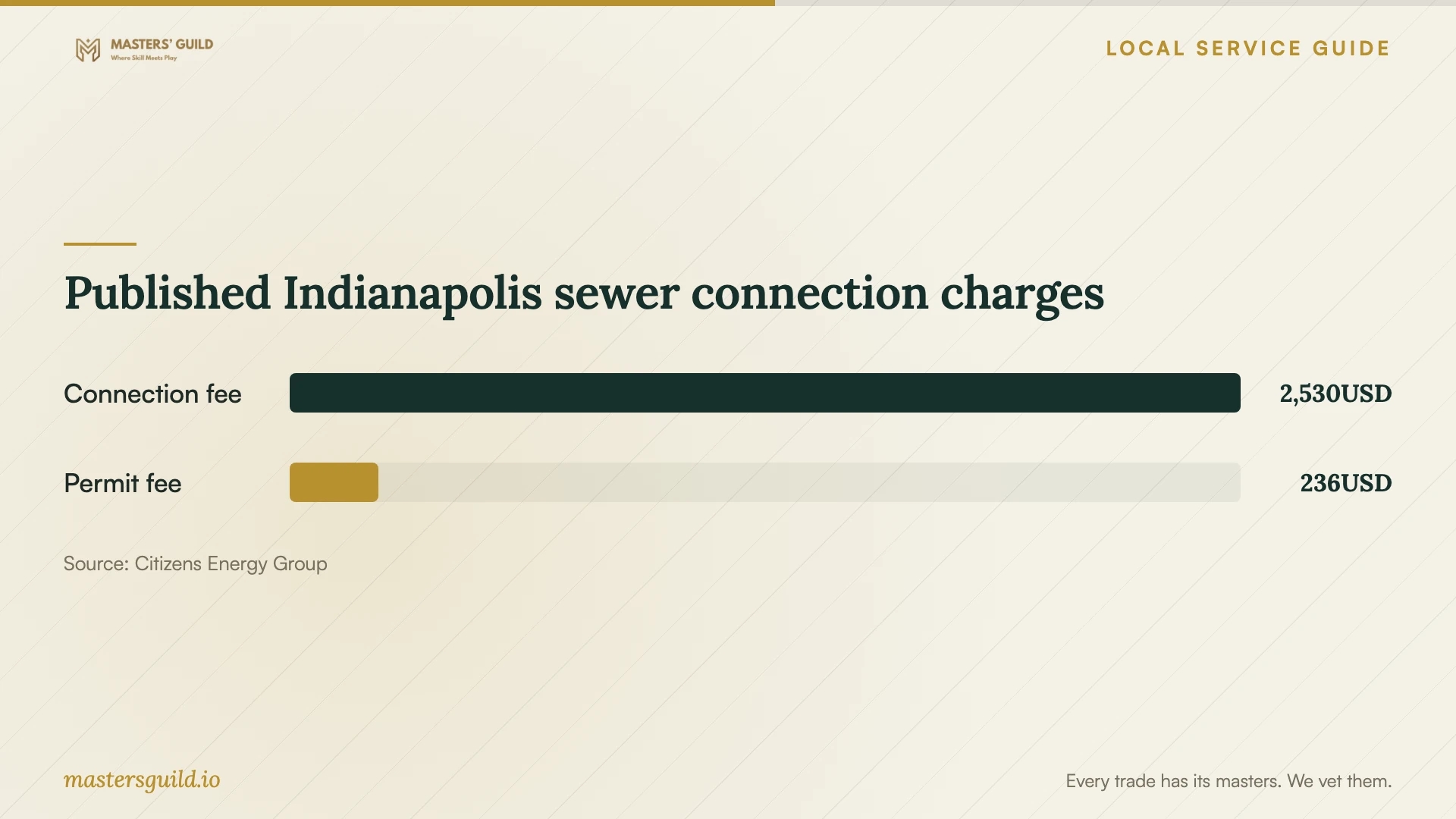
Citizens publishes a $2,530 Indianapolis sewer connection fee and a $236 permit fee on its connection guidance. These are utility charges for the described connection process, not an installed plumbing price. Citizens also notes that an address-specific subsequent connection fee may apply when connecting to a sewer main less than ten years old. Confirm the applicable charges for your project before using these figures in a budget. [1]
Keep utility fees separate from the contractor’s price. Ask whether the quote includes those fees or whether you will pay Citizens through its approval process. Do not apply the published new-connection charges to a routine drain clearing or assume they describe the fees for your lateral repair. [1]
Check lead service line options before replacement
Citizens says buildings constructed and connected to its water system before 1950 may have lead service lines. Building age alone does not establish your pipe material. Ask Citizens about the service line record and replacement pathway for your address before deciding how to arrange the work. [3]
In designated proactive replacement areas, Citizens replaces lead service lines at no cost to the customer when the property owner signs an approved Right of Entry Agreement. Its owner-initiated pathway has separate eligibility conditions and assigns the private-property replacement and meter relocation costs to the owner. Ask for a written explanation of your eligibility and share of the work. [3]
Published Indianapolis sewer connection charges
Local details that affect your job
Confirm the sewer permit before construction
Citizens requires the contractor to apply for the sewer lateral permit before exterior construction begins. It gives a typical review period of 2–3 business days for a completed single-family residential connection application. Treat that as application review time, not a promised repair completion date, and ask the contractor to confirm permit issuance before scheduling construction. [1]
Investigate rain-related connections
Citizens’ Correct Connect guidance says sump pumps should discharge outside into a yard or connect to a storm sewer. A sump pump connected to the same pipe as toilets, showers and sinks sends clear water into the sanitary sewer. Ask the plumber to trace the discharge route and consult Citizens about a correction before approving sewer construction. [4] [1]
Choose the correct owner-initiated lead replacement route
For eligible owner-initiated replacements, Citizens offers a quote through its contractor or allows the owner to hire a contractor registered and bonded with Citizens. Under the second option, the contractor submits a water service line modification permit and the work must pass inspection. Confirm the contractor’s Citizens credentials and include meter relocation in the scope. [3]
Match the proposed work to the next step
| Proposed work | Relevant local distinction | Ask before authorizing |
|---|---|---|
| Routine sewer snaking or root removal | Citizens permits typical cleaning and maintenance without a lateral permit. | What does the cleaning price include, and what findings would prompt a separate repair proposal? |
| Exterior lateral repair, lining or cleanout installation | Citizens requires a sewer lateral permit before construction. | Who obtains the permit, arranges inspection and completes restoration? |
| Correction of rainwater connections | Citizens identifies sanitary connections from sump pumps and downspouts as improper clear water sources. | Where does the discharge go, and what correction does Citizens require for this property? |
| Lead water service line replacement | Citizens has designated-area and eligible owner-initiated pathways with different payment arrangements. | Which pathway applies to my address, and which portions must I fund? |
Your hiring checklist
- Photograph the problem and write down affected fixtures, timing and prior repair attempts.
- Request the responsible contractor’s name and license number, then check the state record.
- Ask whether the appointment includes diagnosis, repair or an estimate for later work.
- Request an itemized scope with exclusions and a written process for approving added work.
- For exterior sewer construction, ask for the permit plan and inspection schedule.
- For a suspected lead service line, confirm utility program eligibility before accepting replacement costs.
- Agree on cleanup, restoration, completion documents and payment milestones.
Frequently Asked Questions
Does sewer drain cleaning require a permit?
Citizens does not require a sewer lateral permit for typical snaking, cleaning or root removal. Repairs, lining, replacement and cleanout installation require a permit before construction. Ask for a new written scope if the contractor recommends construction after cleaning. [1]
Can I repair my own exterior sewer lateral?
Citizens says only a licensed contractor or plumber can perform sewer lateral repairs. For Indianapolis work, it also requires the contractor to be listed, insured and bonded with the city. [1]
Will Citizens pay for my lead service line replacement?
Payment depends on the program pathway and eligibility. Designated proactive projects offer replacement at no customer cost with an approved Right of Entry Agreement. Eligible owner-initiated projects require the owner to fund the private-property portion and meter relocation while Citizens funds the public right-of-way portion. [3]
What should I request after sewer construction?
Request the permit information, inspection outcome, photographs or recordings, final invoice and restoration details. Citizens inspects lateral construction before allowing the contractor to backfill the trench, so ask for confirmation that the work passed. [1]
Sources and scope
This guide combines the sources below with practical planning guidance. Figures apply to the stated geography and period; request a written quote for your property.