
Local service guide
Indianapolis lighting installation: hiring and planning
For lighting installation in Indianapolis, ask an electrical contractor to quote the fixture locations, wiring work, controls and ceiling repairs before you book. Separate replacements at existing locations from new lighting points. Check the city’s contractor and permit research records, and ask the contractor to explain the permit requirements for your exact scope before work starts. [1]
Define the work before comparing quotes
Write a room-by-room fixture schedule. Identify which lights you want to replace, which you want to move and where you want new lighting. Include photographs, fixture model numbers and your preferred switch locations. For pendants, mark the intended position relative to the table or counter so bidders price the same layout.
Ask the contractor to inspect the existing connections and mounting arrangements before committing to a fixed scope. Request separate allowances for wiring changes, fixture support, access equipment and ceiling or wall repairs. Specify who supplies the fixtures, who removes the old ones and who handles packaging and disposal.
For recessed lighting, ask the bidder to explain the proposed layout and how they will access each location. For a chandelier or stairwell fixture, provide the manufacturer’s weight and installation instructions. Ask who will arrange access and whether the quote includes the equipment they intend to use.
Check the contractor and settle permit responsibility
The City of Indianapolis provides a Permit and Contractor Research page with searches by address and licensed professional information. Its records include electrical contractor categories and electrical permits for one- and two-family, multifamily and nonresidential properties. Use those search options to investigate the proposed contractor and your property. [1]
Ask the bidder for the business name and electrical credential details they use in city records. Compare those details with your written proposal. If you cannot reconcile a record with the bidder’s information, ask for an explanation before signing. Request proof of insurance as a separate hiring check. [1]
The research page identifies permit categories and search methods; it does not explain which fixture replacements qualify for an exemption. Ask the contractor to confirm the requirement for your address and work description with the responsible permitting office. Put responsibility for applications, fees and any required inspections into the agreement. [1]
Choose brightness, light appearance and controls
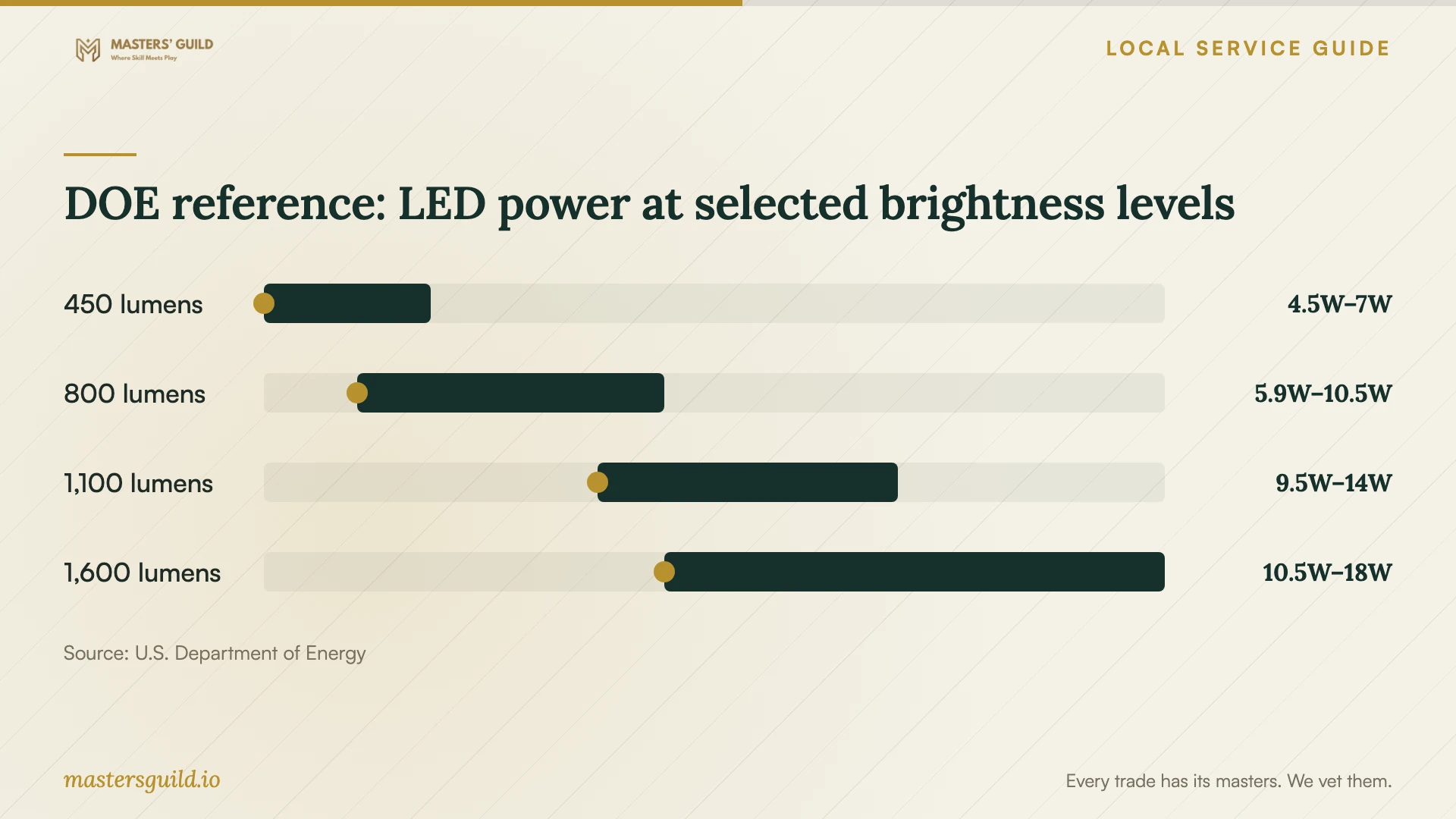
Compare bulb brightness in lumens and power consumption in watts. The Department of Energy’s reference table pairs several light outputs with incandescent wattages and LED wattage ranges. Use the chart below as a bulb-shopping reference when discussing brightness with your installer. [2]
Choose light appearance before ordering a whole room’s fixtures. DOE lists 2,700 K as warm and 3,000 K as soft, with homes among the applications for both. Try a sample in the room alongside the finishes you intend to keep, then record your preferred color temperature in the fixture schedule. [2]
For dimmed lighting, check both the bulb’s dimmable designation and its compatibility with the proposed dimmer. DOE also advises checking whether an LED suits a fully enclosed fixture because trapped heat can affect performance and life expectancy. Give the contractor the bulb and control specifications before approving substitutions. [2]
Compare outdoor installation with utility service
AES Indiana describes a private lighting service that includes electrical design, poles and fixtures, electricity and routine maintenance. It also includes photoelectric controls for dawn and dusk operation. If you want pole lighting for a driveway or yard, ask AES whether it can serve your address before choosing an installation approach. [3]
Ask AES and the electrical contractor to explain equipment ownership, maintenance responsibilities, control options and ongoing charges. Compare those answers alongside installation costs. AES says an existing utility pole can accommodate its cobra head fixture in many cases, while installing a pole adds cost. Confirm the proposed location and current fixture choices during consultation. [3]
If you need to address a failed streetlight, use AES Indiana’s streetlight reporting route. The utility accepts reports of broken, burnt-out or damaged streetlights online or at 317-261-8111. Confirm who maintains the light before arranging private work. [3]
DOE reference: LED power at selected brightness levels
Local details that affect your job
Investigate records for the property and bidder
On Indianapolis’s Permit and Contractor Research page, choose Search by Address to investigate property cases or Search by Licensed Professional Information to investigate the bidder. The city includes electrical permit and contractor categories. Ask the contractor to clarify any record you cannot match to the proposal; a search result alone does not settle the permit requirements for your project. [1]
Consider AES for maintained pole lighting
AES Indiana offers consultation and estimation for its private lighting service at 317-261-8653. Its stated scope combines installation, electricity and routine maintenance, so ask about ongoing charges as well as initial work. Existing pole availability can affect the proposal: AES identifies an additional cost when it installs a utility pole for its cobra head lighting option. [3]
Match your project to the next planning step
| Your project | Next step | Clarify in the proposal |
|---|---|---|
| Replace fixtures at existing locations | Ask for inspection of connections and mounting arrangements | Fixture supply, installation and disposal |
| Add or relocate lighting | Request a layout and wiring scope | Access, switching, repairs and permit responsibility |
| Install dimmed LED lighting | Check the bulb and dimmer specifications together | Compatible product models and substitution approval |
| Add outdoor pole lighting | Compare a contractor proposal with AES private lighting service | Installation, electricity, maintenance and ongoing charges |
Your hiring checklist
- Prepare a fixture schedule with locations, model numbers and photographs.
- Mark proposed pendant positions and preferred switch locations.
- Ask bidders to separate installation, wiring changes, access equipment and surface repairs.
- Compare the bidder’s business and credential details with city research records.
- Assign responsibility for confirming permits, paying fees and arranging required inspections.
- Confirm bulb, fixture and dimmer compatibility before ordering.
- Agree on cleanup, disposal and a demonstration of the finished controls.
Frequently Asked Questions
How much should I budget for installation?
Get a written quote for your fixture schedule after the contractor reviews access and existing conditions. The supplied sources do not establish an Indianapolis installation price range. Ask bidders to separate fixture purchases, labor, wiring changes, surface repairs and any permit costs so you can compare the scope.
Does replacing a ceiling light require a permit?
Confirm the requirement for your exact scope before work begins. The city research page lists electrical permit categories but does not state fixture-replacement exemptions. Ask the contractor to confirm the applicable rule and record who will handle any required application and inspection. [1]
Can I keep my existing dimmer with new LED bulbs?
Check the specifications before deciding. DOE advises confirming that the LED supports dimming and works with the dimming system. Give the installer the existing dimmer model and proposed bulb details, then ask whether the quote needs to include a replacement control. [2]
Should I hire someone to fix a streetlight?
If AES maintains the streetlight, report the fault through its online reporting option or call 317-261-8111. AES accepts reports of broken, burnt-out and damaged streetlights. For a light on your property, clarify ownership and maintenance responsibility before booking work. [3]
Sources and scope
This guide combines the sources below with practical planning guidance. Figures apply to the stated geography and period; request a written quote for your property.