
Local service guide
Indianapolis lawn mowing: scheduling and hiring
Arrange lawn mowing in Indianapolis by requesting a written quote that names the cutting height, visit schedule, trimming areas, and clipping or leaf handling. Ask the provider to adjust visits to grass growth and postpone work on frost-covered turf, following Purdue's guidance. For an autumn booking, agree on leaf cleanup and a dormancy-based end to seasonal mowing before accepting the quote. [2] [3]
Specify the cut before choosing a schedule
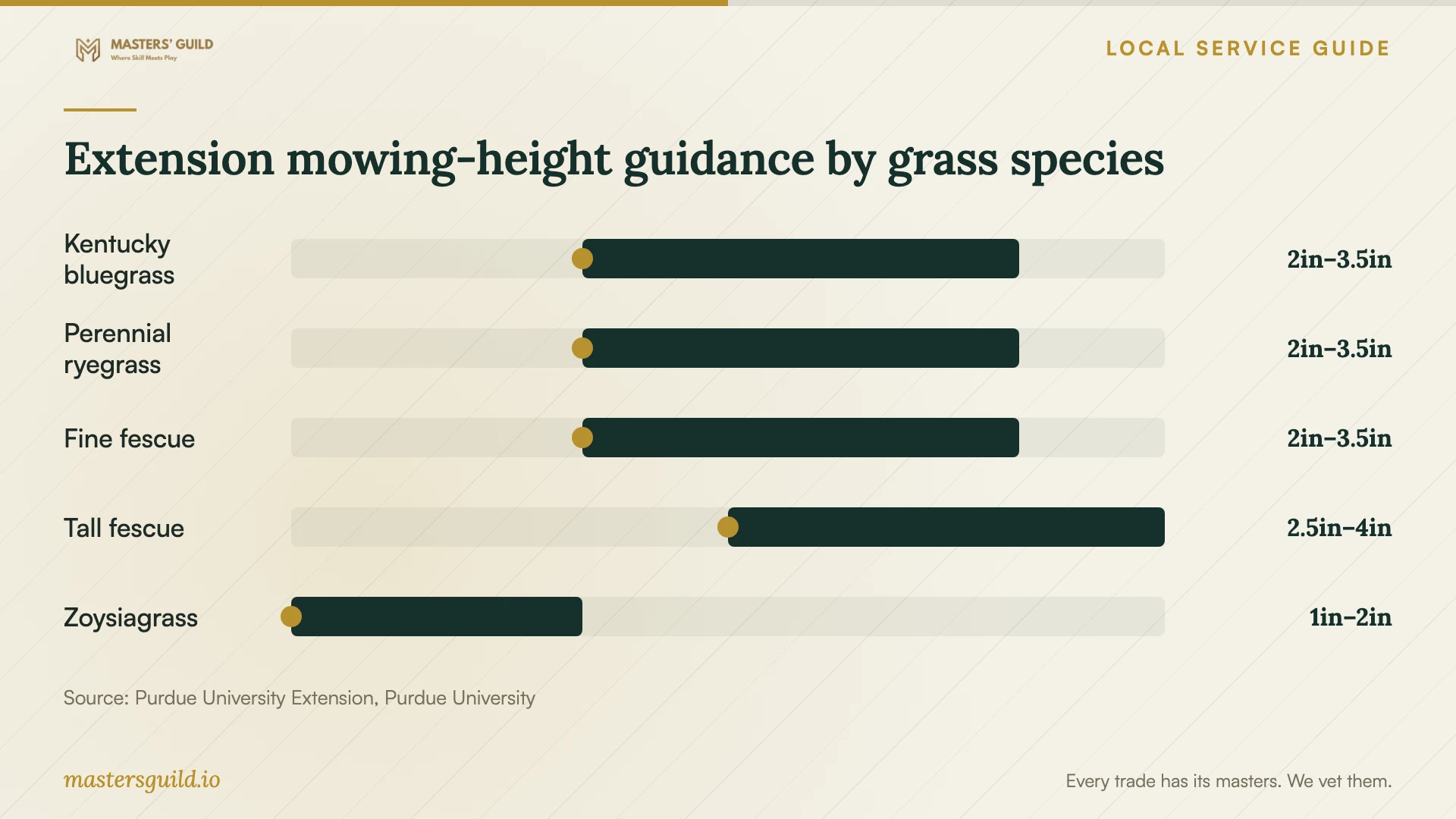
Ask the provider to identify your grass and explain the mower setting. Purdue and University of Illinois Extension publish species-specific height ranges in AY-8. They recommend adding 0.5 to 1.0 inch in shade. Write down the agreed height and identify shaded sections that need separate treatment. [2]
Purdue's separate autumn article gives general advice to mow lawn turf at 3 inches or higher. That blanket recommendation differs from AY-8's 1.0 to 2.0-inch range for zoysiagrass. Use the species-specific range to choose the setting; do not apply the autumn article's minimum to zoysiagrass. Ask the provider to maintain the agreed setting through the remaining growing season. [2] [3]
Purdue advises removing no more than one-third of the grass blade during a single mowing. Its example is to mow at 4 inches when maintaining a 3-inch height. For overgrown grass, ask for a recovery plan that raises the initial cutting height and returns to the intended height over several cuts. [2]
Ask how the crew maintains sharp blades and how you should report a poor cut. Purdue warns that dull blades injure grass and that mowing below the recommended height restricts root growth and increases susceptibility to drought, disease, insects, and traffic damage. [2]
Choose flexible visits and clear billing
Treat weekly or biweekly service as a starting agreement. Purdue ties frequency to growth, with some lawns needing twice-weekly cuts in spring and fall and a two-week interval in summer. Ask who checks the grass between visits and how you can request an extra cut or skip a visit. [2]
Request written quotes for your property and compare the same scope of work. Ask for separate amounts for routine mowing, the first overgrown cut, leaf removal, and requested bagging. Record whether you pay per completed visit or under a seasonal agreement, along with the billing terms for postponed or skipped visits.
For hot, dry periods, Purdue advises avoiding midday mowing when temperatures exceed 90 degrees Fahrenheit and the soil is dry. Ask whether the provider can move that visit to a cooler morning or evening and communicate the change before arrival. [2]
Plan autumn mowing and leaf work together
Agree to end mowing according to turf dormancy rather than a fixed final appointment. Purdue's autumn guidance advises continuing mowing until dormancy and avoiding mowing or leaf removal on frost-covered or frozen turf. Include a rescheduling policy for these conditions. [3]
Discuss whether the crew will mulch fallen leaves during mowing or collect them under a separate scope. Purdue says dry leaves mulch more easily and advises against shredding too many in a single mowing. It recommends removing debris when the layer is too thick. Heavy leaves left through winter can thin turf and increase susceptibility to snow mold. [3]
Walk the yard with the provider and identify where leaves should go. Specify whether the quote includes beds, fences, sidewalks, and the curb, then agree on hauling or an on-property collection area. Require approval before the crew adds work beyond that scope.
Prepare the yard and assess the first visit
Send photos of the lawn, gates, slopes, and obstacles before requesting a quote. Provide the gate opening measurement and identify equipment access. Mark sprinkler heads and other fixtures, remove toys and pet waste, and tell the provider where to avoid mowing or trimming.
Request proof of insurance and ask who handles damage reports. After the first visit, check the agreed height, trimming boundaries, and cleanup areas. Photograph missed work and discuss it before confirming the next visit. Request a separate scope for aeration, weed treatment, or other work you want beyond mowing.
Extension mowing-height guidance by grass species
Local details that affect your job
Use Indianapolis freeze history to plan postponements
The National Weather Service's Indianapolis page lists October 26 as the average first freeze date. Treat that historical average as planning context, not a forecast for your property or a final mowing date. Purdue advises avoiding work on frost-covered turf. Ask your provider to inspect conditions before an autumn visit and agree on how a frost delay affects scheduling and billing. [1] [3]
Handle a Clermont overgrowth notice as a deadline job
Clermont's official maintenance page describes vegetation over 12 inches as a violation under Indianapolis/Marion County Chapter 575 and gives owners five days from a notice to mow. It also says owners pay for city mowing and subsequent necessary cuts. Confirm the applicability and deadline of this published reminder with your property's issuing authority. Send the notice and current photos to the provider, request a completion commitment, and retain dated completion photos. [4]
Include curb cleanup when arranging work in Clermont
Clermont's maintenance page tells owners to keep sidewalks free of grass and weeds and curbs clear of leaves and grass because debris can block storm grates. For a property there, specify sidewalk and curb cleanup in the mowing scope. Elsewhere in the service area, ask your local authority about responsibilities before applying Clermont's reminder to your address. [4]
Choose the service scope for your lawn
| Your situation | Request | Reason |
|---|---|---|
| Grass grows fast between visits | A growth-based schedule with an extra-cut option | Purdue says spring and fall growth may require twice-weekly mowing. |
| Grass has become overgrown | A staged return to the target height | Purdue recommends raising the initial height and lowering it over several cuts. |
| Leaves cover the lawn | An assessment for mulching or separate removal | Purdue recommends removal when leaf debris is too thick. |
| Frost covers the turf | Postpone mowing and leaf work | Purdue advises avoiding maintenance on frost-covered or frozen turf. |
| You received an overgrowth notice | A deadline commitment after confirming jurisdiction | Clermont's reminder describes a five-day mowing deadline from a notice. |
Your hiring checklist
- Send current photos, gate measurements, and a description of obstacles.
- Agree on a species-specific cutting height and treatment for shaded grass.
- Request a written scope for mowing, trimming, edging, and cleanup.
- Record the price basis and approval process for extra work.
- Agree on skipped visits, frost delays, and seasonal cancellation.
- Specify leaf mulching, collection, and disposal arrangements.
- Share any violation notice and confirm a completion deadline.
- Request insurance documentation and a damage-reporting contact.
Frequently Asked Questions
Should I choose weekly or biweekly mowing?
Choose an interval that keeps growth within the agreed cutting limit. Purdue says frequency depends on growth and advises removing no more than one-third of the blade at a cut. Ask the provider to reassess the interval as growth changes. [2]
Should the crew bag grass clippings?
Purdue recommends returning clippings when the mower distributes them evenly and they do not shade the grass beneath. Ask the provider to explain proposed bagging and quote it as a defined part of the job. [2]
Should I request a shorter final autumn cut?
Maintain the verified species-specific setting until dormancy rather than requesting a shorter final cut. AY-8 advises keeping the mowing height consistent through the year and gives zoysiagrass a 1.0 to 2.0-inch range. Purdue's autumn article gives general advice of 3 inches or higher, which conflicts with that zoysiagrass range. Prioritize the species-specific guidance when agreeing on the final visits. [2] [3]
Does mowing include leaf removal and edging?
Ask the provider to list each included task in writing. Specify the edges to maintain, whether the crew will mulch or collect leaves, and whether hauling costs extra. Approve changes to the scope before the crew performs them.
Sources and scope
This guide combines the sources below with practical planning guidance. Figures apply to the stated geography and period; request a written quote for your property.