
Local service guide
Kitchen Remodeling in Indianapolis: Hiring and Planning
Arrange Kitchen Remodeling in Indianapolis by giving contractors the same written scope, comparing itemized bids, and assigning responsibility for demolition, trade work, approvals, cleanup, and completion. Before choosing finishes, discuss painted surfaces in a pre-1978 home and review water conditions at your address. Indiana health guidance explains lead-safe renovation practices, while Citizens provides hardness information and service-line records to inform plumbing decisions. [1] [3]
Define the work before comparing contractors
Start with a room sketch, photographs, and the problems you want to solve. Describe the storage you need, the appliances you intend to keep, and whether you want to move the sink or cooking area. Give each bidder this same brief.
Request separate descriptions for demolition, cabinets, countertops, flooring, lighting, plumbing, ventilation, appliance installation, and repairs to adjoining surfaces. Have the contractor identify who supplies each item. For allowances, ask which product and quantity the amount covers. Resolve selections before accepting the final price.
Ask who will supervise the job and which subcontractors will enter your home. Request insurance documentation, relevant credentials, and references for projects with similar work. Have the bidder explain which permits or approvals they will confirm for your address and who will arrange inspections. Put those responsibilities in the contract.
Agree on the budget and construction sequence
Build your budget from written project bids. Request a base price, selected alternatives, delivery charges, disposal, and exclusions. Have the contractor explain how they will price concealed damage and changes you request. Require written approval of the price and schedule effect before extra work starts.
Request a sequence covering product selections, ordering, delivery checks, demolition, trade work, cabinet installation, countertop measurement, and final connections. Ask which milestones the contractor needs to reach before committing to a completion date. Agree on how you will receive updates when materials or site conditions change.
Before demolition, decide where you will prepare food and wash dishes. Agree on access hours, dust containment, floor protection, waste storage, and daily cleanup. Ask when you will lose use of the sink, range, and refrigerator so you can plan meals and temporary storage.
Address painted surfaces before demolition
Indiana Department of Health explains that repair, renovation, and painting in pre-1978 homes may disturb lead. The department identifies EPA’s Renovation, Repair, and Painting rule as the framework for these renovation activities and calls for lead-safe work practices. [3]
If your project involves older painted surfaces, ask bidders how they will assess the affected areas, document applicable qualifications, contain dust, and clean the work area. Assign responsibility for these steps before anyone removes painted trim, cabinets, or wall finishes.
Indiana describes lead abatement as measures designed to eliminate lead-based paint hazards permanently and advises homeowners to use Indiana-licensed lead abatement contractors. Ask the bidder to explain whether your proposed work involves renovation, abatement, or both, and identify who will perform each part. [3]
Choose appliances with plumbing details in hand
Select the dishwasher model before approving its cabinet opening and connections. Ask the installer to review the manufacturer’s dimensions, utility requirements, and service access. Use the model number in the contract so you and the cabinet installer work from the same specifications.
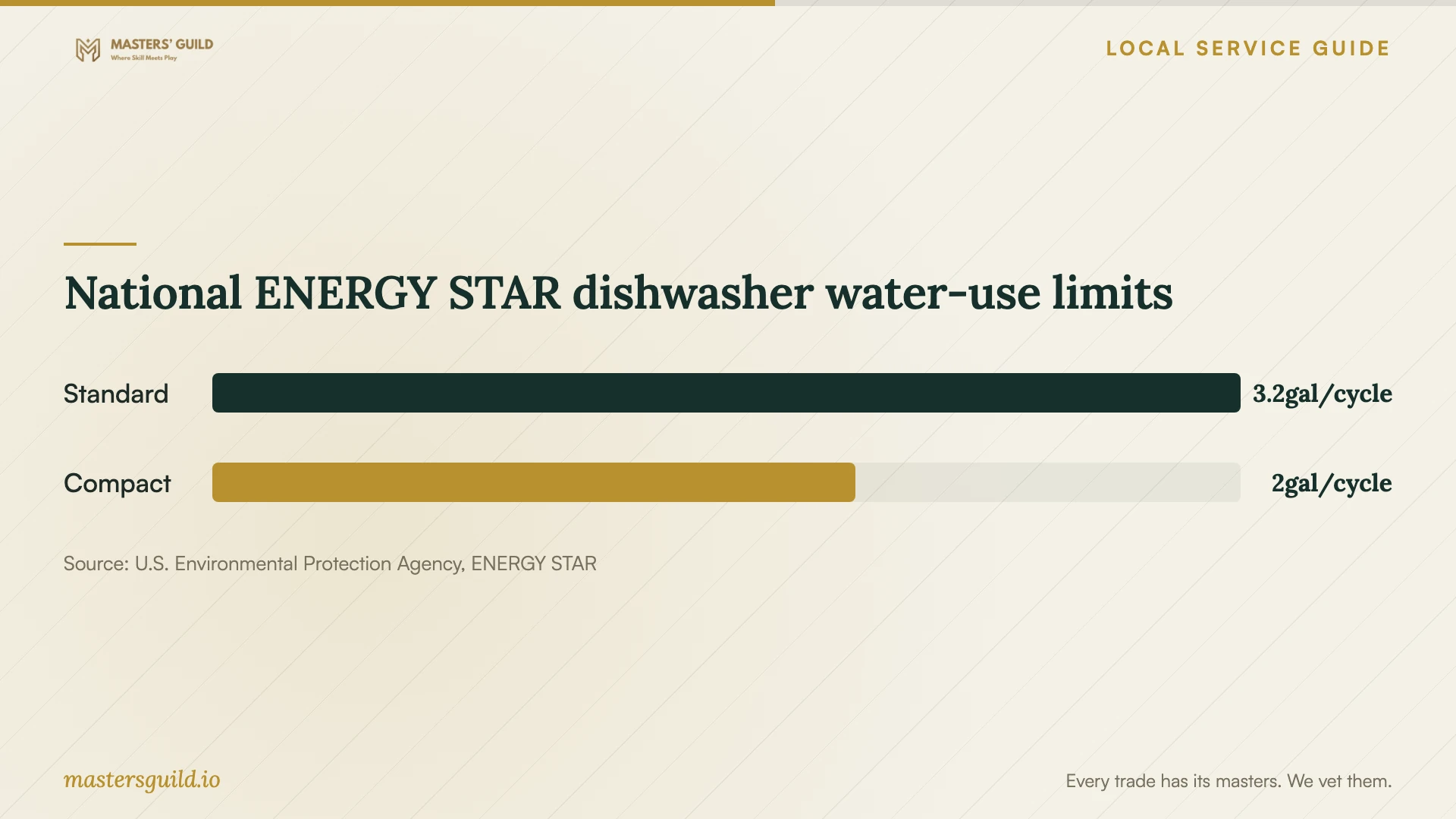
ENERGY STAR lists water-use limits of 3.2 gallons per cycle for standard dishwashers and 2.0 for compact models under criteria effective July 19, 2023. Its standard category covers capacity of at least eight place settings plus six serving pieces; compact models fall below that capacity. Compare capacity with your household’s needs alongside water use. [2]
Before approving a treatment unit beneath the sink or elsewhere in the plumbing system, ask the installer to explain its purpose, maintenance needs, replacement supplies, and space requirements. Keep access to shutoffs and serviceable components in your cabinet planning discussion.
National ENERGY STAR dishwasher water-use limits
Local details that affect your job
Confirm hardness for your Citizens service address
Citizens’ report published in May 2026 gives average hardness of 320 milligrams per liter, expressed as calcium carbonate, equivalent to 19 grains per gallon. The utility says hardness varies with the source water supplying different treatment plants and offers address-specific information at 317-924-3311. Obtain that information before approving a water-treatment allowance or discussing dishwasher settings with the installer. [1]
Check lead service line program eligibility before a replacement bid
For Citizens water customers, the property owner owns the service line connecting the water main to the home or business. Citizens provides a searchable service-line inventory and a tap-water lead testing request process. Within its lead service line replacement program, Citizens says it will partner to cover replacement of the portion in the public right-of-way when customers choose to replace their service line at their own expense. Confirm your line’s eligibility, the covered work, and utility coordination before accepting a replacement bid. Ask the kitchen contractor to identify interior plumbing work separately. [1]
Resolve these questions before signing
| Your situation | Next step | Ask the bidder to document |
|---|---|---|
| You want to retain the layout | Request a base bid using existing fixture and appliance locations. | Cabinet specifications, connection work, and repair exclusions. |
| Work will disturb painted surfaces in a pre-1978 home | Discuss applicable lead-safe renovation practices before demolition. | Qualifications, containment, cleanup, and responsibility for the work. |
| You receive Citizens water and are considering treatment equipment | Request hardness information for your address. | The equipment proposed and the reason for including it. |
| You are considering replacement of a lead-containing service line | Confirm eligibility and coordination under Citizens’ lead service line replacement program. | Utility-confirmed coverage, your share of the work, and interior plumbing scope. |
| You are choosing a dishwasher | Compare household capacity needs with national ENERGY STAR criteria. | The exact model, opening dimensions, and installation requirements. |
Your hiring checklist
- Give each bidder the same sketch, appliance list, finish selections, and scope.
- Request written inclusions, exclusions, allowances, and optional prices.
- Confirm the supervisor, subcontractors, insurance documentation, and responsibility for approvals.
- Discuss lead-safe preparation before disturbing older painted surfaces.
- Obtain address-specific hardness information if you receive Citizens water and are considering treatment equipment.
- Confirm lead service line program eligibility and utility coordination before accepting related replacement work.
- Approve appliance dimensions and connection details before ordering cabinets.
- Agree on access, temporary kitchen arrangements, change approvals, and completion items.
Frequently Asked Questions
How should I compare kitchen remodeling prices?
Ask contractors to price the same scope and selections. Compare allowances, exclusions, delivery, disposal, and final connections alongside the total. Require a written process for approving extra work, and ask each bidder to identify unresolved selections before you sign.
Does Indianapolis water hardness mean I need a softener?
Citizens reports hard water averaging 19 grains per gallon and says hardness varies by supply source. Obtain address-specific information, then ask the installer to explain any proposed treatment against your appliance requirements and household needs. [1]
What should I check about lead when replacing the kitchen faucet?
Citizens identifies service lines and home plumbing as potential sources of lead exposure. Review its service-line inventory and ask about tap-water testing as part of your plumbing discussion. Ask the contractor to identify which plumbing components the faucet replacement includes. [1]
Should I hire a lead abatement contractor for renovation?
Establish the purpose and scope of the work with the bidder. Indiana distinguishes renovation activities that may disturb lead from abatement designed to eliminate lead-based paint hazards permanently. Its guidance calls for lead-safe practices for RRP work and Indiana-licensed contractors for lead abatement. [3]
Sources and scope
This guide combines the sources below with practical planning guidance. Figures apply to the stated geography and period; request a written quote for your property.