
Local service guide
Duct Cleaning in Indianapolis: Scope and Hiring
Arrange Duct Cleaning in Indianapolis after a contractor shows substantial contamination, pests, or excessive debris that warrants cleaning. Compare at least three written estimates covering the same components, and agree on the total price before work begins. EPA recommends cleaning as needed and asking providers to show the contamination they propose to remove. [1]
Establish the problem before buying cleaning
Have the inspector show you the affected duct section or equipment component. EPA identifies substantial visible mold on hard surfaces, vermin infestation, and excessive dust or debris as reasons to consider cleaning. An expert may need laboratory analysis to confirm whether a substance that resembles mold is mold. [1]
Describe your concern before requesting a price: particles blowing from a register, suspected pest activity, water damage, or debris after renovation. Keep photographs and inspection notes so another bidder can assess the same concern. Ask each contractor to separate what they observed from what they recommend doing.
Treat promises to prevent illness or reduce energy bills with caution. EPA says duct cleaning has not been shown to prevent health problems, and little evidence supports efficiency improvements from cleaning ducts alone. Discuss unexplained household symptoms with a doctor. [1]
Compare complete written scopes
EPA recommends written estimates from at least three providers and a written agreement covering total cost and scope before work begins. Discuss experience with your duct materials, references, contamination controls, and cleaning standards. EPA does not certify or approve duct-cleaning companies. [1]
Have bidders list the supply and return ducts, registers, grilles, and air-handling components they will clean. EPA describes system cleaning as including components such as coils, drain pans, heat exchangers, fans, and equipment housing. Require each bidder to identify exclusions and explain who will address contaminated components outside their scope. [1]
Request separate line items for repairs, replacement duct sections, and proposed chemical treatments. Record the number of systems covered, access locations, expected work period, and approval process for additional charges. If you also want dryer exhaust cleaning, name it as a separate scope so you can compare offers.
Resolve moisture and material concerns
Have the contractor identify sheet metal, flexible duct, duct board, and internal fiberglass lining before choosing a cleaning method. EPA calls for soft-bristled brushes on fiberglass materials and recommends replacing wet or moldy fiberglass duct material. Have a qualified HVAC contractor assess replacement where needed. [1]
Establish who will correct leaks, standing water in drain pans, or wet insulation. EPA warns that mold can return when the underlying conditions remain unresolved. If the contractor suspects asbestos-containing material, stop that portion of the work and arrange assessment by someone trained and equipped to handle it. [1]
Request the product label and reason for any proposed biocide. EPA's guidance says no biocides are registered for fiberglass duct board or fiberglass-lined ducts. Before authorizing treatment, establish the duct material, the product's permitted uses, and the application method. [1]
Plan access and verify completion
Before the appointment, agree on furniture clearance, equipment access, pet arrangements, and protection for floors and furnishings. Discuss how the crew will collect debris. EPA recommends equipment that exhausts particles outdoors or HEPA vacuum equipment when the exhaust stays inside the home. [1]
Agree on completion evidence before work starts. EPA recommends a visual inspection and having the provider show each cleaned component. Review photographs of inaccessible areas, check that registers are secure, and have the crew demonstrate system operation. Require the crew to seal and reinsulate access holes they create. [1]
Keep fuel-burning appliance service on your planning list. EPA recommends inspection and service before each heating season. Arrange that work separately from the decision about whether your ducts need cleaning. [1]
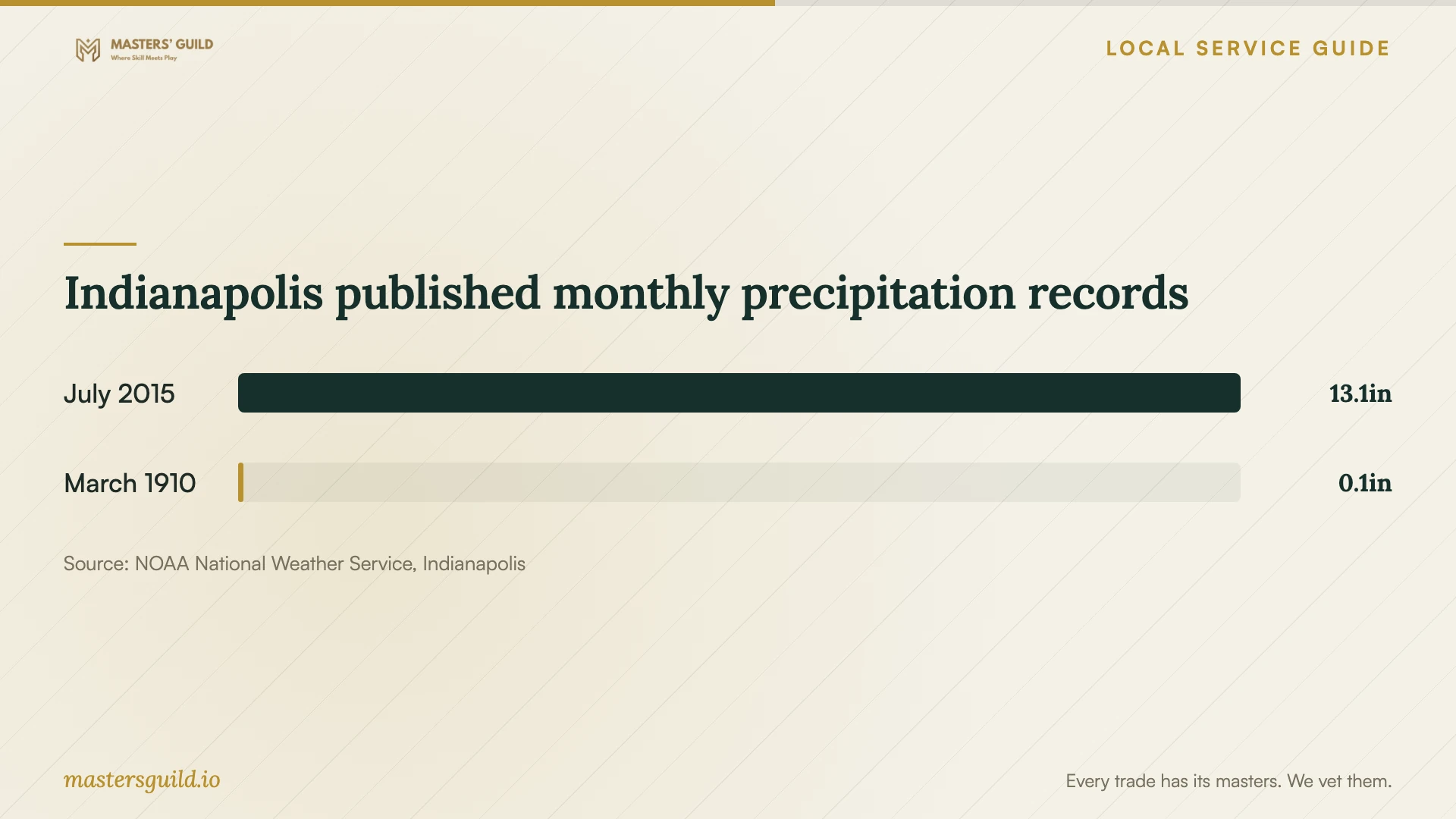
Indianapolis published monthly precipitation records
Local details that affect your job
Indiana consultation before approving a disputed scope
If a cleaner attributes an unresolved indoor-air concern to your ducts, seek consultation from the Indiana Department of Health Indoor Air Quality Program at 317.351.7190. The statewide program lists educating and consulting with the public among its functions. Prepare your inspection notes and ask which concerns need further assessment before you authorize cleaning or treatment. [2]
Technical help through a local health investigation
For a concern you bring to your local health department, ask whether its investigation could benefit from state technical assistance. Indiana's program says it can measure various indoor pollutants and provide information to local health departments supporting their investigations. Ask about that route before purchasing a cleaner's test. Do not assume eligibility for a home inspection: the program describes its inspection enforcement role for schools and state agencies. [2]
Choose the next step from inspection findings
| Finding | Next step | Question before authorizing |
|---|---|---|
| Dust on a return grille | Clean the accessible grille and assess the system before buying cleaning. | Can you show substantial contamination beyond the grille? |
| Excessive debris or particles leaving supply registers | Consider cleaning after an inspection. | Which components need cleaning, and what caused the buildup? |
| Suspected mold on hard surfaces | Request evidence and address the moisture source. | Does an expert need to confirm what this material is? |
| Wet or moldy fiberglass duct material | Arrange assessment for replacement. | Who will replace the material and correct the moisture problem? |
| Pests in ducts | Correct the infestation and assess cleaning needs. | How will you address the cause before cleaning? |
Your hiring checklist
- Write down the concern and gather photographs before requesting estimates.
- Have bidders show the contamination they propose to remove.
- Compare written scopes covering the same systems and components.
- Record duct materials and agree on moisture repairs or replacement work.
- Require separate approval for chemicals and additional charges.
- Confirm access, floor protection, debris collection, and the work period.
- Review completion photographs and system operation before accepting the work.
Frequently Asked Questions
How often should I have the ducts cleaned?
EPA recommends cleaning as needed rather than on a routine schedule. Base the decision on inspection findings. Follow the manufacturer's filter recommendations and keep up with heating-equipment inspections. [1]
What should I do after a dusty renovation?
Have a contractor assess whether debris entered the system before buying cleaning. For future dust-producing work, EPA advises sealing supply and return registers and keeping the HVAC system off until workers have cleaned up the dust. [1]
Can Indiana's indoor-air program inspect my home?
The program offers public consultation and assistance to local health departments. Its published inspection enforcement role covers schools and state agencies. Ask about advice or an investigation route without assuming the state offers residential inspections. [2]
How can I tell whether the crew completed the work?
Have the crew demonstrate that the agreed components are visibly clean, using photographs where access is limited. Review the scope together, inspect access closures and registers, and confirm system operation. [1]
Sources and scope
This guide combines the sources below with practical planning guidance. Figures apply to the stated geography and period; request a written quote for your property.