
Local service guide
Door and Window Repair in Indianapolis
Arrange Door and Window Repair in Indianapolis by getting a diagnosis and an itemized scope before choosing component repair or full replacement. Give bidders photos, the operating problem, and the home's construction date. For painted older components, have the contractor explain applicable lead requirements: Indiana Department of Health guidance distinguishes lead-safe renovation certification from state licensing for lead abatement. [1]
Give the contractor a useful problem description
Describe what happens when you use the opening: the door rubs at the top, the latch misses the strike, the sash will not stay open, or you notice water at the sill after rain. Photograph the whole opening and the affected area from accessible positions. Include any manufacturer label without dismantling the frame.
During the inspection, have the contractor explain which components need attention and which observations support the diagnosis. For water entry, include investigation of the entry point in the proposed scope. Before accepting a sealing repair, establish how the contractor will assess the surrounding opening and address unresolved questions.
Explain your access and security needs when arranging the visit. Identify the entrance you need to use, furniture or coverings that obstruct access, and any opening above ground level. For broken glass or a door you cannot secure, agree on temporary protection and its price before the repair appointment.
Compare the affected component with the whole opening
Get a component-repair option alongside a replacement proposal when you want to compare both approaches. Each bidder should identify what they would retain, the parts they would supply, and the finishing work included. Establish a written process for changes if disassembly reveals damage outside the original scope.
For historic windows, the National Park Service recommends considering repair first. It describes renewing finishes, repairing material with epoxies, replacing component parts, and adding weatherstripping. The agency also recognizes that deterioration can make repair impractical and replacement appropriate. This national preservation guidance does not establish Indianapolis approval requirements. [3]
Have a restoration contractor document deterioration with clear photographs. For a larger project, discuss a sample repair before committing to all the windows. The National Park Service identifies sample repairs as a way to assess appearance, cost, and feasibility. Use that demonstration to decide whether the proposed result meets your expectations. [3]
Match lead credentials to the purpose of the work
Tell the contractor whether your home predates 1978 before discussing work that disturbs painted doors, sash, or frames. Indiana Department of Health guidance says EPA requires lead-safe certified contractors for covered renovation, repair, and painting projects that disturb lead-based paint in pre-1978 homes, child care facilities, and preschools. Have the bidder explain applicability and provide the relevant certification. [1]
The department explains that EPA's homeowner exception generally does not apply if you rent all or part of your home, operate a child care center in it, or buy, renovate, and sell homes for profit. Disclose those uses before settling the work plan. Include occupant protection, dust containment, cleanup, and debris handling in your discussion with the contractor. [1]
Indiana distinguishes ordinary renovation from abatement by the purpose of the work. For abatement intended to permanently eliminate lead hazards, the state requires an IDOH-licensed abatement contractor and appropriately licensed personnel, along with project notification, a pre-abatement inspection or hazard screen, and post-abatement clearance. Confirm the project category before accepting credentials. [1]
Agree on weather protection and completion
For exterior sealing or painting, have the contractor check the work-date forecast and the selected product's application instructions. Agree on how they will protect an unfinished opening and whether they can complete indoor tasks if exterior work needs another visit. Record who will return for the remaining finish work.
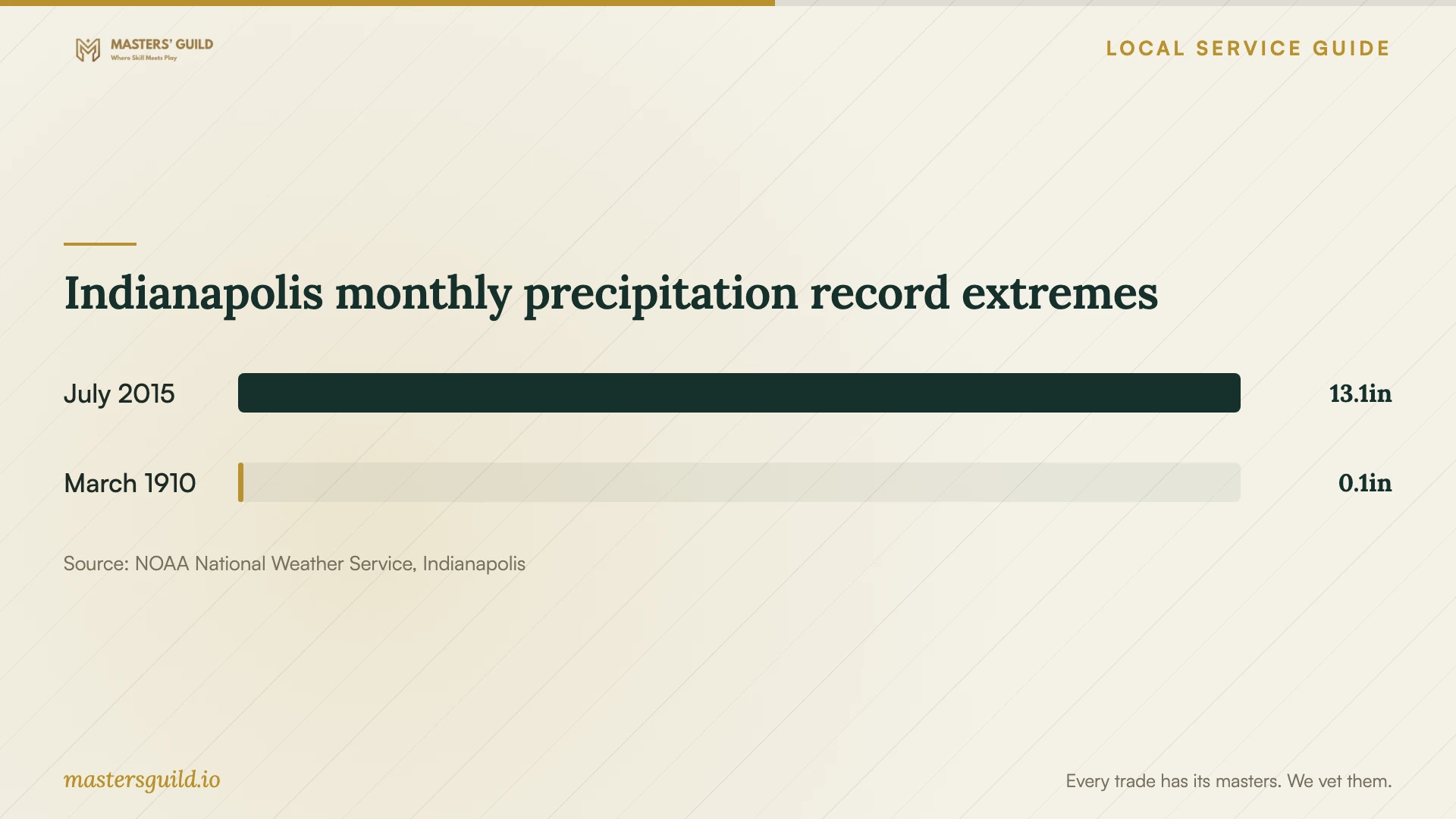
The National Weather Service records Indianapolis monthly precipitation extremes of 13.14 inches in July 2015 and 0.07 inches in March 1910. The chart compares those historical extremes. Use it as context for discussing a rain contingency; neither observation predicts conditions on your appointment date. [2]
Compare itemized quotes for the same diagnosis. Include labor, specified parts or glass, finishing, cleanup, temporary protection, and warranty terms. Confirm part availability and the expected visit sequence. If a proposal changes the opening or exterior appearance, identify who will check applicable permit or preservation approvals before work begins.
At completion, operate the door or window with the contractor and check the lock and latch. Compare the finished work with the agreed scope, record any remaining painting or sealing, and keep the part information and written warranty with your repair records.
Indianapolis monthly precipitation record extremes
Local details that affect your job
Indiana rental-property paint disturbance needs its own check
For a rental home in Indianapolis, disclose both its age and rental use. Indiana's non-abatement guidance requires lead-safe work practices when remodeling, renovation, or maintenance on rental property built before 1960 will disturb the minimum lead-painted area defined by the rule. The department identifies an exception for housing that a qualified lead inspection has determined to be free of lead paint. Have the contractor document applicability before disturbing painted components. [1]
Indiana abatement requires notification and clearance
If your project aims to permanently eliminate lead hazards, include the Indiana abatement requirements in the hiring scope: an IDOH-licensed abatement contractor, advance notification, appropriately licensed personnel, and post-abatement clearance. Confirm who will arrange the inspection or hazard screen and the clearance procedure. For help distinguishing renovation from abatement, the Indiana Department of Health lists its Lead and Healthy Homes Program at 317-233-1250. [1]
Choose the next step before approving work
| Situation | Next step | Confirm with the contractor |
|---|---|---|
| Door rubs or will not latch | Arrange an assessment of the door, hinges, frame, and strike. | Which components do you propose to adjust or replace? |
| Broken glass or water at the sill | Get a component-specific diagnosis and a temporary protection plan if needed. | What inspection remains before you can confirm the scope? |
| Deteriorated historic window | Consider repair first and document condition using national preservation guidance. | Would a sample repair help compare appearance and feasibility? |
| Paint disturbance in a pre-1978 home | Have the contractor explain applicable lead-safe renovation requirements. | Which certification and work practices apply to this project? |
| Permanent lead-hazard elimination | Confirm Indiana abatement licensing, notification, and clearance arrangements. | Who will handle the pre-abatement assessment and post-abatement clearance? |
Your hiring checklist
- Photograph the whole opening, affected components, and visible water marks.
- Record the construction date and disclose rental use or home child care.
- Describe the operating problem and any temporary security needs.
- Compare the diagnosis, retained components, and specified replacement parts.
- Confirm applicable lead credentials and the occupant-protection plan.
- Agree on access, weather protection, visit sequence, and approval responsibilities.
- Operate the repaired opening with the contractor and record unfinished work.
Frequently Asked Questions
Should I replace an entire historic window?
Start with a condition assessment. The National Park Service recommends considering repair first and documenting deterioration. A sample repair can help you assess appearance, cost, and feasibility before committing to a larger project. Treat this as national preservation guidance and confirm any applicable local approvals separately. [3]
Which lead credential should my contractor have?
Match the credential to the project. Indiana Department of Health guidance identifies EPA lead-safe certification for covered renovation work and separate Indiana licensing for abatement intended to permanently eliminate lead hazards. Have the contractor classify the scope and explain the applicable requirements before work begins. [1]
How should I schedule exterior sealing?
Have the contractor check the forecast and the chosen material's application instructions. Agree on temporary weather protection, a fallback for exterior work, and responsibility for the return visit. Keep any historical climate chart separate from the decision about conditions on the actual work date.
How can I compare repair quotes?
Give bidders the same symptom description and photos. Compare the diagnosis, components they will retain, specified parts, finishing, cleanup, temporary protection, and warranty terms. Resolve differences in scope before comparing totals, and establish how you will approve added work.
Sources and scope
This guide combines the sources below with practical planning guidance. Figures apply to the stated geography and period; request a written quote for your property.