
Local service guide
Data recovery and backup in Indianapolis, IN
Data recovery and backup in Indianapolis should start with a written scope covering your priority files, diagnostic charges, equipment handling and acceptance checks. For suspected ransomware, arrange incident response before authorizing a rebuild. For backup installation, require a restore demonstration and an outage procedure. CISA recommends isolating affected systems, preserving evidence and testing backups. [3]
Choose the recovery scope
Describe the business task you need to resume: opening accounting records, retrieving project files or restoring a shared folder. Give the provider the device model, symptoms, last successful use and previous repair attempts. Identify the files you need first, then request an assessment before approving recovery work.
Confirm who will perform the work. If the receiving shop plans to send your equipment elsewhere, request the destination, shipping arrangements and subcontractor terms. Record the serial number and obtain a handoff receipt. Agree on access to confidential files, encrypted return delivery and deletion of working copies.
For suspected ransomware, CISA recommends isolating affected systems from the network. It advises powering them down only when network disconnection is impossible, because shutdown loses potential evidence in memory. Have the incident responder direct evidence collection and restoration before anyone wipes a system. [3]
Compare charges and completion terms
Request separate charges for assessment, recovery, replacement storage, shipping and priority service. Ask what you owe if the provider recovers no usable files or only some of your requested data. Have the provider explain exclusions and diagnostic fees within any no-recovery, no-charge offer.
Define success around usable files and completed business tasks. Arrange to inspect a recovered file list and open representative documents. For business software, include application installation, data import and staff access checks in the scope. Name the person who will accept the result.
Set separate milestones for assessment, approval and delivery. Tell the provider your business deadline and request a contingency plan. Keep the original device until you have checked the deliverables and resolved any evidence-preservation requirements.
Specify and test the backup installation
List the files, applications and accounts you want protected. Tell the installer how much recent work you could afford to recreate and how long you could operate without each system. Request backup frequency, retention and a restoration sequence that address those limits.
CISA recommends offline, encrypted backups of critical data and regular disaster-recovery tests. It warns that ransomware can delete or encrypt accessible backups. Have the installer identify the copy you could retrieve after a compromise of a connected workstation or administrator account. [3]
Before accepting the installation, have the provider restore a representative folder and demonstrate the agreed application recovery process. Record the backup date, files restored, elapsed time and missing dependencies. Assign someone to review backup failures and arrange future tests. CISA recommends formalizing managed service providers’ security requirements in contracts. [3]
Prepare for an outage
Have the installer document which computers, storage devices and network equipment receive UPS protection, how shutdown works and who checks systems after restart. AES Indiana recommends UPS devices and surge protectors for sensitive electronics. It also cautions that estimated power-restoration times can change. [2]
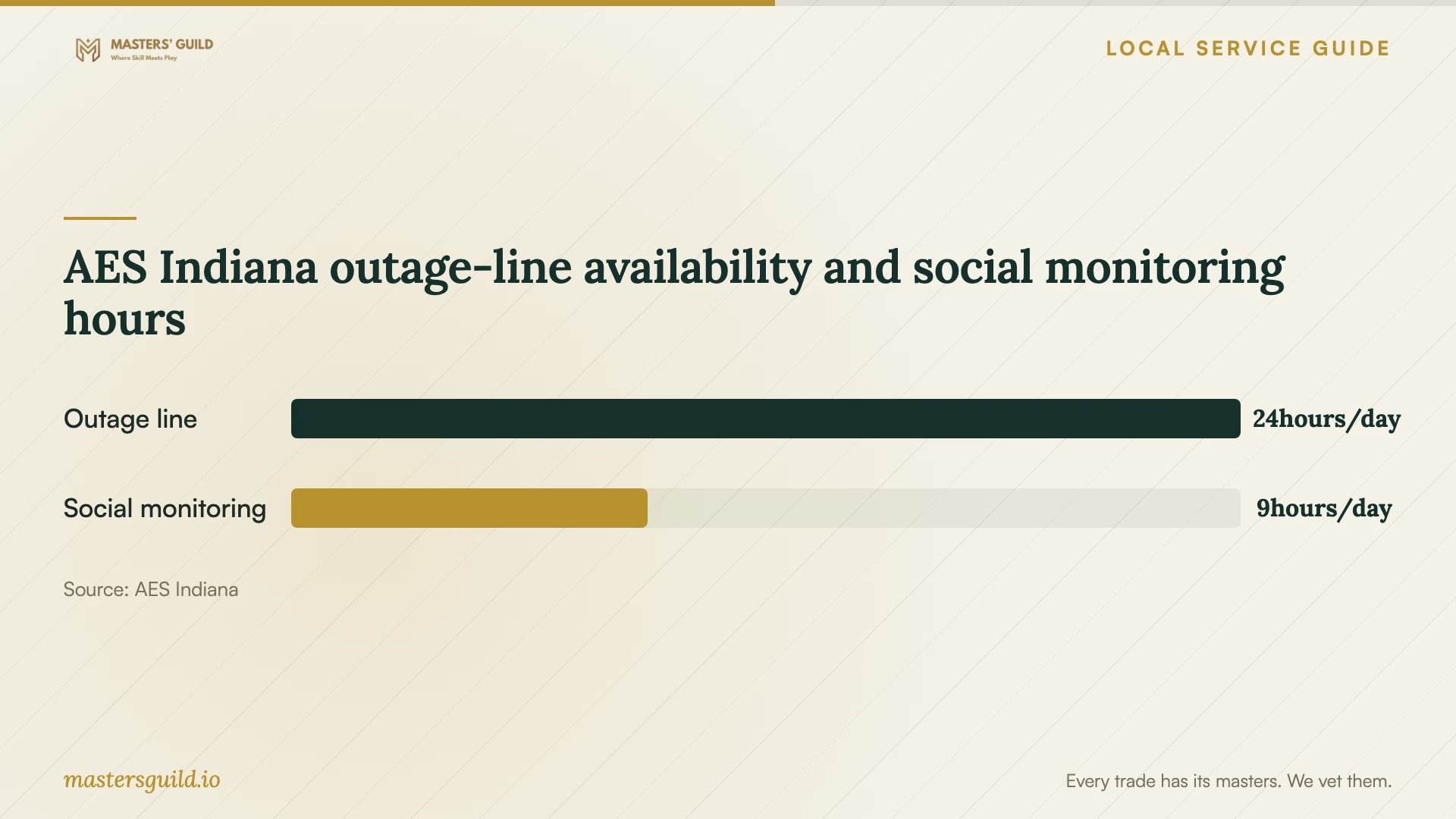
Use the utility’s outage-reporting channel in your written procedure. The contact-hours chart compares AES Indiana’s published outage-line availability with its social-media monitoring schedule. Assign staff an after-hours reporting method and keep the equipment shutdown instructions available away from the affected computer. [2]
AES Indiana outage-line availability and social monitoring hours
Local details that affect your job
AES customers should report outages without waiting for alerts
AES Indiana tells customers to report an outage online or call 317-261-8111 rather than assume the utility knows. It waits fifteen minutes after an outage begins before sending an alert. Its map markers show approximate equipment locations, which may differ from your premises. Assign someone to report the outage and follow your shutdown procedure without waiting for a map marker or alert. [2]
Indiana breach duties need a separate assessment
For covered breaches, the Indiana Attorney General’s guidance requires notice to affected consumers without unreasonable delay and notice to the Attorney General’s office. Businesses must also notify consumer reporting agencies if more than 1,000 Indiana residents will receive notice. The office accepts its printable notification form by email at [email protected]. Involve counsel to assess whether the incident triggers these duties and an incident responder to preserve evidence. [1] [3]
Choose the scope to request
| Your situation | Requested scope | Acceptance question |
|---|---|---|
| Missing files on one device | Assessment and recovery of named files | Can I inspect the file list and open priority documents? |
| Business application unavailable | Data restoration, application setup and access checks | Who confirms staff can complete the required tasks? |
| Suspected ransomware | Incident response, isolation, evidence preservation and clean restoration | Who authorizes containment and rebuilding? |
| New backup installation | Offline encrypted protection and regular restore tests | Can you demonstrate the agreed restore process? |
Your hiring checklist
- List priority files, applications and the tasks staff need to resume.
- Document symptoms and previous repair or recovery attempts.
- Confirm the recovery location and obtain equipment handoff receipts.
- Approve diagnostic charges and partial-recovery terms in writing.
- Agree on confidential-file access, encrypted delivery and working-copy deletion.
- Require a restore demonstration and document the result.
- Assign backup monitoring, future tests and outage responsibilities.
Frequently Asked Questions
Can I restore a backup after ransomware?
Have the incident responder approve the restoration plan first. CISA recommends investigating earlier compromise activity before rebuilding and restoring critical services on a clean network. Ask who will check the backup and destination systems before restoration. [3]
What should a recurring backup agreement include?
Request the storage allowance, retention period, monitoring responsibility, restore assistance, testing schedule and cancellation terms. Establish how you will retrieve data and credentials if you change providers, including any transfer charges.
Does file recovery resolve a potential data breach?
Assess notification duties alongside recovery. Indiana’s Attorney General defines a covered security breach around unauthorized acquisition that compromises covered personal information. Have counsel assess the facts and direct the responder to preserve relevant evidence. [1] [3]
Sources and scope
This guide combines the sources below with practical planning guidance. Figures apply to the stated geography and period; request a written quote for your property.