
Local service guide
Commercial Building Cleaning in Indianapolis
Arrange Commercial Building Cleaning in Indianapolis by walking each bidder through the same rooms, agreeing on tasks and frequency, and requesting separate prices for recurring visits and periodic floor work. Before signing, assign responsibility for access, supplies, inspection, and any kitchen grease, contaminated materials, or discarded chemicals. Ask each contractor to explain which tasks its crew will accept and which need a separate specialist.
Write a scope bidders can price
Give bidders a floor plan or room list, the area you want cleaned, operating hours, restroom count, flooring types, and expected occupancy. During the walkthrough, point out loading entrances, shared corridors, breakrooms, and rooms that staff will keep locked. Ask bidders to measure or confirm the cleaning area rather than relying on the building’s total advertised size.
Specify tasks in plain language: empty designated bins, clean restroom fixtures, replenish agreed supplies, vacuum carpet, damp-clean hard floors, and wipe named surfaces. State whether crews should move chairs, clean beneath accessible furniture, wash interior glass, or leave occupied desks untouched. Give periodic work, such as carpet extraction or floor refinishing, its own scope and price.
Compare costs and contract terms
Request a recurring service total tied to a stated visit schedule. Ask each bidder to separate the initial clean, consumables, equipment charges, periodic floor care, and approved extra work. If bidders propose different frequencies, ask for a common schedule so you can compare the same service.
Agree on holiday service, missed visits, cancellation terms, and approval of extra charges. Request evidence of insurance appropriate to the proposed work and ask who handles damage claims. Choose a named contact for complaints, a correction deadline, and an inspection method. During the first service period, inspect the agreed tasks with the supervisor before changing the schedule.
Plan entrance and floor work around winter
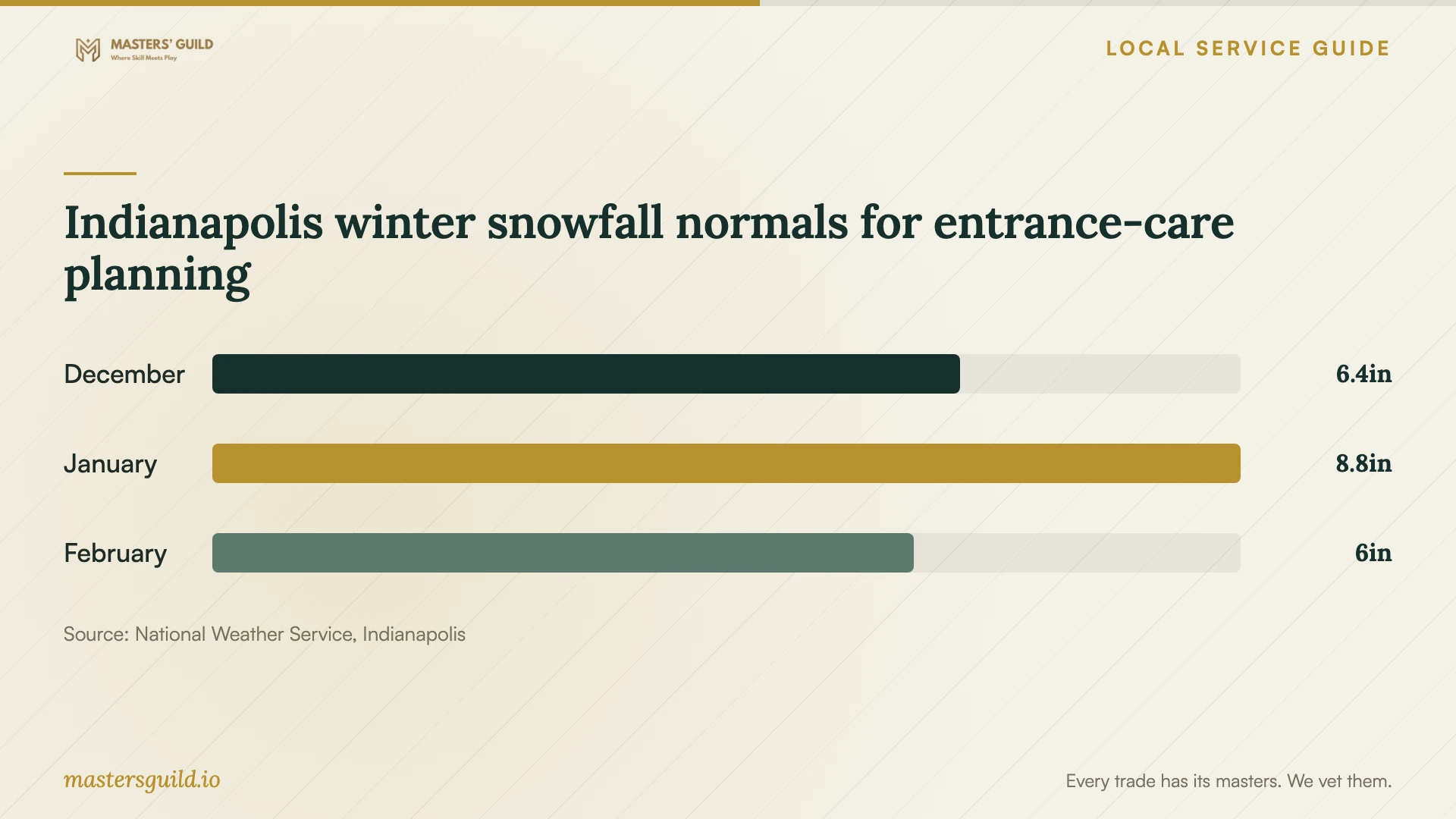
The National Weather Service publishes Indianapolis snowfall normals of 6.4 inches for December, 8.8 for January, and 6.0 for February for 1991–2020. Use that seasonal context to discuss entrance mat care, tracked-in moisture, and weather-related extra visits before winter. [2]
Name the person responsible for checking entrances during business hours. Ask the cleaner to price additional entrance work and describe how staff should request it. For floor treatments, agree on access restrictions, drying time, and reopening criteria before scheduling the work. Keep any snow-removal arrangement explicit and separate from indoor cleaning.
Match specialist work to the actual exposure
For clinics or other premises where cleaning tasks may involve blood or potentially infectious materials, review the proposed tasks before accepting an office-cleaning scope. Indiana Department of Labor guidance calls for exposure determination and describes training before assignment, protective equipment, and decontamination procedures. The department identifies its published program as a sample that employers must tailor to their workplaces. [3]
Ask the contractor to identify who responds to a spill, who handles sharps, and which waste containers crews may empty. Record exclusions and escalation contacts. For storage-room or workshop cleanouts, inventory unwanted chemicals before the walkthrough and ask who will determine their waste classification and arrange disposal.
Indianapolis winter snowfall normals for entrance-care planning
Local details that affect your job
Citizens sewer rules affect kitchen cleaning
For premises on Citizens Energy Group’s sewer service, specify that crews must keep fats, oils, and grease out of sinks and floor drains. Citizens requires restaurants and other food-preparation establishments to install properly sized grease interceptors and maintain them. Its published Marion County best-management guidance calls for monthly monitoring of inside traps and cleaning at least once every three months. Assign interceptor servicing and maintenance logs to a named party rather than assuming the janitorial contract includes them. [1]
Indiana chemical-waste duties affect cleanouts
Before adding chemical disposal to a deep clean, identify what the business will discard. IDEM states that hazardous-waste requirements apply regardless of how the waste originated and depend on the type and monthly quantity generated. It also prohibits dilution of hazardous waste. Ask the contractor to separate ordinary trash removal from chemical-waste handling, and resolve classification questions with IDEM’s compliance assistance staff before approving disposal. [4]
Choose the scope for your premises
| Situation | Scope to request | Question before signing |
|---|---|---|
| Office or retail rooms | Recurring room-by-room cleaning with periodic work priced separately | Which surfaces, supplies, and visits does the total include? |
| Winter entrance concerns | Mat care and extra entrance-cleaning options | Who checks moisture during opening hours? |
| Food-preparation areas | Grease-handling instructions and assigned interceptor maintenance | Who services the interceptor and keeps the maintenance log? |
| Anticipated blood exposure | Task-specific exposure controls and spill procedures | How will the contractor train and protect assigned workers? |
| Discarded chemicals | Waste identification and agreed disposal responsibilities | Who determines classification before removal? |
Your hiring checklist
- Prepare a room list and mark locked rooms, sensitive equipment, and excluded surfaces.
- Give each bidder the same task list, visit schedule, and periodic-work requirements.
- Confirm who supplies liners, paper products, soap, chemicals, and equipment.
- Agree on keys, alarm codes, lockup checks, and incident reporting.
- Assign kitchen grease servicing, spill response, and chemical-waste decisions.
- Record inspection standards, correction deadlines, extra-work approval, and cancellation terms.
Frequently Asked Questions
How should I compare cleaning quotes?
Give bidders the same rooms, tasks, frequency, and access hours. Compare the recurring total alongside initial cleaning, supplies, periodic floor work, and extra-work charges. Ask bidders to explain exclusions before choosing a contract.
Does a kitchen-cleaning contract include grease-trap service?
Confirm it in writing. Citizens requires grease interceptors for restaurants and other food-preparation establishments and requires proper maintenance. Name the servicing party, inspection schedule, and recordkeeping responsibility in your agreement. [1]
Can I use an ordinary office-cleaning scope for a clinic?
Review the actual tasks and potential exposures first. Indiana Department of Labor guidance addresses exposure determination, protective equipment, training, and decontamination. Ask the contractor how its procedures address the work you need. [3]
Can cleaners remove old chemicals during a deep clean?
Resolve waste classification and disposal responsibility before authorizing removal. IDEM bases hazardous-waste requirements on waste type and quantity, regardless of how the business created it. Do not assume a general trash-removal agreement covers those duties. [4]
Sources and scope
This guide combines the sources below with practical planning guidance. Figures apply to the stated geography and period; request a written quote for your property.