
Local service guide
Indianapolis bathroom remodeling: planning and hiring
For bathroom remodeling in Indianapolis, choose a contractor using a written scope that names the fixtures, shower construction, ventilation work, permit responsibilities, and payment milestones. Research the property and proposed contractor through the city’s permit and contractor portal, which offers address and licensed-professional searches. Ask each bidder to confirm which approvals your exact project needs and who will handle them. [1]
Define the work before comparing prices
Write down what you want to keep, replace, or move: toilet, vanity, tub or shower, lighting, fan, flooring, and storage. Tell bidders whether you want easier cleaning, better access, more storage, or a different layout. Ask them to price optional changes separately so you can decide what fits your budget.
For a shower replacement, request the proposed base, drain, waterproofing system, wall finish, and enclosure. Ask how the contractor will prepare the surfaces and check the installation before covering it. For a vanity replacement, name who supplies the cabinet, countertop, faucet, and drain parts.
Use project-specific quotes to set your budget. Keep your spending limit separate from product allowances. Ask bidders to identify the allowance for each unselected item and explain charges for selections above that amount. Require written approval before extra work begins, including repairs discovered during demolition.
Research the address and contractor before signing
The City of Indianapolis provides an Accela research portal for permit-related cases. You can search by site address or general search, and the city lists plumbing, electrical, heating and cooling, and structural permit categories. Look for records associated with previous bathroom work and ask your bidder to review relevant cases with you. [1]
Research the proposed contractor through the licensed-professional search. The city provides license-type, license-number, and business-name fields alongside contractor record categories. Obtain the exact business name and credential details the bidder uses for city records, then compare those details with your search results. [1]
Use the portal to research records; ask the issuing authority to confirm requirements for your proposed work. The search page lists permit categories without giving bathroom-specific permit triggers or exemptions. Assign responsibility for applications, fees, inspections, and completion records in the agreement before signing. [1]
Specify ventilation beyond the fan model
Ask the contractor to inspect the existing exhaust route before quoting a fan replacement. DOE guidance calls for checking duct material, interior surface, backdraft damper, length, and dimensions. It directs installers to discharge outdoors using a direct route with few bends. Ask the bidder to identify any duct replacement work in the quote. [2]
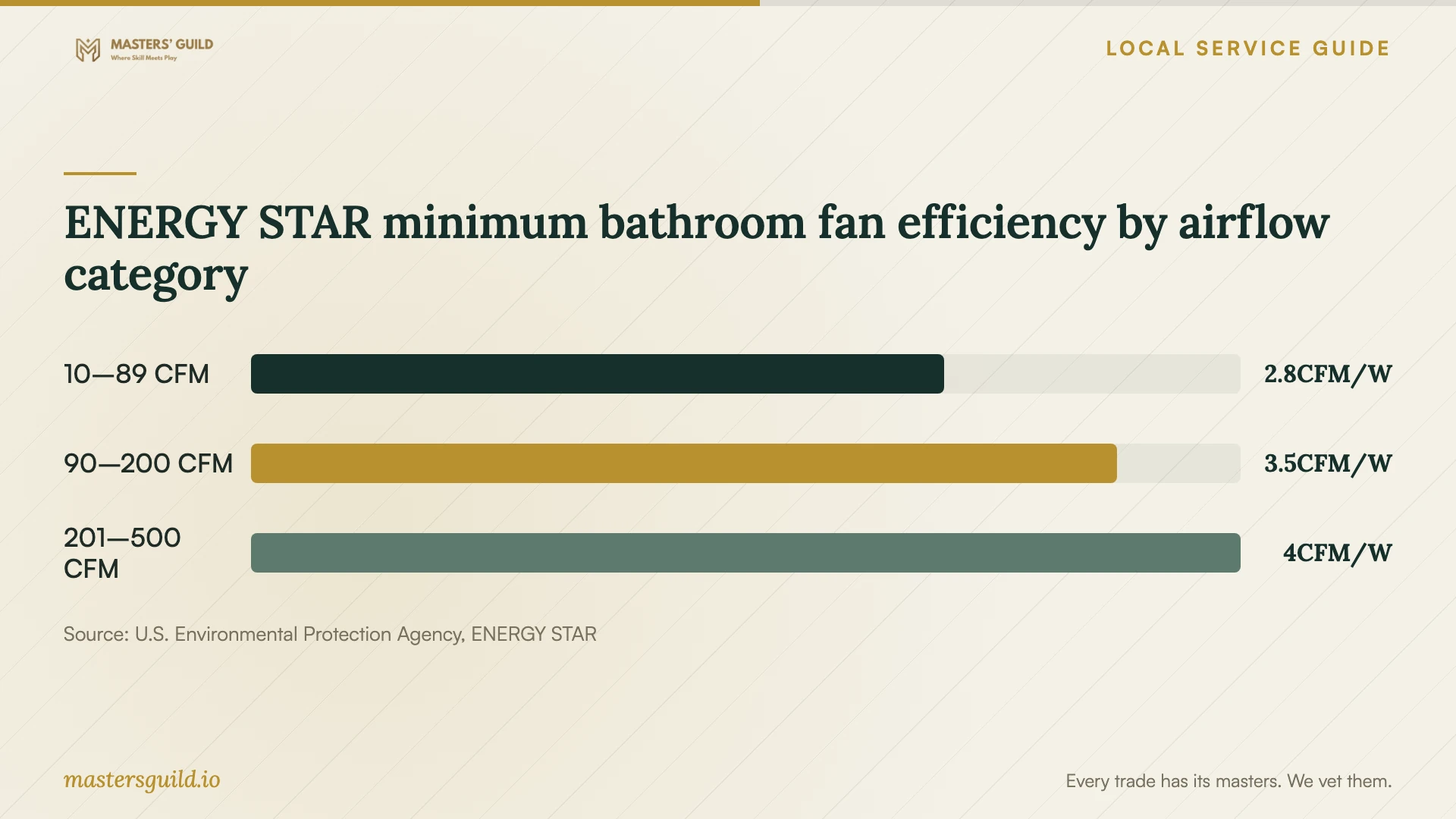
Request the fan model, airflow rating, sound rating, controls, and duct work in writing. ENERGY STAR sets separate requirements for efficiency, maximum sound levels, and airflow performance under specified pressure conditions. Use those specifications to compare products alongside each contractor’s installation plan. [3]
Include airflow verification at handover. DOE guidance calls for measuring the installed fan’s flow rate and making adjustments to meet its stated minimums. It also calls for checking the exterior damper and reviewing operation and maintenance with the homeowner. Ask the installer to record the measurement and explain the controls. [2]
Agree on bathroom access and completion
Before accepting a start date, agree on when you will lose access to the toilet, shower, and sink. For your only bathroom, request a daily access plan and identify periods when you will need another arrangement. Ask for a schedule covering demolition, trade work, inspections, installation, and finishing.
Confirm who orders materials and which selections must arrive before demolition. Agree on storage, work hours, dust protection, and debris removal. Name a contact who can answer questions and approve changes during the job.
Walk through the finished room with the contractor. Operate the fixtures, inspect visible finishes, and record unfinished items with correction dates. Collect product instructions, warranty documents, approved changes, and applicable permit completion records. Ask for photographs of concealed work before the contractor closes walls or floors.
ENERGY STAR minimum bathroom fan efficiency by airflow category
Local details that affect your job
Research earlier work by property address
Choose Search by Address in Indianapolis Accela to research the property’s permit-related cases. The city includes plumbing, electrical, and structural categories. Before agreeing to a layout change, ask the bidder to review relevant records with you and identify what they still need to inspect in person. [1]
Check the bidder’s contractor record separately
Use Search by Licensed Professional Information in the city portal for the proposed contractor. The search includes business-name, license-type, and license-number fields; the portal lists general, plumbing, electrical, and heating and cooling contractor categories. Request the bidder’s exact record details and ask them to explain discrepancies before you sign. [1]
Choose your next step before accepting a bid
| Your situation | Next step |
|---|---|
| You want to keep the layout | Request an itemized replacement scope and separate prices for optional changes. |
| You want to relocate fixtures | Use the city’s address search to research permit cases, then ask the issuing authority to confirm approvals for the proposed work. |
| You want to reuse the exhaust duct | Request the existing-duct checks in DOE guidance, including dimensions, material, and damper condition. |
| You are comparing fan models | Compare ENERGY STAR efficiency, sound, and airflow-performance specifications alongside the installation scope. |
| You have only one bathroom | Agree on toilet and bathing access during each stage before setting the start date. |
Your hiring checklist
- Give bidders the same list of fixtures and finishes to keep, replace, or move.
- Research the property address and proposed contractor through the city portal.
- Assign responsibility for confirming approvals, paying fees, and arranging inspections.
- Request a written shower construction and waterproofing scope.
- Include the fan, duct inspection, outdoor termination, and airflow verification in the quote.
- Identify allowances, exclusions, and written approval requirements for extra work.
- Agree on bathroom access and material delivery before scheduling demolition.
- Define handover documents and correction dates for unfinished work.
Frequently Asked Questions
Does my bathroom project need a permit?
Ask the issuing authority to confirm requirements for your exact address and proposed work. Indianapolis lists plumbing, electrical, and structural permit categories in its research portal, but the search page does not establish project-specific triggers or exemptions. Document who will handle any required applications and inspections. [1]
How can I research a contractor’s city records?
Use the city portal’s licensed-professional search. Request the contractor’s business name, license type, and license number where applicable, then compare those details with the results. Ask the bidder to resolve unclear or inconsistent information before signing. [1]
Can the bathroom fan exhaust into the attic?
DOE installation guidance directs installers to vent outdoors and excludes attics, crawlspaces, and spaces between floors as discharge locations. Ask the bidder to identify the outdoor termination and include necessary duct changes in the quote. [2]
How should I compare quotes with different totals?
Compare the included work, selections, and allowances before choosing by total price. Check shower construction, ventilation, disposal, permit responsibilities, exclusions, and payment milestones. Ask each bidder to explain how they will price and document changes.
Sources and scope
This guide combines the sources below with practical planning guidance. Figures apply to the stated geography and period; request a written quote for your property.