
Local service guide
Pressure washing in Huntsville, AL: Hiring Guide
Pressure washing in Huntsville starts with a written quote covering surfaces, cleaning methods, debris removal, wash-water handling and total price. Request a test patch before approving work on historic masonry. Resolve runoff questions before booking: the City advises dry sweeping paved areas and absorbing spilled vehicle fluids rather than hosing them into the street. [1] [3]
Compare a defined scope and total price
Send each bidder matching photos and a surface list. Separate the driveway, walks, patio, siding and masonry. Mark the stains you want addressed and any areas you want excluded. Request an inspection where the contractor cannot assess the material or condition from photos.
Request a written total covering preparation, cleaning products, access equipment, water supply and cleanup. Have the contractor distinguish general cleaning from separate stain treatments and explain the result they expect. For a combined house and driveway job, request separate prices so you can adjust the scope.
Request proof of liability insurance and examples involving your surface material. Discuss how the contractor handles accidental damage. Photograph existing cracks, loose finishes and stains together, then agree on repairs or exclusions before cleaning begins.
Review the cleaning method before work begins
Have the contractor describe the products, application and rinse method for each surface. If the quote says soft washing, ask the bidder to explain the process and protection measures. Agree on a test area when you have concerns about the appearance or condition of a surface.
For historic masonry, GSA recommends test patches and the gentlest effective cleaning method. Its technical procedure identifies water and soft-bristle brushes as the gentlest approach and warns that most commercial pressure-washing systems operate above its recommended pressures. Use a qualified preservation professional to assess the procedure’s suitability for your building. [3]
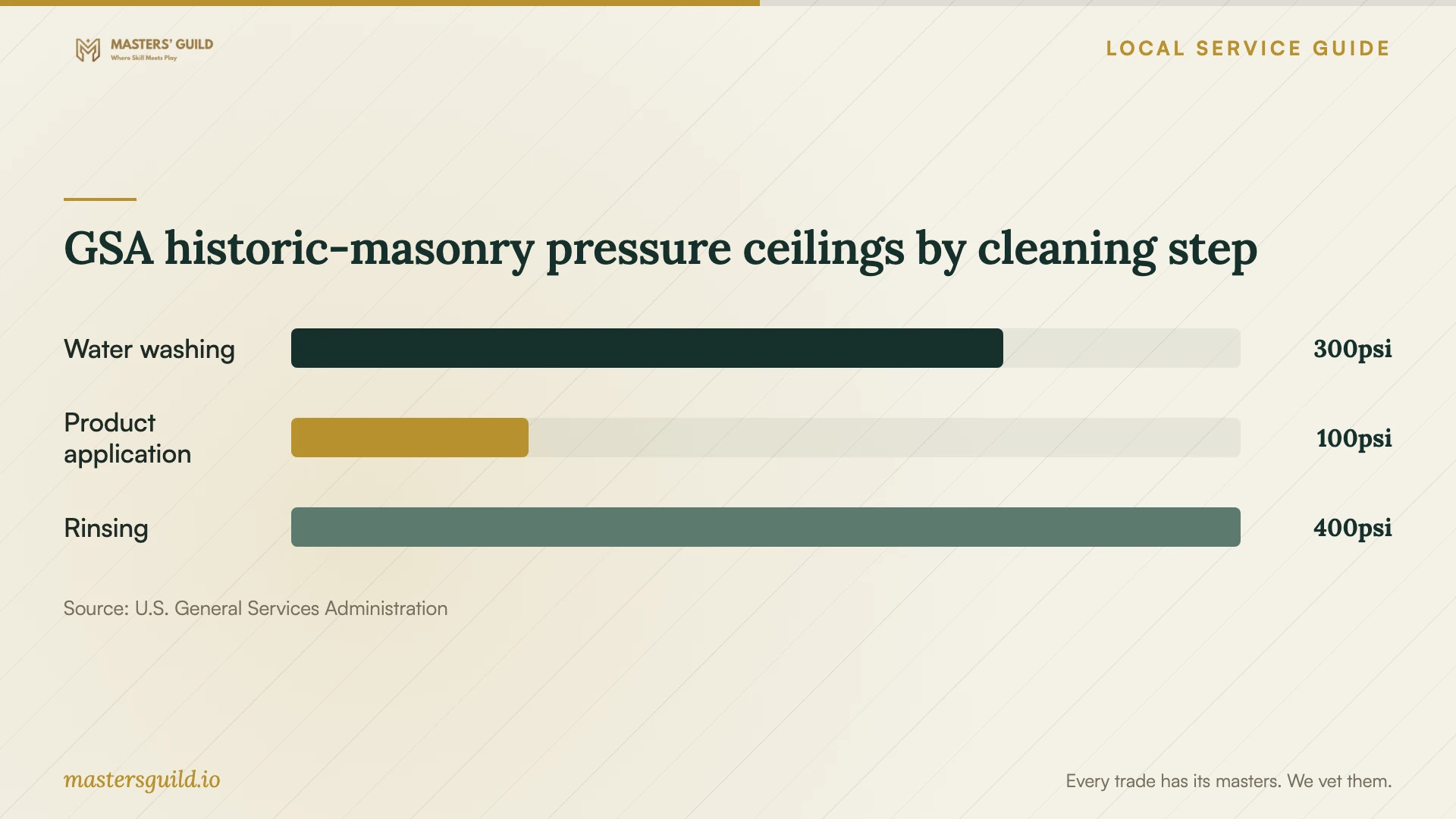
The pressure chart summarizes ceilings for distinct steps in that federal historic-masonry procedure. GSA requires project-specific testing and professional judgment. Do not select a machine setting from the chart alone; have the contractor document the proposed method, test result and protection for adjacent materials before you approve the full area. [3]
Resolve the wash-water route
Walk from the proposed cleaning area toward the street with the bidder. Identify drains, planted beds, loose debris and vehicle-fluid stains. Agree on who will sweep, absorb spills and handle wash water. Include these tasks in the written scope.
Huntsville’s storm-water pollution guidance advises residents against hosing driveways and sidewalks. It recommends dry sweeping, keeping litter out of storm drains and absorbing spilled vehicle fluids instead of hosing them into the street. Question a proposal that would wash loose debris or spilled fluids toward the street. [1]
The City page does not specify a contractor pressure-washing disposal procedure. For an unresolved discharge question, contact its Water Pollution Control Office at 256-883-3719. Describe the surface, contaminants, cleaning products and proposed water route before accepting the quote. [1]
Arrange access, weather terms and completion
Agree on weather postponement terms and the notice you will receive. For historic masonry, GSA’s procedure includes temperature restrictions and directs contractors not to begin when they expect rain, snow or below-freezing temperatures within the next 24 hours. Have the preservation professional identify suitable conditions for your project. [3]
Before arrival, confirm parking, hose access and the water connection. Move vehicles, furniture and portable planters from the work area. Close windows, keep pets away and identify suspected leaks. Have the contractor explain how they will protect openings and nearby belongings.
Arrange a final walkthrough against the agreed scope. Review cleaned surfaces, remaining stains and debris removal with the contractor. Record any follow-up work and its price before authorizing another treatment.
GSA historic-masonry pressure ceilings by cleaning step
Local details that affect your job
Use City guidance to question runoff plans
Huntsville advises dry sweeping paved areas and absorbing spilled vehicle fluids instead of hosing them into the street. Request debris removal and spill handling in your quote. If the contractor cannot explain the discharge route, discuss the proposed work with the City’s Water Pollution Control Office at 256-883-3719 before booking. [1]
Confirm historic-property scope before booking
The City’s August 16, 2023 article identifies Twickenham, Old Town, Five Points and Normal as locally designated historic districts. It describes preservation staff assistance and COA or expedited review approval for exterior-change projects before building-permit issuance. Confirm current requirements with preservation staff if your scope includes paint removal, restoration or other exterior changes. The City article does not say every routine wash requires approval. [2]
Resolve these questions before accepting a quote
| Situation | Question for the bidder | Next step |
|---|---|---|
| Vehicle-fluid spills on paving | How will you remove spilled fluids before washing? | Request absorbent cleanup consistent with City guidance. |
| Historic brick or stone | Who will assess the cleaning method and test patch? | Review the proposal with a preservation professional using GSA’s reference. |
| Exterior changes in a historic district | Does the work include paint removal or restoration? | Confirm current review requirements with City preservation staff; the City described exterior-change review in 2023. |
| Unclear discharge route | Where will wash water and debris go? | Resolve the plan before booking; consult Water Pollution Control if needed. |
Your hiring checklist
- Send matching photos and surface lists to each bidder.
- Request a written total, exclusions and stain-treatment expectations.
- Review insurance documentation and relevant work examples.
- Record existing damage and agree on test areas.
- Confirm debris removal, spill treatment and wash-water handling.
- Resolve preservation questions before exterior-change work.
- Agree on weather terms, access and the final walkthrough.
Frequently Asked Questions
How should I compare pressure-washing prices?
Request quotes for matching surfaces, preparation, stain treatments and cleanup. Have each bidder identify exclusions and any price that depends on inspection. Compare the proposed method and expected result alongside the total.
Does a historic-district home need approval for cleaning?
The City’s 2023 article describes approval for exterior-change projects but does not establish an approval requirement for every routine wash. Confirm current requirements with preservation staff when the scope includes paint removal, restoration or another exterior change. [2]
Can I use the chart to choose a pressure setting?
Have a preservation professional assess the building first. GSA’s historic-masonry procedure requires test patches and project-specific method selection. The chart summarizes ceilings for different cleaning steps; it does not establish a suitable pressure for your surface. [3]
Sources and scope
This guide combines the sources below with practical planning guidance. Figures apply to the stated geography and period; request a written quote for your property.