
Local service guide
Mold Removal in Huntsville, AL: Hiring and Repair Guide
Arrange Mold Removal in Huntsville by asking an experienced contractor to assess affected materials and the moisture source, then quote cleanup and repairs separately. EPA says homeowners can handle many patches smaller than about 10 square feet, with qualifications for water damage, health concerns, contaminated water, and HVAC contamination. Before scheduling rebuilding or exterior repairs, confirm the applicable city permits and historic-preservation requirements. [1] [2] [4]
Decide whether you need a remediation contractor
EPA says homeowners can handle mold covering less than about 10 square feet in most cases. It directs readers with larger growth or extensive water damage to broader remediation guidance. Measure the visible area without disturbing materials, and ask a contractor to investigate areas you cannot assess. [4]
For hard surfaces, EPA recommends detergent and water followed by complete drying. Moldy porous materials, such as carpet and ceiling tiles, may need disposal. Consult a health professional before cleanup if you have health concerns. Ask the contractor which materials they propose to clean, remove, or investigate. [4]
Tell the contractor if sewage or other contaminated water caused the damage. EPA recommends hiring a professional experienced in that work. If you know or suspect that mold has contaminated the HVAC system, stop running it: EPA warns that operation could spread mold throughout the building. [4]
Check experience and understand credentials
The Alabama Department of Public Health states that Alabama has no residential or commercial building mold standards or testing requirements, and no contractor accreditation or certification for mold testing or remediation. Ask anyone claiming state mold certification to identify the issuing authority and provide documentation. [3]
EPA recommends checking a cleanup contractor's experience and references and asking them to follow professional or government remediation guidelines. Request references for projects resembling yours. Ask who will supervise cleanup and which guidelines the crew will use. [4]
Request proof of liability insurance and ask about exclusions. For proposed testing, ask what decision the result would change, who will interpret it, and what report you will receive. Agree on completion records before signing.
Compare the full cleanup and repair scope
Give each bidder the same photographs, affected-room list, and history of leaks or earlier repairs. Request separate prices for investigation, cleanup, removal, disposal, drying, moisture repair, and rebuilding. Agree on how the contractor will document and price hidden damage before authorizing extra work.
EPA advises fixing leaks and other water problems and drying items completely. Ask who will handle the moisture repair and how the contractor will document drying. For bathroom mold that returns, EPA recommends increased ventilation and more frequent cleaning; discuss those steps before approving another cleanup. [4]
Ask bidders how they will protect adjoining rooms, remove debris, and manage household access. Record exclusions, payment stages, and the proposed schedule. Have the contractor name who will handle permit applications and repairs outside the remediation crew's scope.
Prepare the property and review completion
Photograph visible damage and record where moisture returns. Ask which belongings you should move and how the crew will reach the affected area. Agree on arrangements for household members and pets before work starts.
Before accepting the work, request photographs of areas the contractor will cover during rebuilding, drying records, and a written account of moisture repairs. Compare these with the agreed scope. EPA advises cleaning and drying moldy surfaces before painting; discuss unresolved growth or dampness before authorizing finishes. [4]
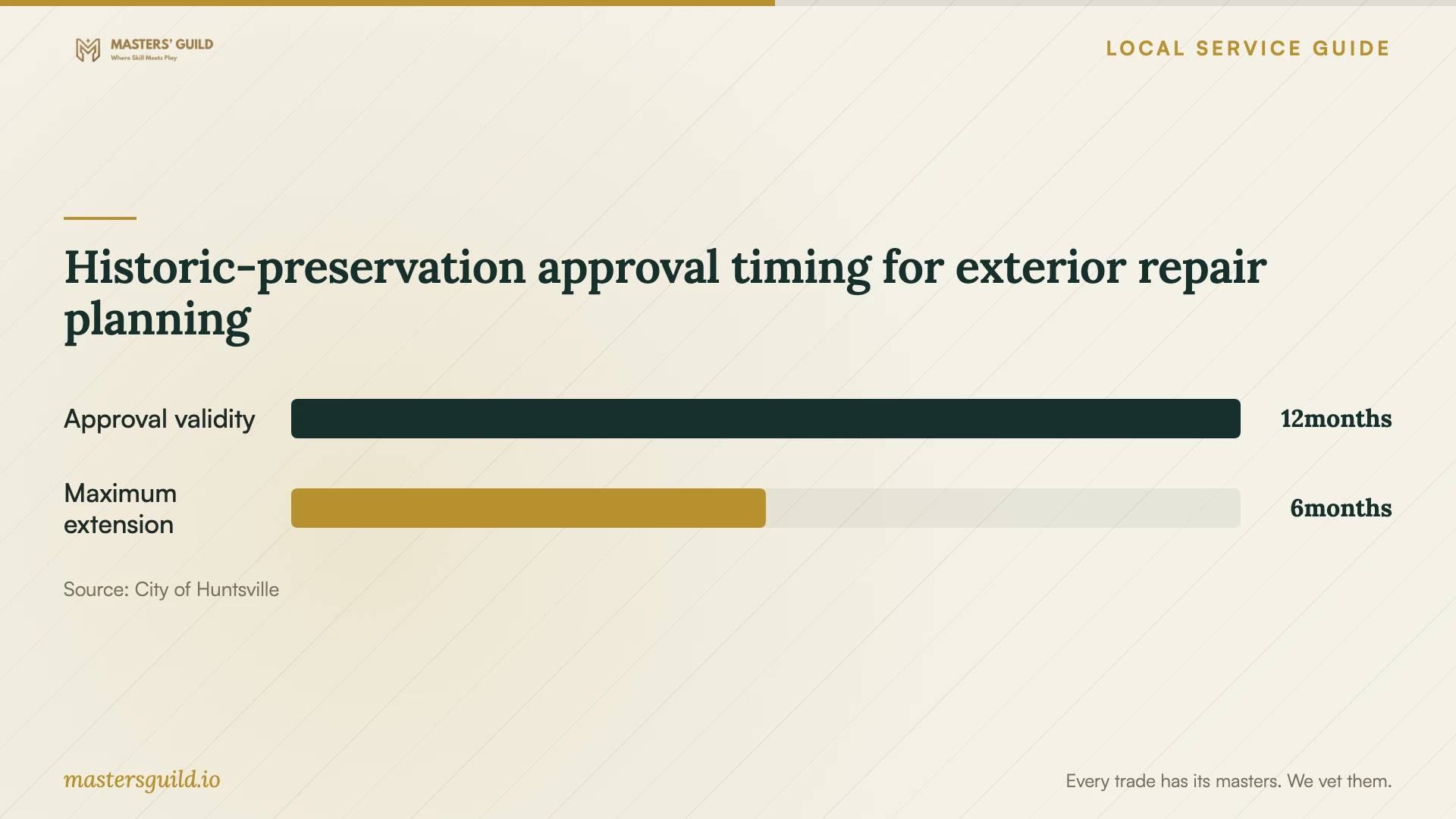
Historic-preservation approval timing for exterior repair planning
Local details that affect your job
City business licensing and repair applications
Huntsville requires businesses operating within its corporate limits to obtain a city business license. For residential alterations and repairs, its application instructions call for a scope list with a full materials-and-labor cost breakdown. Ask your contractor to prepare that breakdown and confirm permit handling with Inspection at 256-427-5331. The city describes walk-in permits for minor repairs that do not require plan review. Confirm requirements for the full cleanup and reconstruction scope before scheduling work. [1]
Historic-district exterior moisture repairs
For exterior changes in a Huntsville historic district, the city generally requires a Certificate of Appropriateness or Expedited Staff Review approval before issuing a building permit. It lists gutters and exterior routine repairs as expedited-review items. Certificate exemptions include interior work without exterior changes, repainting with prior colors, and reroofing with identical materials and colors. Describe the exact repair and materials to Historic Preservation at 256-650-4779 to confirm how your project qualifies. Ask about approval timing before booking exterior work. [2]
Flood-zone permit sequencing
Huntsville directs projects in a FEMA Special Flood Hazard Area to submit trade-permit applications in person. Within that area, the city says all building permits and most standalone trade permits require a Flood Development Permit before other permit approval. Check your address using the city's GIS FEMA flood-zone layer, then confirm the application sequence with Inspection before scheduling rebuilding or trade repairs. [1]
Choose the next step for your situation
| Situation | Next step | Basis |
|---|---|---|
| Hard-surface patch under about 10 square feet | Consider homeowner cleanup if your circumstances fit EPA guidance; address moisture and dry the surface. | EPA permits homeowner cleanup in most small-area cases, with qualifications for other conditions. |
| Larger growth or extensive water damage | Consult broader remediation guidance and ask an experienced contractor to assess the scope. | EPA directs these situations to its broader remediation guidance. |
| Sewage or contaminated-water damage | Hire a professional experienced in contaminated-water cleanup. | EPA recommends professional help with this experience. |
| Known or suspected HVAC mold contamination | Stop running the system and seek assessment before further action. | EPA warns that operating a contaminated system could spread mold. |
| Exterior repair in a historic district | Confirm whether the specific repair needs preservation approval or qualifies for an exemption. | Huntsville requires approval for exterior changes but lists exemptions, including prior-color repainting and identical-material-and-color reroofing. |
Your hiring checklist
- Photograph affected surfaces and record prior leaks or repairs.
- Give bidders the same affected-room list and problem description.
- Request references for comparable cleanup work.
- Ask for insurance documentation and the issuer of any claimed credentials.
- Separate cleanup, drying, moisture repair, disposal, and rebuilding in the quote.
- Assign responsibility for checking permits and preservation requirements.
- Agree on hidden-damage authorization and completion records before signing.
Frequently Asked Questions
Does Alabama require mold testing before cleanup?
ADPH states that Alabama has no residential or commercial building mold testing requirements. Ask a bidder proposing testing to explain its purpose, what decision it will inform, and the separate cost. [3]
Does mold cleanup require a Huntsville building permit?
Confirm permit requirements with Huntsville Inspection using the full cleanup and repair scope. The city describes applications for alterations and repairs, including a materials-and-labor breakdown. Include proposed demolition, rebuilding, and trade repairs when asking which permits apply. [1]
Can the contractor paint over the affected area?
EPA advises against painting or caulking moldy surfaces. Clean the mold and dry the surface first. Ask the contractor to document that work before applying finishes. [4]
How should I budget for the work?
Request itemized written quotes after assessment. Compare the same cleanup and repair tasks across bidders. Agree on how the contractor will document hidden damage and obtain your approval for added charges.
Sources and scope
This guide combines the sources below with practical planning guidance. Figures apply to the stated geography and period; request a written quote for your property.