
Local service guide
Yard Cleanup in Houston, TX: Scope and Hauling
Arrange Yard Cleanup in Houston by agreeing on the areas to clear, the plants to preserve, and who will remove the debris before accepting a quote. Include contractor haul-away in the written scope: the City requires landscaping contractors to remove and dispose of debris they generate. For work you do yourself, check your address’s collection schedule and preparation rules before leaving material at the curb. [1] [2]
Define the cleanup before requesting quotes
Walk the property and divide the work into named areas: front lawn, backyard, planting beds, fence line, patio, and any roadside ditch. Photograph each area and mark plants you want the crew to keep. Describe the finish you expect, such as leaves removed from beds, loose branches collected, weeds pulled from a named border, and paved surfaces swept.
Separate cleanup from additional work. Ask for individual prices for mowing, shrub pruning, mulch, stump removal, or tree work if you want those tasks. For overgrowth that hides the ground, arrange a walkthrough and agree on how the contractor will handle discoveries or changes. Require your approval before the crew adds work.
Tell the contractor about narrow gates, steps, parking restrictions, and the distance from the backyard to the loading area. Share photos of existing debris piles and identify anything mixed into them. Ask the contractor to state what they will collect, what they will leave, and how they will protect access routes during loading.
Make hauling part of the agreement
Houston’s yard waste guidance assigns removal and disposal of contractor-generated debris to the landscaping contractor. Its heavy trash guidance also excludes contractor debris. Ask for a quote that names haul-away and disposal, and reject an arrangement that relies on City crews collecting debris the contractor generates. [1] [2]
For material already on your property, describe its origin and contents before requesting a hauling price. Ask whether the quote includes that existing pile as well as debris from the new work. Agree on a final inspection with no unapproved piles left beside the curb, behind the garage, or along the fence.
Keep soil, sod, chemicals, and household rubbish out of a pile intended for City yard or tree waste collection. Houston excludes dirt, sod, soil, and household hazardous waste from heavy trash and may refuse a pile that mixes accepted and prohibited items. Its yard waste program also rejects mixed materials. [1] [2]
Compare the total scope and price
Request a written total for the defined work, with separate amounts for optional tasks. If a contractor quotes by the hour, ask how many workers the rate covers, whether loading time counts, and what spending limit requires your approval. Ask the contractor to list disposal charges and any other additions before you agree.
Use the same photos and task list for each quote. Compare the areas included, plant protection, hauling, and final sweep alongside the price. Ask for proof of insurance and the name of the person supervising the crew. Agree on payment timing, cancellation terms, and how you will approve completion.
Plan around rain and preserve drainage
Include surface debris removal from roadside ditches and swales in your requested scope. Houston Public Works asks residents to keep these paths free of clippings, leaves, limbs, and garden debris. It also tells residents not to change the grading of slopes that drain into canals, waterways, or lakes. [3]
Do not commission ditch deepening just because you see water after rain. Public Works explains that roadside ditches and swales can pond for 24 to 36 hours while conveying water or allowing it to soak into the soil. Discuss persistent drainage concerns as a separate task rather than adding excavation to a cleanup visit. [3]
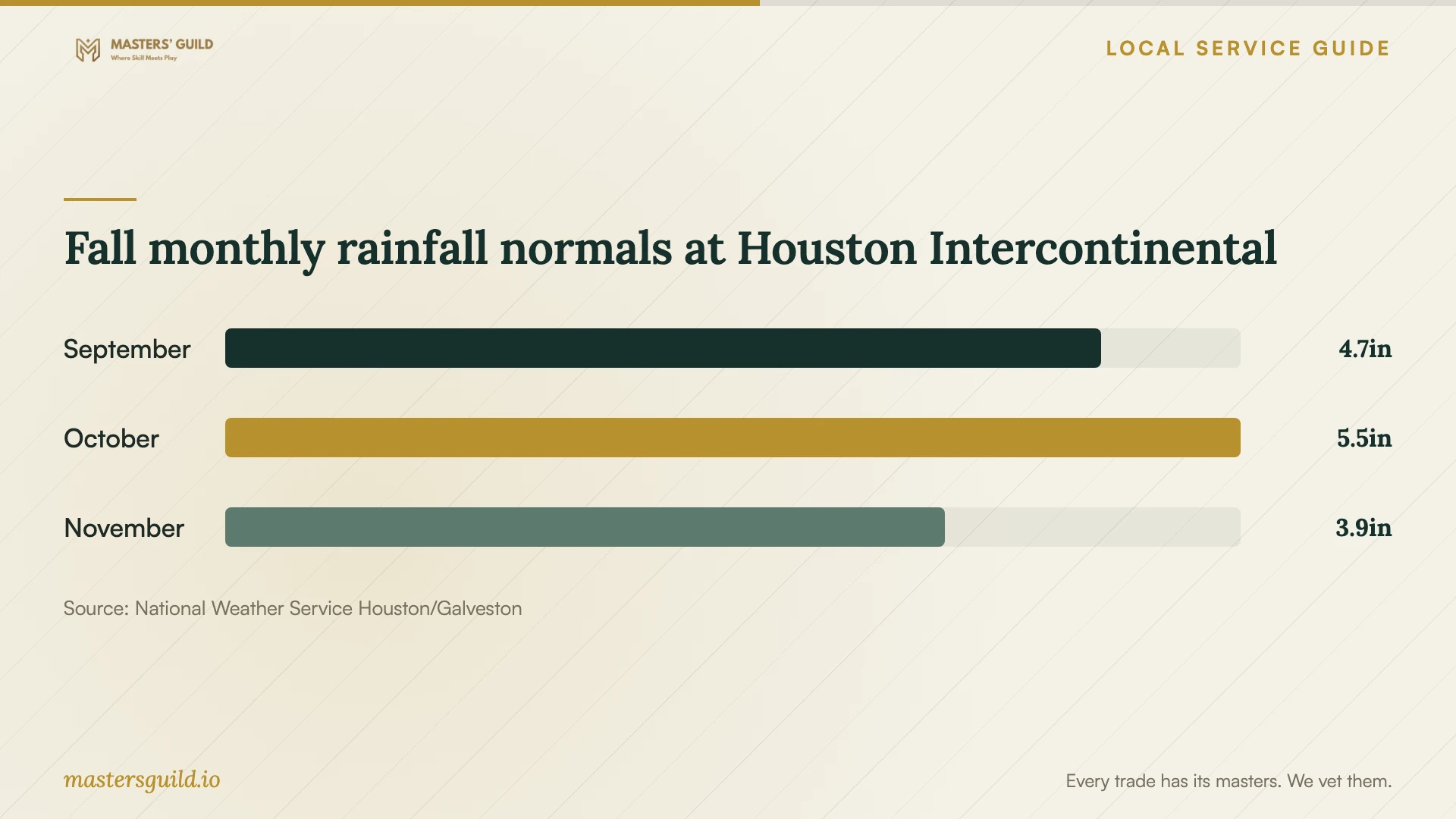
Agree on a rain rescheduling plan and ask the contractor how they will protect soft ground during loading. The rainfall chart provides historical planning context for Houston Intercontinental. Use a current forecast and the condition of your yard when choosing the workday. [4]
Fall monthly rainfall normals at Houston Intercontinental
Local details that affect your job
Check eligibility before planning curbside disposal
Houston limits heavy trash service to occupied residential units receiving City services and excludes multi-residential structures with more than eight units. Eligible addresses receive collection every other month, up to six times per calendar year. Look up your address’s assigned day before planning a DIY cleanup around collection. [1]
Prepare resident-generated leaves and small logs
The City accepts qualifying biodegradable or compostable bags meeting ASTM D6400 or EN 13432, or personal reusable refuse containers excluding City-issued refuse carts. You may tie small logs into bundles up to 4 feet long; containers and bundles must weigh no more than 50 pounds. Keep yard waste at least 3 feet from obstacles and separate from other waste. [2]
Keep tree waste within the curbside rules
For eligible resident-generated tree waste, Houston limits individual limbs and shrubbery pieces to 8 inches in diameter and 10 feet in length, with a maximum set-out of 8 cubic yards. Place heavy trash behind the curb between 6 p.m. the Friday before and 7 a.m. on the scheduled day. Keep sidewalks, streets, and utilities clear. [1]
Clear drainage paths without adding excavation
Houston Public Works asks residents to remove garden debris from roadside ditches and swales and explains that ponding for 24 to 36 hours can be part of their function. Ask your cleanup crew to remove loose surface debris. Keep proposed ditch reshaping outside the cleanup agreement and seek a separate assessment for persistent drainage concerns. [3]
Choose the right cleanup arrangement
| Your situation | Arrangement to consider | Confirm before starting |
|---|---|---|
| You will collect leaves yourself | Prepare them for eligible City yard waste collection | Check the Heavy Trash schedule, approved containers, and separation rules |
| A contractor will clear or prune the yard | Include contractor haul-away | Require removal and disposal of debris the contractor generates |
| Your pile contains soil or sod | Arrange disposal separately | City heavy trash excludes dirt, soil, and sod |
| Leaves and limbs obstruct a roadside swale | Request surface debris removal | Ask the crew to keep the flow path clear and leave excavation outside the cleanup scope |
Your hiring checklist
- Photograph each work area and mark plants the crew should preserve.
- List cleanup tasks and request separate prices for optional work.
- Describe existing debris piles and identify any mixed materials.
- Confirm haul-away, disposal charges, and the final condition in writing.
- Share gate measurements, loading access, and parking constraints.
- Agree on a rain plan and protection for soft ground.
- Specify surface debris removal for drainage paths and exclude excavation from the cleanup scope.
- Walk the finished property with the supervisor before approving completion.
Frequently Asked Questions
Can my cleanup contractor leave branches for City pickup?
Houston requires landscaping contractors to remove and dispose of the debris they generate. Include that responsibility in the quote. For branches you collected yourself, check collection eligibility, dimensions, volume limits, and the assigned date. [1] [2]
Does Houston collect yard waste with weekly garbage?
Houston collects yard waste with scheduled Heavy Trash service. Check your address’s schedule. The City directs residents to call 3-1-1 if yard waste remains after their scheduled Heavy Trash pickup. [2]
Should a cleanup crew regrade my roadside ditch?
Request removal of loose leaves, clippings, and limbs, and ask the crew to preserve the existing ditch grade during cleanup. Public Works explains that temporary ponding for 24 to 36 hours can be part of a ditch or swale’s function. Its grading guidance prohibits changing slopes that drain into canals, waterways, or lakes. Treat proposed grading changes as a separate drainage assessment. [3]
What should I send for a useful quote?
Send wide photos of each area, close views of debris, your task list, and access details. Identify plants to preserve and ask for a written total covering loading, hauling, and disposal. For concealed or extensive overgrowth, request a walkthrough before agreeing on the scope.
Sources and scope
This guide combines the sources below with practical planning guidance. Figures apply to the stated geography and period; request a written quote for your property.