
Local service guide
Plan wall painting in Houston: quotes and cleanup
Arrange wall painting in Houston by giving each painter the same room list, wall-condition photos and written scope. Ask them to price preparation, primer, finish coats, protection and cleanup, with ceilings and trim listed as separate options. Before accepting a quote, agree on who moves furniture, how the crew handles existing paint and who keeps or disposes of leftovers. For a home built before 1978, ask about EPA lead-safe requirements before anyone sands or scrapes painted surfaces. [3]
Define the surfaces before asking for prices
Walk through each room and list the walls you want painted. Identify accent walls, stairwells, closets and areas behind large furniture. State whether you want ceilings, baseboards, doors and window trim included. Give each bidder the same list so you can compare their totals without guessing what each person allowed for.
Photograph holes, cracks, peeling areas and stains. Ask the painter to describe the proposed repair for each area and name any work they exclude. For a recurring stain or damp patch, arrange an assessment of the cause before approving painting. Request a written change price if the crew uncovers damage after starting.
Ask the contractor to state whether any square-foot calculation refers to wall surface area or room floor area. Require a total for your actual scope, along with any optional work. Use written quotes for your home's actual surfaces and preparation to set your budget.
Set preparation and finish expectations
Have the painter name the paint manufacturer, product line, color and sheen in the proposal. Ask where they plan to use primer and how many finish coats they include. Agree on how they will handle incomplete coverage, visible patches or a color change you request after approving the sample.
Review a sample in the room under your daytime and evening lighting before authorizing the full job. Tell the painter which walls you expect to wipe or clean, and ask them to explain the proposed finish for those areas. Keep the product name and color formula with your home records.
Write down who moves furniture, removes wall hangings and protects floors. Ask how the crew will control preparation dust and maintain access to rooms you still need. Request a schedule that distinguishes preparation, coating, touch-ups and room-use restrictions based on the selected product's instructions.
Check older paint before sanding or scraping
EPA's Renovation, Repair and Painting Rule covers work that disturbs painted surfaces in pre-1978 housing and child-occupied facilities, subject to its exemptions. EPA includes painting preparation among covered activities. For a qualifying project, ask for the firm's certification and the crew's plan for containment, cleaning and keeping occupants away from the work area. [3]
EPA does not require paint testing before renovation. Without documentation that the affected paint is not lead-based, the applicable RRP requirements apply. If you choose testing, EPA requires an appropriately qualified professional to test the surfaces the work will affect. Ask the contractor to identify the basis for any claimed exemption before you approve preparation. [3]
Give the bidder your home's construction year and describe the proposed sanding, scraping or removal. Ask them to separate lead-safe preparation from the finish-painting scope so you understand the work and responsibilities before signing.
Plan exposed work around actual conditions
For exterior walls or an unconditioned space, ask the painter to check the selected coating's application limits against conditions at the job site. Agree on who decides to postpone work and how the crew will protect unfinished surfaces. For interior rooms, ask how they will manage ventilation while keeping the room within the product's requirements.
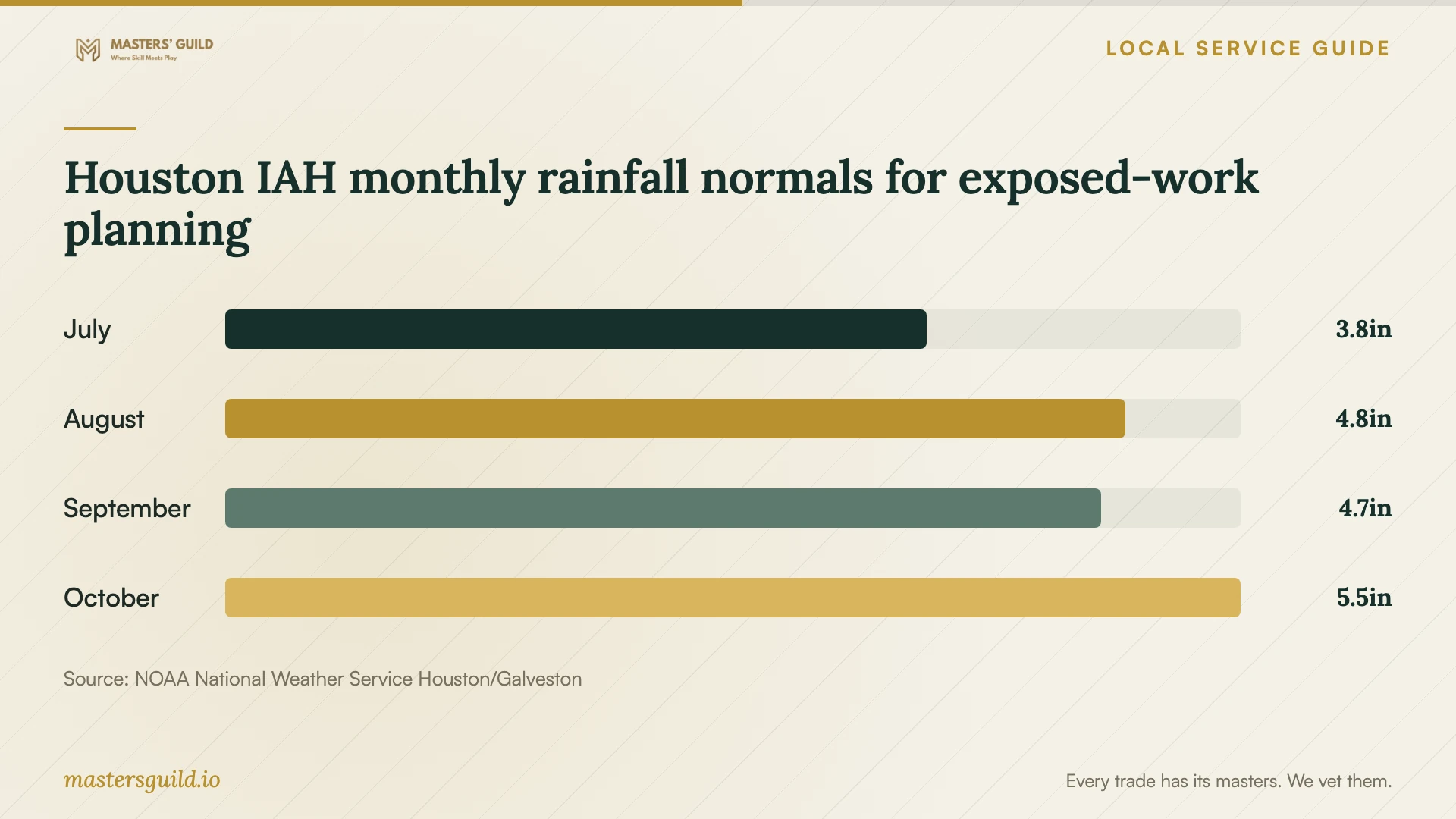
The National Weather Service's 1991–2020 Houston Intercontinental normals list October rainfall at 5.46 inches, compared with 3.77 inches in July. Use the chart as background when discussing weather contingency plans for exposed work. These historical monthly averages do not predict rain on your appointment date or establish indoor drying times. [4]
Agree on payment, inspection and leftover paint
Request a written total, payment schedule and approval process for changes. Ask for evidence of liability insurance and references for work with similar preparation needs. Read any workmanship warranty and ask who handles touch-ups, how you report a problem and which conditions the contractor excludes.
Schedule a walkthrough with the painter before closing the job. Inspect coverage, edges, patched areas and any paint on protected surfaces under the room's normal lighting. Record agreed corrections and their completion date. Ask the crew to label retained paint by room and leave the color formula and product details.
Decide how much paint you want to retain and who will remove the rest. Houston provides household hazardous-waste drop-off through its Environmental Service Centers. Because the city describes this service for Houston residents, confirm eligibility before assuming a contractor can use it for your job's waste. [1]
Houston IAH monthly rainfall normals for exposed-work planning
Local details that affect your job
Texas residential contract format changes tax handling
The Texas Comptroller says residential repair and remodeling labor is not taxable. Under a lump-sum contract, the contractor pays tax when buying supplies and materials and does not charge the customer tax. Under a separated contract, the contractor collects applicable sales tax on incorporated materials and specified taxable services; construction labor remains nontaxable. Ask the painter to identify the contract format and explain the tax line before you compare totals. For a shop or office repaint, the Comptroller generally taxes nonresidential repair and remodeling. Its maintenance exception requires documentation of scheduled, periodic work on property that is not broken to prevent deterioration. [2]
Choose a Houston paint drop-off before arranging cleanup
The city lists ESC South at 11500 S. Post Oak Road, open Tuesday, Wednesday, Friday and Saturday from 8 am to 5 pm. ESC North, at 5614 Neches Street, opens the second Thursday of each month from 9 am to 3 pm. The city's Environmental Service Centers page lists a 25-gallon maximum for latex and oil-based paints. Choose a location and confirm its schedule before loading leftovers. Ask the center which documents you need for a paint drop-off, and confirm eligibility if the painter plans to transport the waste. [1]
Match the painting scope to your next step
| Your situation | Next step | Put in the agreement |
|---|---|---|
| Sound walls and a color refresh | Request matching walls-only quotes | Preparation, primer, finish coats and exclusions |
| Recurring stains or damp patches | Arrange assessment before approving painting | Who addresses the cause and approves additional repairs |
| Pre-1978 home with paint-disturbing preparation | Ask how EPA RRP requirements and exemptions apply | Firm certification where required, containment and cleanup |
| Residential quote with a tax line | Ask whether the contract is lump-sum or separated | Material and labor charges with an explanation of tax treatment |
| Leftover paint you want removed | Confirm the disposal route and resident eligibility | Who retains paint, who transports waste and any disposal charge |
Your hiring checklist
- Send each bidder the same room list, photographs and ceiling or trim options.
- Identify the home's construction year and ask how the crew will handle existing paint.
- Approve the paint product, color sample, sheen, primer locations and finish-coat scope.
- Assign furniture moving, floor protection, dust control and daily cleanup.
- Request a written total, tax explanation, payment schedule and change-approval process.
- Agree on room access, product-based use restrictions and any weather contingency.
- Arrange a final walkthrough, correction list and labeled paint handover.
- Assign leftover disposal and confirm the intended drop-off's eligibility and hours.
Frequently Asked Questions
How should I compare painting quotes?
Ask each painter to quote the same rooms, surfaces and preparation. Compare the total with paint specifications, repair allowances, coat counts, protection and cleanup beside it. Have bidders explain exclusions and optional charges before you choose.
Does a painter need EPA certification for an older home?
EPA generally requires firm certification for paid work that disturbs paint in pre-1978 housing, subject to exemptions. Painting preparation can qualify. Ask the firm to explain the rule's application to your job and provide certification when required. [3]
Should a residential painting quote include sales tax on labor?
The Texas Comptroller treats residential repair and remodeling labor as nontaxable. Material-tax handling depends on whether the contractor uses a lump-sum or separated contract. Ask the painter to explain the contract and any tax charge in writing. [2]
Can I take leftover paint to a Houston city facility?
The city's Environmental Service Centers serve Houston residents and accept latex and oil-based paints with a 25-gallon maximum. Check the chosen center's hours and confirm eligibility and documentation before your trip. Assign disposal responsibility in the painting agreement. [1]
Sources and scope
This guide combines the sources below with practical planning guidance. Figures apply to the stated geography and period; request a written quote for your property.