
Local service guide
Tree cutting in Houston: Hiring and Cleanup Guide
Tree cutting in Houston should start with an on-site assessment, a written scope and a contractor who includes debris removal. Ask the arborist whether pruning can meet your goal before you authorize removal. Resolve street-easement questions before booking, and include hauling in the contract: Houston does not collect contractor-generated tree debris through its heavy-trash service. [1] [2]
Choose assessment, pruning or removal
Describe the problem before requesting a price. You might want clearance above the driveway, an assessment of a damaged limb or removal of a tree where you plan to build. Ask the person assessing the tree to explain the proposed work and identify which branches or trees the crew will cut. Avoid approving an open-ended instruction to trim everything.
If you want to retain the tree, request a pruning proposal and an explanation of the intended result. If the contractor recommends removal, ask for the reason and consider an assessment from another arborist before deciding. Request a separate assessment price so you understand what you are buying before committing to cutting.
For a damaged tree, send photographs taken from a safe position and describe changes you have noticed since the damage. Ask the contractor to assess it on site before agreeing to a final scope. Keep people away from the area of concern while arranging help, and tell the contractor about nearby wires without approaching or handling them.
Resolve street-tree and development questions
Houston Parks and Recreation asks residents to report tree removal from street easements so staff can check permits. The department directs other non-emergency street-tree service requests to 311. For a tree close to the curb, ask the city to clarify responsibility before you give a private crew permission to remove it. [2]
Houston's Tree and Shrub Ordinance addresses planting and landscape buffers, including minimum requirements for street trees, parking-lot trees, shrubs and buffers based on property size. Planning and Development also lists protected-tree and tree-protection resources. Ask the department which requirements apply to your address and proposed work. [3]
For an addition, driveway change or other development project, describe both the proposed construction and the tree work when contacting Planning and Development. Ask about planting or protection requirements and who must obtain any required approval. Have the contractor identify that responsibility in writing before the crew starts. [3]
Get a quote that covers the whole job
Give each bidder the same scope. Identify the trees with photographs or an agreed marking method, describe the pruning objective, and specify whether removal includes the stump. For stump grinding, ask for the proposed depth, treatment of exposed roots, removal of grindings and backfilling. Include preparation for new planting if that is your goal.
Find out who will perform and supervise the work. Request evidence of insurance that covers the proposed job and verify any professional credentials the bidder presents. Discuss the equipment route and protection for the driveway and lawn. Get a neighbor's agreement before scheduling access through their property.
Require an itemized written total covering assessment, cutting, equipment, hauling, stump work and any applicable charges. Request site-specific written quotes for the same scope. Agree on how you will approve extra work, how the contractor will handle weather delays and how you will document completion.
Include hauling instead of relying on city pickup
Houston excludes contractor-generated debris from heavy-trash collection and requires the contractor to remove material from tree removal and other contractor work. Put hauling and disposal in the agreement. Before payment, check that the crew has removed the material you agreed they would take and completed the promised cleanup. [1]
For resident-generated material, the city limits heavy-trash service to occupied residential units receiving City of Houston services and excludes multi-residential structures with more than eight units. It lists a maximum set-out volume of eight cubic yards and limits individual limbs and shrubbery pieces to eight inches in diameter and ten feet in length. The city excludes contractor debris regardless of these residential limits. [1]
If you have separate debris from your own yard work, check your address's collection schedule before placing it outside. Houston instructs residents to keep set-outs behind the curb line, off streets and sidewalks, and clear of utilities and traffic. Keep your own eligible material separate from the contractor's cleanup plan. [1]
Plan access and a weather contingency
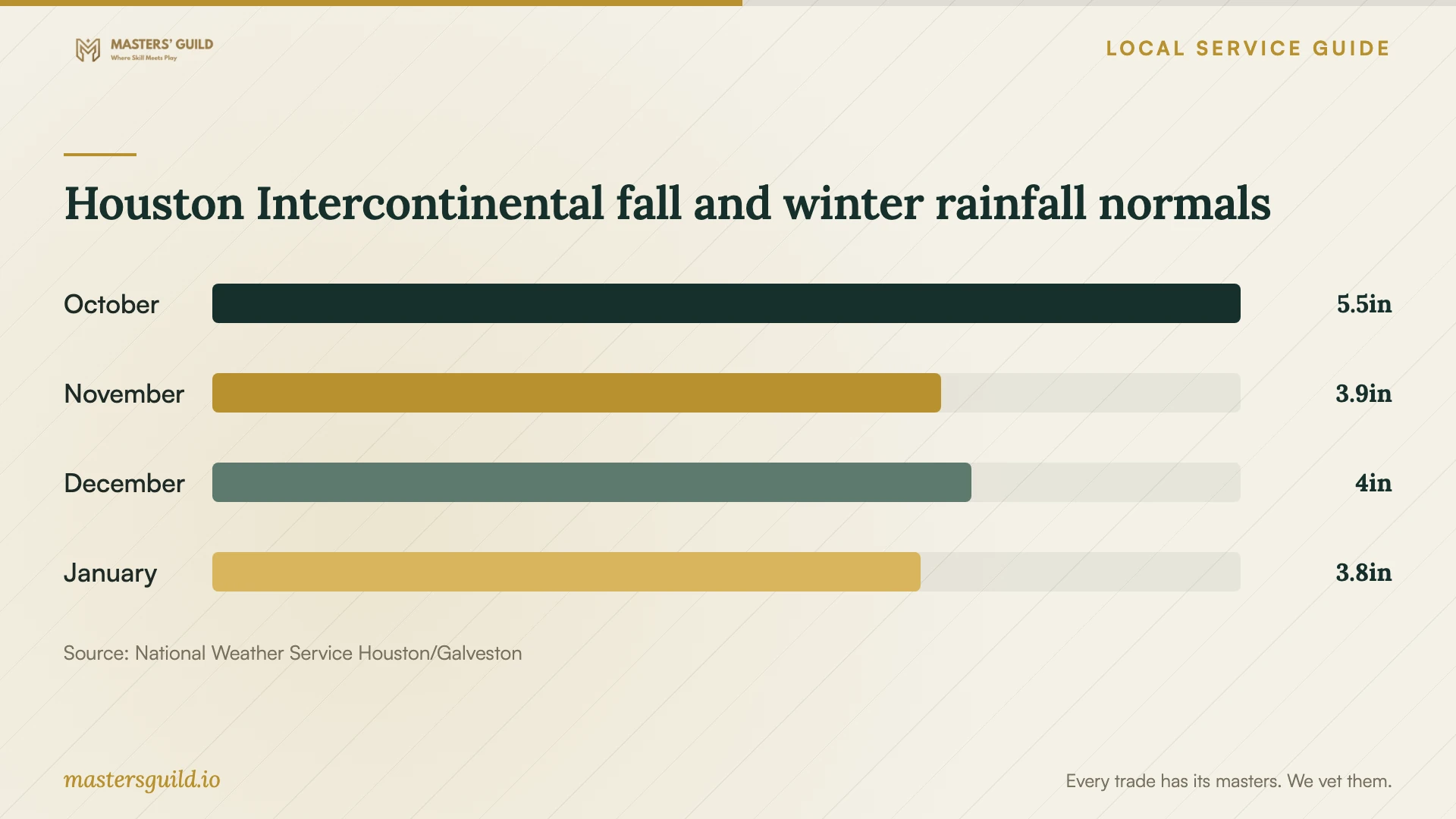
Houston Intercontinental's published 1991–2020 rainfall normals include 5.46 inches for October and 3.87 inches for November. These historical monthly averages do not predict conditions on your scheduled workday. Use them as context for discussing a weather contingency, then check the forecast and access conditions with the contractor before work. [4]
Walk the equipment route with the contractor. Point out gates, irrigation components, drains and areas you want protected. Discuss how the crew will assess ground conditions, what would trigger postponement and who will tell you about a revised date. Agree on where vehicles and equipment may stand.
Before arrival, move vehicles and outdoor furniture from the agreed work area, arrange access and keep pets inside. Photograph the driveway, fence and lawn along the equipment route. Afterward, inspect those areas with the crew leader and compare the completed work with the written scope.
Houston Intercontinental fall and winter rainfall normals
Local details that affect your job
Contractor debris requires contractor removal
Houston's heavy-trash rules exclude material generated by tree-removal contractors. A quote that leaves branches and trunk sections at the curb does not satisfy the city's stated contractor-removal requirement. Ask the bidder to include removal of that debris in the job total. [1]
Use the street-tree service route
For non-emergency street-tree service, Houston Parks and Recreation directs residents to 311 or 713.837.0311. If you witness removal from a street easement, the department asks you to call 832.395.7100 so staff can check permits; it says that line operates 24 hours a day. Resolve easement questions before arranging private removal. [2]
Check development-related tree requirements
Houston Planning and Development describes property-size-based planting requirements under the Tree and Shrub Ordinance. If cutting accompanies development work, ask the department which requirements apply to your proposal. Its listed contact number is 832.393.6600. [3]
Choose your next step before booking
| Situation | Next step | Confirm before work |
|---|---|---|
| You want to retain the tree | Request an assessment and pruning proposal | The branches involved and intended result |
| The tree stands near the street | Ask 311 about street-tree responsibility | Whether the proposed work involves a street easement |
| Removal accompanies development | Ask Planning and Development about applicable tree requirements | Who handles any required approval and planting obligations |
| The contractor proposes curbside debris | Require contractor hauling | Removal of contractor-generated material from the property |
| You want to reuse the stump area | Request a separate stump-work scope | Grinding depth, grindings removal and backfilling |
Your hiring checklist
- Photograph and identify each tree or branch you want assessed.
- State your goal and request an explanation of pruning and removal options.
- Resolve street-easement responsibility and any project-specific approvals.
- Request insurance evidence and verify credentials the bidder claims.
- Compare written quotes with matching cutting, hauling and stump scopes.
- Agree on equipment access, property protection and weather postponement.
- Confirm who approves extra work and how payment relates to completion.
- Inspect cleanup and the equipment route with the crew leader.
Frequently Asked Questions
Will Houston collect branches left by my tree contractor?
Houston's heavy-trash service excludes contractor-generated tree debris. The city requires the contractor to remove it. Include hauling in the written agreement before accepting the quote. [1]
Does every private tree removal need a permit?
Confirm requirements with the city for your tree's location and proposed project before authorizing removal. Houston asks residents to report removal from street easements so staff can check permits. Planning and Development describes tree planting and landscape requirements that warrant a project-specific inquiry when removal accompanies development. [2] [3]
How can I compare tree-cutting quotes?
Give each bidder the same tree list and requested outcome. Ask for written totals covering cutting, equipment, debris removal and any stump work. Resolve differences in scope before comparing the amounts, and require your approval before the contractor adds work.
Can I choose a dry workday from monthly rainfall averages?
Monthly climate normals describe historical averages, not the weather on your booking date. The published Houston Intercontinental figures cover 1991–2020. Ask the contractor to assess the forecast and access conditions and agree on a postponement plan. [4]
Sources and scope
This guide combines the sources below with practical planning guidance. Figures apply to the stated geography and period; request a written quote for your property.