
Local service guide
Houston mold removal: Hiring and Planning
For mold removal in Houston, arrange an assessment of affected materials and the moisture source before agreeing to cleanup. For licensed remediation, Texas requires the contractor’s work plan to follow a licensed Mold Assessment Consultant’s protocol, including small projects. Texas also prohibits a provider from performing both assessment and remediation on the same project, apart from a school-district exception. Identify who will assess, remove contaminated material, repair the moisture source, and check the finished work. [1] [2]
Start with the moisture source and affected materials
Tell the assessor where you see growth, where you notice a musty smell, and when you first found water. TDLR recommends inspecting hidden areas when mold or a musty odor is present, including plumbing access areas, attics, closets, and spaces behind furniture. Have the assessor explain which areas they inspected and which remain inaccessible. [1]
Request a material-by-material scope. TDLR distinguishes surfaces that can be cleaned from absorbent materials such as drywall, carpet, and insulation that can be difficult to clean and may need removal. Have the proposal identify what the contractor will clean, discard, and leave for further inspection. [1]
Assign responsibility for the leak repair before scheduling reconstruction. Confirm whether the cleanup proposal includes that repair or whether you need a separate contractor. Photograph the affected areas and keep a written record of earlier leaks, repairs, and recurring growth.
Choose providers for the required Texas roles
Request the assessor’s and remediator’s license details and check them through TDLR’s license search. Texas regulates both mold assessment and remediation, subject to exemptions. A provider holding both licenses still cannot perform both activities on your project under the ordinary homeowner arrangement. [1]
Request current evidence of insurance and identify the business named on it. TDLR’s contractor application guidance specifies employer commercial general liability coverage of at least $1 million per occurrence. The page also lists exemptions from submitting insurance documentation with the application; those documentation exemptions do not establish a blanket exemption from maintaining coverage. Have the provider explain how its coverage applies to your work. [3]
Expect a Consumer Mold Information Sheet before services begin. TDLR requires licensed assessors and remediators to give it to the client and, when different, the property owner. Read it before authorizing work and keep it with the protocol and contract. [1]
Compare complete scopes before comparing totals
Request separate amounts for assessment, remediation, moisture repairs, completion checks, and rebuilding. Have each bidder list containment, material removal, surface cleaning, disposal, and exclusions. Use the same assessment protocol when requesting competing remediation proposals.
Agree on how the contractor will handle additional contamination found after opening a wall or cabinet. Specify who can authorize extra work, how the contractor will document it, and how you will receive the revised price before proceeding.
Request a schedule that distinguishes cleanup from repairs and rebuilding. Discuss access to bathrooms, kitchens, and sleeping areas, and agree on household access around containment. TDLR says a licensee should explain entry risks and protection when an owner requests access to a containment area. [1]
Arrange completion checks before demolition
Have the assessment consultant define completion criteria before remediation begins. TDLR states that a consultant who has not prepared a protocol in advance cannot declare project clearance. A consultant may conduct a later inspection and certify that the property shows no evidence of mold damage through a distinct certification route. [1]
Agree on the documents you will receive and who will provide them. Discuss the applicable Certificate of Mold Damage Remediation with the licensed professionals before hiring. TDLR states that unlicensed workers cannot issue that certificate, including when they perform work under the homebuilder exemption. [1]
Keep the assessment, protocol, work plan, photographs, repair invoices, and completion documents together. Have the contractor identify remaining repairs before you authorize wall closure or replacement finishes.
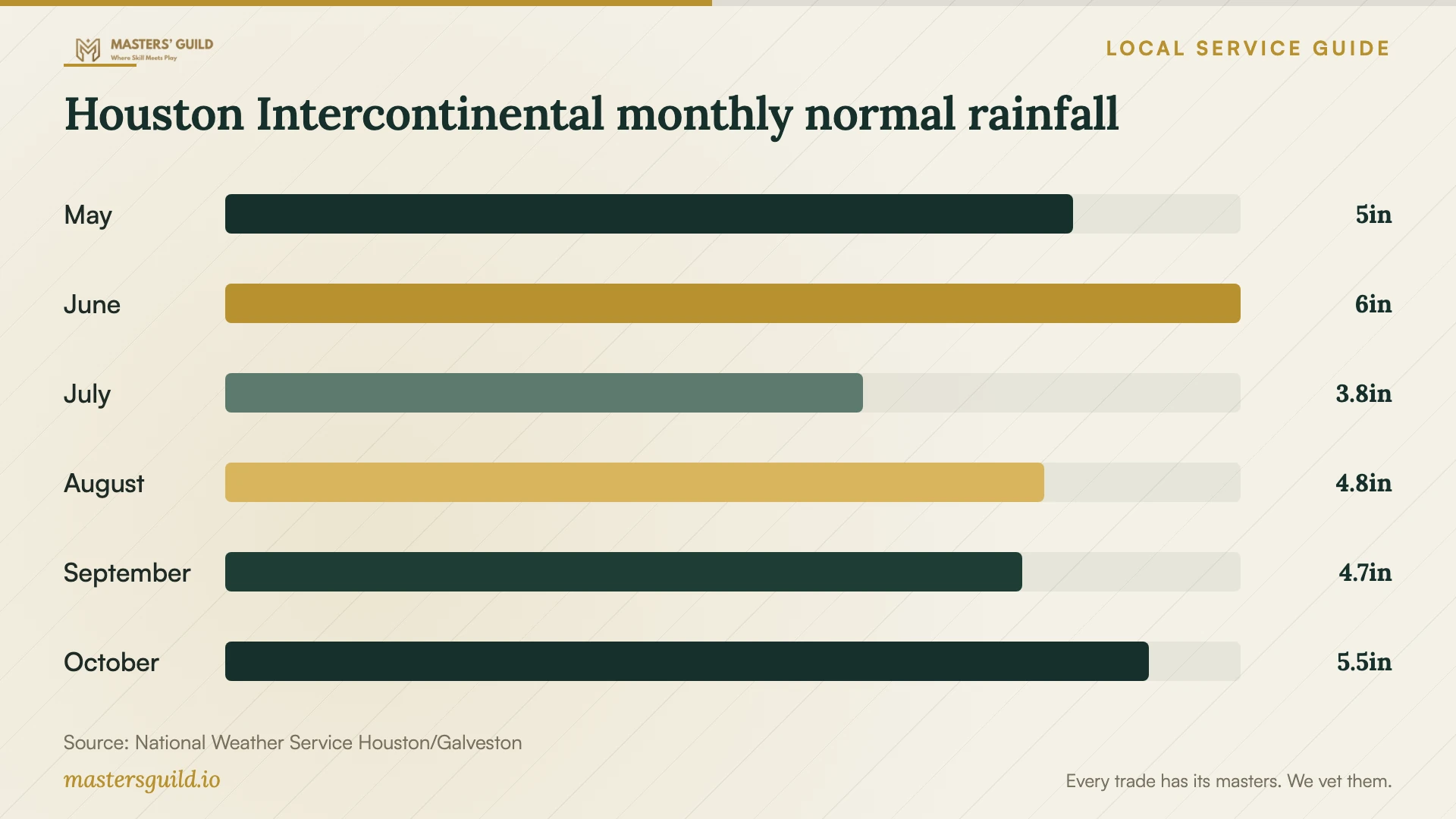
Houston Intercontinental monthly normal rainfall
Local details that affect your job
Texas small-project rules affect the hiring sequence
For a Houston home, question a licensed contractor’s claim that a small patch removes the need for a protocol. TDLR says licensed remediation contractors must follow the law and rules even below 25 contiguous square feet. Its April 2025 guidance explains that notification calculations include surfaces cleaned or treated within the remediation scope. Request the area calculation and notification decision before work starts. [1] [2]
Texas separates assessment from cleanup on your project
When arranging licensed work here, identify separate assessment and remediation providers before accepting a combined proposal. Texas allows a person or company to hold both licenses but prohibits performing both activities on the same project, except for the stated school-district situation. Confirm each provider’s role and who will prepare the protocol and perform the post-remediation assessment. [1]
Use Houston rainfall history to plan moisture follow-up
At Houston Intercontinental, the National Weather Service reports 1991–2020 normal rainfall of 6.00 inches in June and 5.46 inches in October. If growth followed rain, discuss the water-entry history with the assessor and plan a follow-up check after rain. These airport climate averages cannot establish the cause of moisture at your house. [4]
Choose the next step for your situation
| Situation | Next step | Reason |
|---|---|---|
| Visible growth with a known leak | Arrange moisture repair and a material-specific cleanup assessment. | TDLR says correction requires fixing moisture and removing mold. |
| Musty odor without visible growth | Request an inspection that considers hidden areas. | TDLR recommends careful inspection when a musty odor is present. |
| Licensed contractor proposes a small cleanup | Request the consultant’s protocol, contractor’s work plan, and notification calculation. | Small size does not exempt a licensed contractor from the applicable project rules. |
| Provider recommends sampling | Discuss what decision the results will change and how the consultant will interpret them. | TDLR recommends establishing interpretation criteria before sampling. |
| You want documented clearance | Arrange the consultant’s protocol before remediation starts. | A consultant who did not prepare the protocol in advance cannot declare project clearance. |
Your hiring checklist
- Photograph growth and water damage, and write down when each appeared.
- Give the assessor access details and the history of leaks or earlier cleanup.
- Request license details for each assessment and remediation role.
- Request insurance evidence naming the business you will hire.
- Compare proposals against the same protocol and material list.
- Assign moisture repairs, rebuilding, and completion checks in writing.
- Agree on access restrictions and approval of additional work.
- Keep the project documents with your home maintenance records.
Frequently Asked Questions
Do I need a mold test before hiring someone?
TDLR says testing to identify the kind of mold is not required before cleaning or remediation. Discuss inspection, scope, and completion criteria with the consultant. If you choose sampling, have the consultant explain the interpretation criteria and what recommendations would follow from the results. Clarify any testing specified for project completion. [1]
Does a patch below 25 square feet qualify for simple cleanup?
Texas has a minimum-area exemption for some unlicensed work, but it does not exempt a licensed remediation contractor from the project rules. The notification calculation also considers surfaces needing cleaning, removal, or treatment. Have the provider explain the full proposed scope rather than relying on the patch dimensions. [1] [2]
Can a contractor paint over the affected drywall?
TDLR says painting over mold is ineffective. It also warns that applying bleach to drywall without removing the mold source does not provide a permanent solution. Have the assessor explain whether the material needs removal and how the moisture problem will be corrected. [1]
Sources and scope
This guide combines the sources below with practical planning guidance. Figures apply to the stated geography and period; request a written quote for your property.