
Local service guide
Junk removal in Houston: pickup and hiring guide
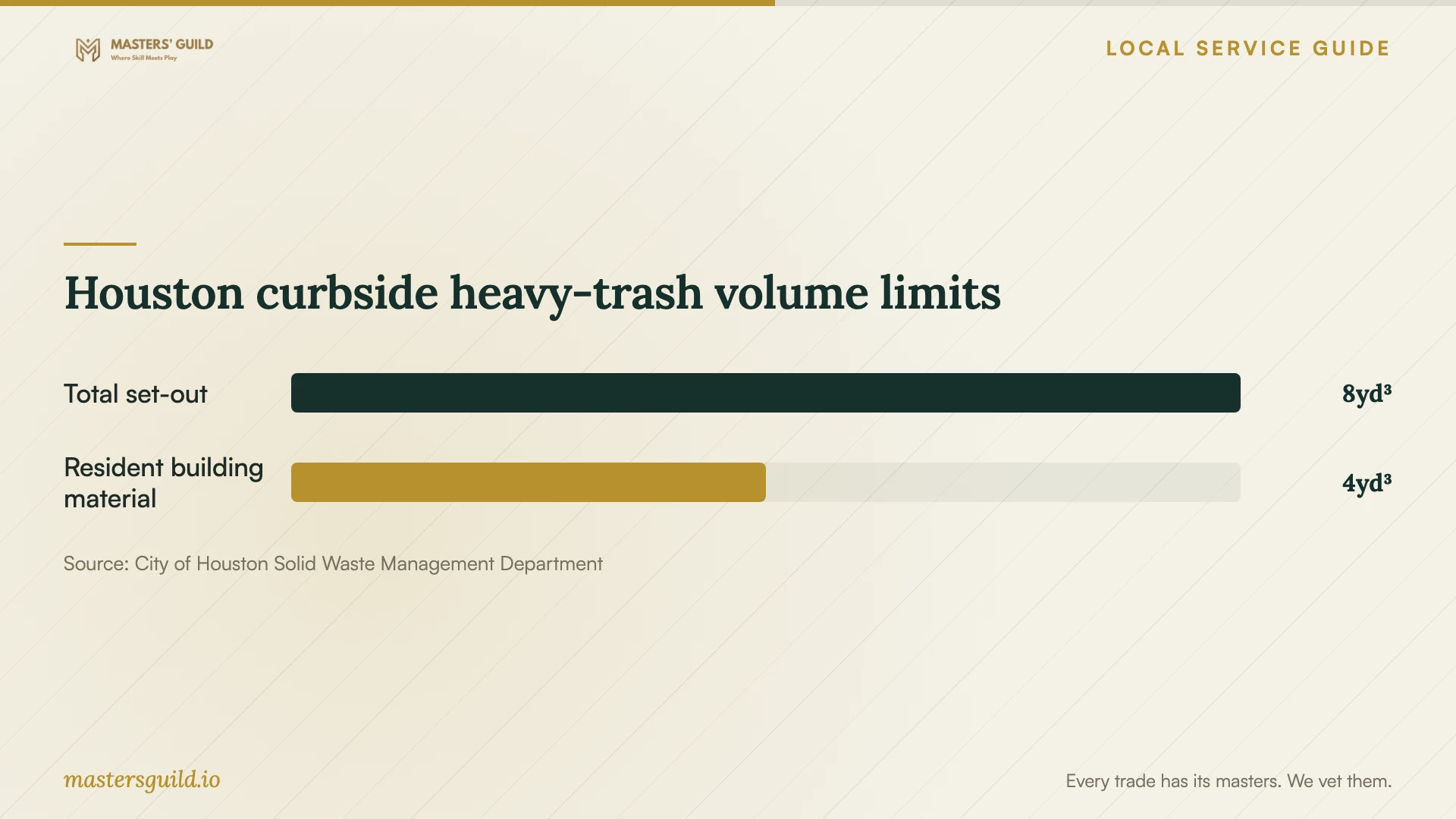
For junk removal in Houston, check your address’s city heavy-trash eligibility and collection date before hiring a crew. Eligible homes receive collection every other month, with an 8-cubic-yard limit per set-out. Consider a private hauler when you need indoor lifting, a specific removal date, or removal of materials the city excludes. Separate electronics and household chemicals before arranging pickup. [1]
Choose between city collection and a hauling crew
Use municipal heavy-trash collection if your address qualifies, your materials fit the rules, and you can wait for your assigned date. The city accepts furniture, bundled carpet, mattresses, toilets, bicycles, and listed household appliances. Look up your address’s schedule before moving anything outside. [1]
For a private pickup, decide whether you want the crew to carry items from inside or collect a pile you have prepared outside. Include the floor, stairs, elevator arrangements, doorway clearance, and distance to truck parking in your request. Ask the crew to confirm the scope before you move heavy furniture yourself.
Keep demolition and renovation cleanup separate from a household furniture cleanout. Houston permits up to 4 cubic yards of resident-generated building material within its curbside rules, but excludes shingles, brick, plaster, and concrete. The city does not collect contractor-generated debris. If a contractor performed the work, ask them to include debris removal in the agreement. [1]
Get a written quote for the complete load
Send an item list and photos that show the whole pile. Name heavy or awkward pieces, including a sleeper sofa, large cabinet, or appliance. Photograph the route out of the home if it includes tight turns or stairs. Mark anything you intend to keep so the crew can distinguish it from the removal load.
Ask whether the quote covers loading, carrying, transport, disposal, and cleanup of the loading area. Request a total that includes any applicable charges, and ask which changes could increase it. If the hauler quotes a fraction of a truck, request the corresponding volume and any weight limit so you can compare offers on the same basis.
Confirm the arrival window, payment terms, cancellation terms, and insurance coverage. Ask where the crew intends to take each material category. For donation or recycling requests, agree on the destination and what the crew will do if that facility declines an item. Approve the final scope and price before loading starts.
Separate appliances, electronics, and chemicals
Set electronics, paint, fuels, and chemicals apart from ordinary furniture. Houston excludes electronic scrap and household hazardous waste from heavy-trash pickup and directs residents to Environmental Service Centers. Mixing authorized and unauthorized materials can cause the city to refuse the entire pile. [1]
For a refrigerator or freezer, city curbside collection requires a certified technician’s tag showing refrigerant removal. Residential Drop-Off Centers also require a refrigerator refrigerant-removal tag. Ask a private hauler whether its quote includes arranging that work and identifying an appropriate disposal destination. [1] [2]
Houston’s Environmental Service Centers accept household chemicals, specified automotive fluids, paints, fuels, and electronics under material-specific limits. For example, the city lists a 25-gallon maximum for latex and oil-based paints and a 15-gallon maximum for fuels. Check your material and quantity against the center’s rules before loading your vehicle. [3]
Prepare the pickup or drop-off
For city collection, set items just behind the curb in front of your home between 6 p.m. on the preceding Friday and 7 a.m. on collection day. Keep the street, sidewalk, utilities, and traffic paths clear. Do not place the pile under wires, signs, or mailboxes. [1]
For a residential drop-off trip, bring a current Texas-issued ID and a current City of Houston utility bill or lease with matching addresses. Residents unload their own items. The city limits unloading to 20 minutes and may ask you to re-enter the line if you need longer. Arrange help before departure if you cannot unload the items yourself. [2]
For a hired crew, clear the carrying route, reserve building access if needed, and identify a suitable loading space. Keep pets and children away from the work area. Walk through the agreed item list with the crew, then inspect the cleared space before completing payment.
Houston curbside heavy-trash volume limits
Local details that affect your job
A rental truck can rule out a city drop-off trip
Houston permits pickups and qualifying small trailers at Residential Drop-Off Centers, but excludes U-Hauls, box trucks, and Sprinter vans. Small trailers must be no longer than 10 feet, with sideboards or railings no higher than 4 feet. Check the vehicle rules before paying for a rental. [2]
Drop-off furniture limits affect a whole-room cleanout
Residential Drop-Off Centers limit furniture to two large items such as couches. They allow residents up to four visits per month, once per week. Count your large pieces before choosing this route for a room or house cleanout. [2]
Hazardous-waste locations have different schedules
The South Environmental Service Center at 11500 S. Post Oak Road lists Tuesday, Wednesday, Friday, and Saturday hours from 8 a.m. to 5 p.m. The North center at 5614 Neches Street lists the second Thursday of each month from 9 a.m. to 3 p.m. Confirm hours before setting off with chemicals or electronics. [3]
Choose a removal route
| Your situation | Route to consider | Check before committing |
|---|---|---|
| Accepted household items and a flexible deadline | City heavy-trash collection | Eligible address, assigned date, and 8-cubic-yard set-out limit |
| Accepted items you can transport and unload | Residential Drop-Off Center | Matching address documents, permitted vehicle, and item limits |
| Paint, chemicals, or electronics | Environmental Service Center | Material-specific limits and the selected center’s hours |
| Debris from contractor-performed work | Contractor-arranged removal | Include removal in the work agreement; city heavy trash excludes this debris |
| Indoor lifting or a required removal date | Private hauling crew | Request written confirmation of access, materials, disposal, and total price |
Your hiring checklist
- Check your address’s collection eligibility and assigned date.
- List the items and photograph the complete load.
- Separate electronics, chemicals, and refrigerant appliances.
- Describe stairs, tight turns, elevator access, and truck parking.
- Request a written total and identify possible extra charges.
- Confirm who handles appliance preparation and disposal.
- Review the item list and final price before loading begins.
Frequently Asked Questions
Can I put a couch out with heavy trash?
Houston accepts couches through heavy-trash collection at eligible addresses. Check your assigned date, follow the set-out window, and keep the load within the city’s volume limit. Do not leave the couch in the street or on the sidewalk. [1]
Can I take a television to a Residential Drop-Off Center?
Houston lists televisions among the items Residential Drop-Off Centers do not accept. Environmental Service Centers list TVs among accepted electronics, subject to electronics limits. Confirm acceptance for your television’s size and your complete electronics load before traveling. [2] [3]
Does city collection cover waste from my remodeling contractor?
No. Houston excludes contractor-generated remodeling and construction debris from heavy-trash collection and requires the contractor to remove it. Confirm removal arrangements with the contractor before work starts. [1]
How should I compare hauling quotes?
Give each hauler the same photos, item list, access details, and deadline. Ask for a written total, included disposal arrangements, exclusions, and the conditions that could change the price. If a quote uses truck fractions, request its volume and weight allowance.
Sources and scope
This guide combines the sources below with practical planning guidance. Figures apply to the stated geography and period; request a written quote for your property.