
Local service guide
Duct cleaning in Houston, TX: Scope and Hiring
Arrange duct cleaning in Houston after a provider shows you substantial contamination, pests or excessive debris inside the system. Ask for a written scope and compare at least three estimates. EPA recommends cleaning as needed rather than on a routine schedule. If you find moisture or suspected mold, resolve the cause and establish whether you need assessment, replacement or remediation before approving cleaning. [1]
Decide whether cleaning addresses your problem
Ask the inspector to show you the condition inside the ducts and identify its location. EPA lists substantial visible mold on hard surfaces, vermin infestation, and excessive dust or debris as reasons to consider cleaning. A dusty grille provides different evidence from debris blowing out of supply registers. [1]
Describe your concern before requesting a price: visible debris, an odor, water staining or particles coming from a vent. Ask the provider to explain what they found and how their proposed work addresses it. Keep photos with the estimate so you can compare the diagnosis and the finished work.
Treat health and energy promises with caution. EPA says duct cleaning has not been shown to prevent health problems, and little evidence supports efficiency gains from cleaning ducts alone. Discuss unexplained symptoms with a health care provider rather than relying on a cleaning salesperson's diagnosis. [1]
Get a scope you can compare
Ask each bidder to list supply and return ducts, registers, grilles, the air handler, blower, coils and drain pans. EPA describes these as components of heating and cooling system cleaning and warns that leaving a contaminated component untreated can recontaminate the system. Confirm who will perform work outside the cleaner's qualifications. [1]
Have the provider record the number of systems, duct material and access limitations. EPA identifies system size, accessibility, contamination and services offered as cost factors. Request a total for the agreed scope, separate prices for optional work, and a requirement for your approval before additions. [1]
Ask how the crew will collect loosened debris. EPA recommends equipment that exhausts outside or HEPA vacuum equipment when exhaust stays indoors. The provider should protect furnishings, use methods suited to the duct material, and seal and reinsulate access openings after the work. [1]
Separate moisture repairs from cleaning
Ask the provider to check the condensate pan, nearby insulation and evidence of leaks before cleaning damp ductwork. EPA identifies condensation near cooling coils as a major contributor to moisture contamination. Standing water or debris in the pan requires attention; cleaning without correcting the moisture source allows growth to return. [1]
Have the contractor identify whether affected sections contain bare metal, fiberglass lining, duct board or flexible duct. EPA recommends replacing wet or moldy fiberglass duct material. For a chemical proposal, ask to see the product label, its permitted use and the reason physical cleaning and moisture correction would be insufficient. [1]
Avoid approving a mold diagnosis from appearance alone. EPA says an expert may need laboratory analysis to confirm whether a substance is mold. TDLR also cautions that routine sampling is generally unnecessary and that sampling results require interpretation alongside a physical inspection and the building's conditions. [1] [2]
Plan access and inspect the result
Before the visit, clear paths to registers and equipment, identify attic access, and agree on where the crew can place equipment. Ask how long they expect the work to take, when you will lose cooling, and whether the crew expects interruptions. Give them any records of leaks, repairs or previous duct replacement.
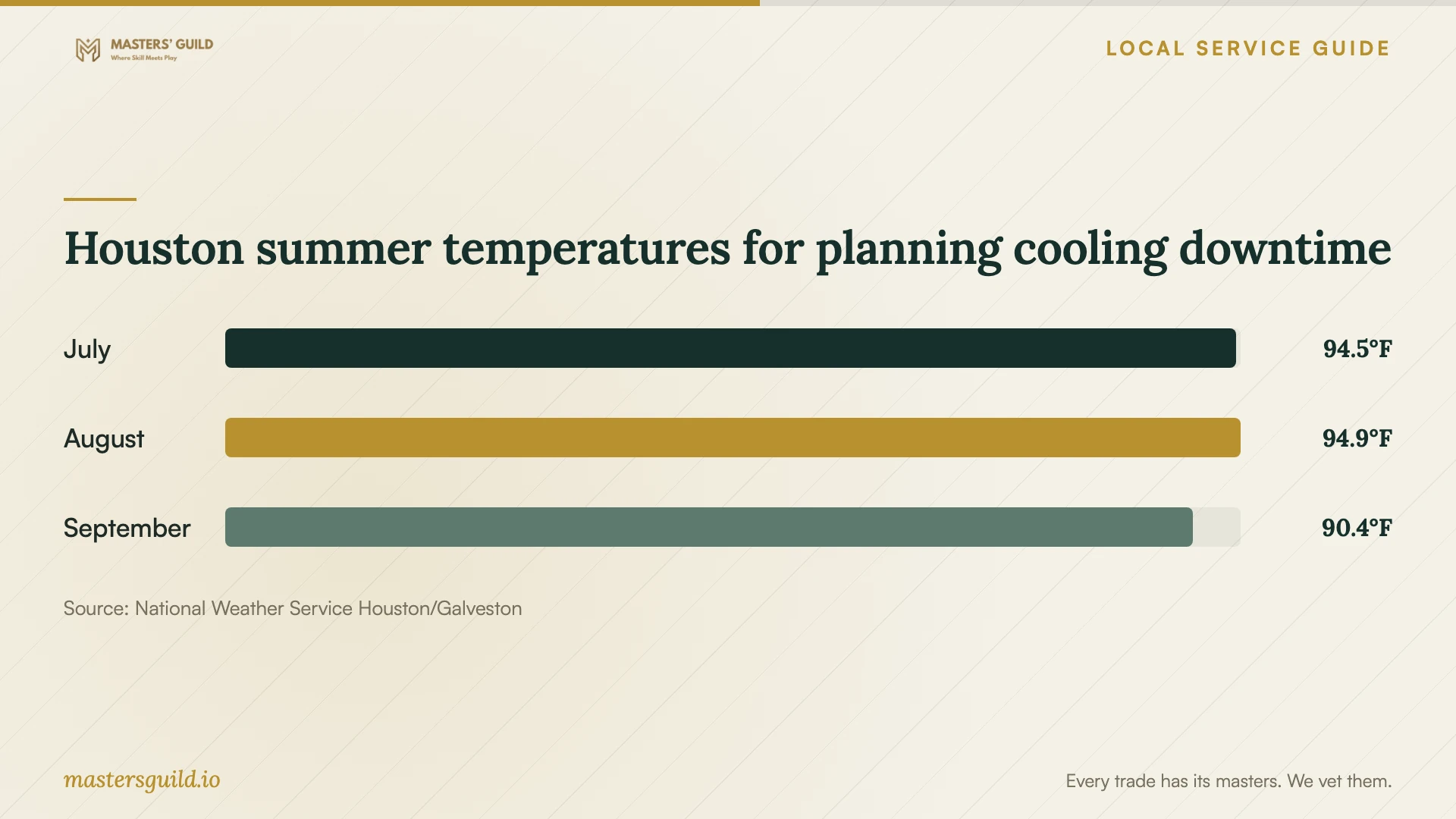
Plan cooling interruptions with the weather in mind. The Houston Intercontinental 1991–2020 normals list average highs of 94.5°F in July, 94.9°F in August and 90.4°F in September. These historical averages support asking about cooling downtime; they do not establish a best month for cleaning or current appointment availability. [3]
Before payment, ask the crew to show the components they cleaned, using photos for inaccessible areas. EPA recommends visual inspection to verify cleanliness. Check that registers are secure, access openings are sealed, the drain pan drains, and the system operates after the work. Record any unresolved items on the completion paperwork. [1]
Houston summer temperatures for planning cooling downtime
Local details that affect your job
Texas separates assessment from remediation on the same project
For a Houston home, verify who will assess suspected mold and who will remove it. TDLR says a person or company may hold both licenses but cannot conduct both assessment and remediation on the same project, apart from its stated school-district exception. If a cleaner offers testing and removal together, ask who performs each role before approving the package. [2]
A small mold area does not exempt a licensed remediator
Do not assume an area below 25 contiguous square feet removes the need for a protocol. TDLR says a licensed Mold Remediation Contractor hired for a small project must follow the mold rules, including a work plan based on a licensed Mold Assessment Consultant's protocol. Exemptions for unlicensed people depend on circumstances. Ask the bidder to explain the applicable exemption or licensed process in writing. [2]
Match the condition to the next step
| Condition | Next step | Before approving work |
|---|---|---|
| Dust on the return grille | Clean the accessible grille and inspect further if concerns remain. | Ask for evidence of contamination inside the system. |
| Excessive debris or particles leaving supply registers | Request an inspection and written cleaning scope. | Identify the cause and the affected components. |
| Wet or moldy fiberglass insulation | Discuss replacement and moisture correction. | Ask which sections need removal and why. |
| Suspected mold with a testing and removal package | Clarify Texas assessment and remediation roles. | Verify the applicable licenses, exemptions and project process. |
Your hiring checklist
- Photograph the concern and note which rooms or registers it affects.
- List each heating and cooling system and identify equipment access.
- Request written proposals using the same component list.
- Ask each bidder to identify duct materials and proposed cleaning methods.
- Separate cleaning, moisture repairs, replacement and chemical treatments in the estimate.
- Agree on cooling downtime, furniture protection and cleanup.
- Request completion photos and a walkthrough before accepting the work.
Frequently Asked Questions
How often should I schedule duct cleaning?
EPA recommends cleaning as needed rather than at a fixed interval. Ask for evidence of substantial contamination before booking. Keep up with filter changes and equipment maintenance according to the system manufacturer's recommendations. [1]
What should a written estimate include?
Request the total price, included components, access work, cleaning method and exclusions. Ask for separate optional prices and an estimated duration. EPA recommends a written agreement defining the total cost and scope before work begins. [1]
Should I approve a duct sanitizing spray?
Ask for evidence supporting treatment, the duct material and the product label. EPA says no biocides are registered for fiberglass duct board or fiberglass-lined ducts. Chemical treatment also requires attention to label directions and the underlying moisture problem. [1]
Does an EPA certification prove a cleaner is qualified?
EPA says it does not certify, endorse or approve duct cleaning companies. Ask about experience with your duct material, relevant credentials and references, and request an explanation of the proposed work. [1]
Sources and scope
This guide combines the sources below with practical planning guidance. Figures apply to the stated geography and period; request a written quote for your property.