
Local service guide
Commercial Building Cleaning in Houston, TX
Arrange Commercial Building Cleaning in Houston by walking the premises with prospective cleaners, agreeing on tasks and visit frequency, and requesting a written total that includes applicable sales tax. Separate routine cleaning, periodic floor care, and off-site waste removal in the quote. Texas taxes office and building cleaning; Houston also requires commercial waste operators hauling from commercial properties within city limits to hold a city franchise. Identify who will handle disposal before accepting a cleanout proposal. [1] [2]
Define the work before comparing cleaners
Prepare a room list covering offices, reception, restrooms, break rooms, storage, and shared corridors. Mark the tasks you want at each visit: emptying bins, cleaning fixtures, vacuuming, mopping, wiping accessible surfaces, and replenishing supplies. Ask each bidder to price that same list. Specify whether staff should clear desks or leave paperwork and equipment untouched.
Give periodic work its own schedule and price. Ask about carpet extraction, floor stripping and finishing, interior glass, high dusting, and an initial deep clean where needed. Identify floor materials during the walkthrough and request the proposed cleaning method. For a clinic or another premises with specialist procedures, provide those requirements before requesting a proposal.
Choose visit frequency around your opening hours, occupancy, restroom use, and the condition you expect at the next opening. Ask the cleaner to explain the proposed staffing and completion window. Agree on a review after the first service period so you can adjust tasks or frequency based on what you observe.
Request a complete price and clear contract
Ask for a total payable amount with applicable tax identified. The Texas Comptroller says cleaners should collect state tax plus applicable local taxes on their service charges. Its examples include cleaning offices and warehouses, washing windows and floors, and picking up trash. Pressure washing buildings, sidewalks, and parking lots also falls within its taxable cleaning guidance. [1]
Request separate amounts for the initial clean, recurring service, periodic work, and optional additions. Ask who buys bin liners, toilet paper, paper towels, and hand soap, and whether the quoted amount includes replenishment. Set an approval process for extra work so a crew member cannot authorize an unplanned charge on your behalf.
Before signing, review the cancellation notice, price-change terms, missed-visit policy, and process for reporting damage. Request evidence of insurance and ask whether employees or subcontractors will enter the premises. Name a supervisor who can resolve a missed task, and agree on how you will document and review service concerns.
Separate cleaning from waste disposal
Specify where the crew should place bagged rubbish and recycling. For a deep clean or tenant turnover, distinguish moving waste to the property's container from transporting it off site. Ask the property manager to approve container use, the loading route, and any temporary storage area before the crew arrives.
Houston requires a city franchise for commercial solid waste operators collecting, hauling, or transporting solid or industrial waste from commercial properties within city limits. If a proposal includes hauling, ask for the operator's name and verify its authorization with the city's Franchise Administration. Apply this check to the actual property address rather than assuming a Houston mailing address establishes city jurisdiction. [2]
For a proposed dumpster or roll-off container exceeding 50 cubic feet, Houston's Solid Waste Management Department identifies a Combustible Waste Storage Permit requirement. Ask the property manager who will confirm the permit arrangements before ordering the container. Include container delivery and collection responsibilities in the cleanout plan. [3]
Plan access and wet-weather tasks
Arrange keys or access credentials, alarm instructions, parking, loading access, and a closing checklist before the first visit. Identify rooms the crew must avoid and provide an emergency contact. Schedule floor work around the contractor's stated drying or reopening requirements, and agree on barriers and a usable route through occupied areas.
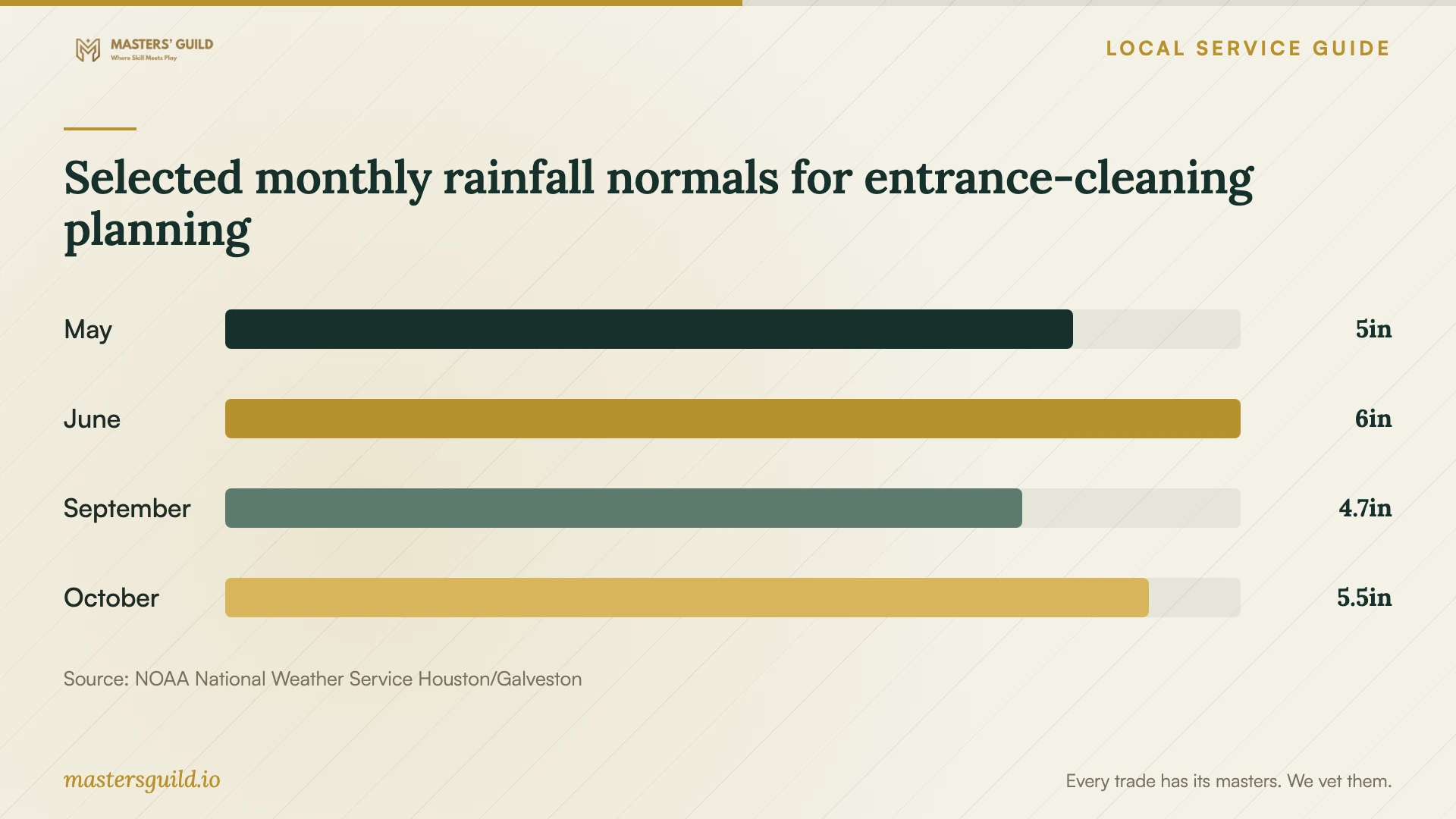
Houston Intercontinental's 1991–2020 normals report 51.84 inches of annual precipitation. Use that historical context to discuss entrance mats, tracked-in water, and responsibility for checking entrances during business hours. Ask who can authorize extra entrance cleaning during wet weather and how the contractor will charge for it. [4]
For exterior washing, agree on a weather rescheduling process and who will protect or move nearby stock and furnishings. Treat the rainfall chart as background for planning. Check the forecast near the work date rather than choosing an appointment from a monthly historical average.
Selected monthly rainfall normals for entrance-cleaning planning
Local details that affect your job
Verify the hauler for a Houston cleanout
Within Houston city limits, the city requires commercial solid waste operators to obtain a franchise before collecting, hauling, or transporting waste from commercial properties. If your cleaning quote includes off-site disposal, obtain the hauler's name before accepting it. The city provides a franchise portal and lists Franchise Administration at 832.393.6910 for questions about commercial waste hauler franchises. [2]
Check the container permit before delivery
Houston requires a Combustible Waste Storage Permit for properties with dumpsters or roll-off containers exceeding 50 cubic feet. Before a large cleanout, ask the property manager to confirm the proposed container capacity and permit arrangements. Assign responsibility for that check before the cleaner or hauler orders a container. [3]
Match the proposal to the work
| Your situation | Request in the proposal | Confirm before starting |
|---|---|---|
| Routine office upkeep | Room-by-room tasks and visit frequency | Access window, supplies, supervisor, and tax-inclusive total |
| Periodic floor care | Floor-specific method and separate price | Furniture movement and reopening requirements |
| Cleanout with off-site hauling | Named hauler and disposal scope | City franchise for commercial waste operations within Houston |
| Dumpster or roll-off exceeding 50 cubic feet | Container capacity and delivery arrangements | Houston Combustible Waste Storage Permit arrangements |
| Exterior pressure washing | Defined surfaces and weather rescheduling terms | Applicable tax, which Texas requires for building and grounds pressure washing |
Your hiring checklist
- Prepare a room list with tasks, exclusions, floor materials, and visit frequency.
- Request separate prices for initial cleaning, recurring visits, and periodic work.
- Ask for the total payable amount with applicable tax and supply charges identified.
- Review insurance evidence, crew arrangements, supervision, and damage reporting.
- Document access, alarms, restricted areas, and closing responsibilities.
- Confirm the waste destination and identify any off-site hauler.
- Ask the property manager to confirm container and permit arrangements.
- Agree on a service review, correction process, and cancellation notice.
Frequently Asked Questions
Does Texas charge sales tax on commercial cleaning?
Yes. The Texas Comptroller identifies office and building cleaning as taxable and directs providers to collect state tax plus applicable local taxes. Ask bidders to identify tax and give you the total payable amount. [1]
How should I compare monthly cleaning quotes?
Give bidders the same task list and service calendar. Ask how they handle holidays, missed visits, consumables, and periodic floor work. Compare the total payable amount and contract terms, then resolve exclusions before signing.
Can the cleaning company take cleanout waste away?
Ask who will perform the hauling. Houston requires commercial waste operators collecting, hauling, or transporting waste from commercial properties within city limits to hold a city franchise. Verify the named operator before agreeing to off-site removal. [2]
What should I check before arranging a roll-off container?
Confirm its capacity, placement, delivery, and collection with the property manager. Houston requires a Combustible Waste Storage Permit for dumpsters or roll-off containers exceeding 50 cubic feet. Assign someone to confirm the permit arrangements before delivery. [3]
Sources and scope
This guide combines the sources below with practical planning guidance. Figures apply to the stated geography and period; request a written quote for your property.