
Local service guide
Houston carpet cleaning: quotes and preparation
For carpet cleaning in Houston, request a written quote covering the rooms or measured area, treatments, furniture handling, drying plan, and total including applicable tax. Disclose leaks, flooding, or musty odors before booking. Texas generally taxes carpet cleaning, with an exemption for qualifying natural-disaster work. Water damage and suspected mold need their own scope. [1] [2] [4]
Describe the job before asking for a price
Send each cleaner the same room list, approximate dimensions, stair count, and photos. Identify stains, pet accidents, previous spot treatments, and any carpet label or manufacturer instructions you have. Ask whether the quote covers the entire room or only exposed carpet around furniture.
Request a breakdown for cleaning, stain or odor treatment, furniture moving, and optional protection. Ask how the company defines a room and whether it has a minimum visit charge. Confirm parking, stairs, building access, and the equipment route. Require your approval before the crew adds work.
Set your budget from comparable written quotes for your actual rooms and requested treatments. Keep optional services separate so you can choose them within your budget. Ask whether the provider gives a firm price or an estimate, and agree how you will approve any change after inspection.
Compare the total including applicable Texas tax
The Texas Comptroller generally classifies residential and nonresidential carpet cleaning as taxable. It also lists carpet protection and odor-control chemical applications as taxable services. Providers collect 6.25 percent state sales tax plus applicable local sales tax on taxable charges. Ask the provider to identify the rate and final total for your address. [1]
For a home water-damage job, request separate charges for extraction, repairs, cleaning, deodorizing, and disposal. The Comptroller lists residential water extraction and residential carpet repairs as nontaxable. Cleaning and hauling away ruined carpet or pad generally carry tax, subject to the qualifying disaster exemption for cleaning described below. [1]
Agree on preparation and drying
Ask the cleaner to explain the proposed method, its suitability for your carpet, and any limits on stain removal. Request drying instructions and an expected time before normal use. Mention a bedroom you need that evening or a fixed move-out inspection time before choosing the appointment.
Confirm who vacuums, moves furniture, and protects furniture legs. Clear small belongings and fragile items from the work area. Arrange a separate place for pets and children during the visit, and agree on a route through the home that avoids the rooms undergoing cleaning.
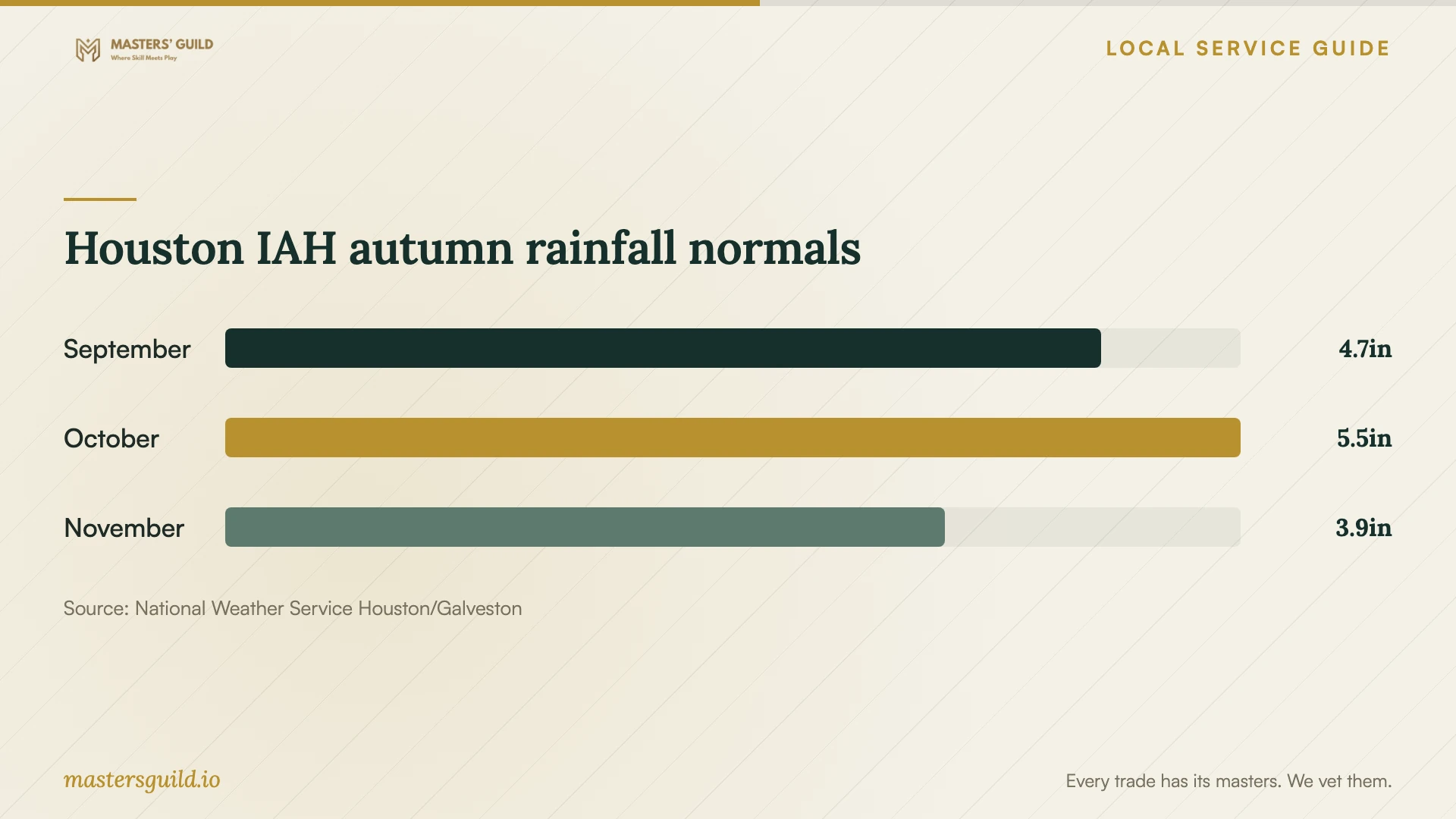
National Weather Service rainfall normals for Houston Intercontinental include 5.46 inches in October over 1991–2020. That historical average does not establish appointment-day weather or carpet drying time. Check the forecast and ask how the crew will handle wet access routes and indoor moisture control. [3]
Request a restoration scope after water damage
Report the water source, when the damage occurred, and whether the pad or underlying floor is wet. EPA says that, in most cases, drying wet or damp items within 24–48 hours prevents mold growth. This guidance concerns water damage; it does not promise a drying time after routine cleaning. [4]
For clean-water damage, EPA describes extracting water, lifting carpet and pad, and using drying equipment to address the carpet and backing. A wet vacuum alone will not dry carpet. Ask the restoration provider how it will assess the pad and underlying floor and confirm drying before reinstallation. [4]
If you suspect sewage or other contamination, disclose that before work starts and seek a professional experienced with contaminated water. EPA limits its general drying instructions to clean-water damage and advises against fans until someone determines that the water is clean or sanitary. [4]
Texas provides a tax exemption for qualifying carpet-cleaning work on property damaged in a natural disaster within an area declared by the Governor or President. The exemption requires a customer exemption certificate stating that the disaster damaged the property, and the provider must bill labor apart from materials. Materials and waste-removal charges remain taxable. Before claiming the exemption, ask the provider to confirm that the declaration and your property's damage qualify; do not assume a storm or flood qualifies. [1]
Check the scope when mold is suspected
Tell the provider about visible growth or a musty odor before approving deodorizer. TDLR advises inspecting for moisture problems and says homeowners should remove and discard moldy porous materials, including carpet. Ask whether the proposed work involves assessment, material removal, or routine cleaning, and how the provider will address the moisture source. [2]
Texas regulates mold assessment and remediation, with exemptions that depend on the work and property. TDLR says a licensed mold remediation contractor must follow the mold rules even on a project below 25 contiguous square feet. Request license details and an explanation of any claimed exemption before accepting mold services. [2]
Houston IAH autumn rainfall normals
Local details that affect your job
Texas billing rules affect mixed cleaning and repair jobs
For your Houston home, ask the provider to distinguish generally taxable cleaning from nontaxable residential extraction and carpet repairs. The Comptroller requires reasonable, identifiable separate charges when providers separate taxable and nontaxable work. A lump-sum bill carries a presumption of taxability when taxable services exceed 5 percent of the total. Discuss itemization before the transaction, along with any qualifying disaster exemption. [1]
Texas mold hiring requires a separate credential check
If a cleaner offers mold assessment or remediation, ask which Texas credential or exemption covers the work. TDLR generally prohibits a person or company from performing both assessment and remediation on the same project, with a school-district exception. Licensed assessors and remediators must provide the Consumer Mold Information Sheet to the client and property owner before mold-related activity begins. Request it before work starts. [2]
Choose the scope before booking
| Your situation | Who to contact | What to ask |
|---|---|---|
| Routine soil or isolated stains | A carpet cleaner | Confirm area, treatment limits, furniture handling, and total including applicable tax. |
| Carpet and pad wet from a clean-water leak | A water-damage restoration provider | Ask how the provider will dry the backing, pad, and underlying floor. |
| Suspected sewage or contaminated water | A professional experienced with contaminated-water restoration | Disclose the source before anyone uses fans. |
| Visible mold or persistent musty odor | A provider qualified for the proposed mold work | Clarify assessment, Texas licensing or exemptions, and whether carpet needs removal. |
| Carpet damaged in a natural disaster | A provider suited to the damage and required restoration | Check declared-area eligibility, the exemption certificate, and separate labor, materials, and disposal charges. |
Your hiring checklist
- Send the same room dimensions, photos, and requested tasks to each cleaner.
- Disclose pet accidents, previous treatments, leaks, and suspected contaminated water.
- Ask for the cleaning method and its suitability for your carpet.
- Confirm the minimum charge, optional treatments, applicable tax, and final total.
- For disaster-damaged carpet, ask the provider to check exemption eligibility and billing requirements.
- Agree who vacuums, moves furniture, and clears the equipment route.
- Request drying instructions and discuss rooms you need to use that evening.
- Keep the written scope and require approval before additional work.
Frequently Asked Questions
How much should I budget for carpet cleaning?
Get written quotes for the same measured area and specified tasks. Ask each provider to separate the base cleaning charge, optional treatments, furniture handling, and applicable tax. Confirm the minimum visit charge and whether the price can change after inspection before choosing an offer.
Is carpet cleaning taxable in Texas?
Generally, yes. The Comptroller taxes residential and nonresidential carpet cleaning. Qualifying natural-disaster cleaning labor can be exempt when the declaration, damage, certificate, and separate-billing requirements apply; materials and waste removal remain taxable. Residential water extraction and carpet repairs are nontaxable services. [1]
How long will my carpet take to dry?
Ask the cleaner for an estimate based on your carpet, method, and indoor conditions, plus instructions for using the rooms again. EPA's 24–48-hour guidance concerns preventing mold after water damage. It does not establish a routine cleaning drying time. [4]
Can I have moldy carpet cleaned?
TDLR advises removing and discarding moldy carpet and other moldy porous materials. Ask a provider qualified for the proposed mold work to assess the affected materials and moisture source. Confirm the applicable Texas licensing rules or exemptions before approving the work. [2]
Sources and scope
This guide combines the sources below with practical planning guidance. Figures apply to the stated geography and period; request a written quote for your property.